Algeria
 Egypt
 Libya
 Morocco
 Sudan
 Tunisia
 Benin
 Burkina Faso
 Cabo Verde
 Ghana
 Guinea
 Guinea-Bissau
 Liberia
 Mali
 Mauritania
 Niger
 Nigeria
 Senegal
 Sierra Leone
 The Gambia
 Togo
 Cameroon
 Central African Republic
 Chad
 DR Congo
 Equatorial Guinea
 Gabon
 Republic of the Congo
 São Tomé and Príncipe
 Burundi
 Comoros
 Djibouti
 Eritrea
 Ethiopia
 Kenya
 Madagascar
 Malawi
 Mauritius
 Mozambique
 Rwanda
 Seychelles
 Somalia
 South Sudan
 Tanzania
 Uganda
 Angola
 Botswana
 Eswatini
 Lesotho
 Namibia
 South Africa
 Zambia
 Zimbabwe
Announced financing is not yet a completed project. For Ivorians, the challenge of the new agreement with the OPEC Fund will therefore be to turn a multi-year allocation into roads, energy, water and accessible services, without losing sight of its cost or the conditions for implementation.
A partnership aligned with Côte d’Ivoire’s plan
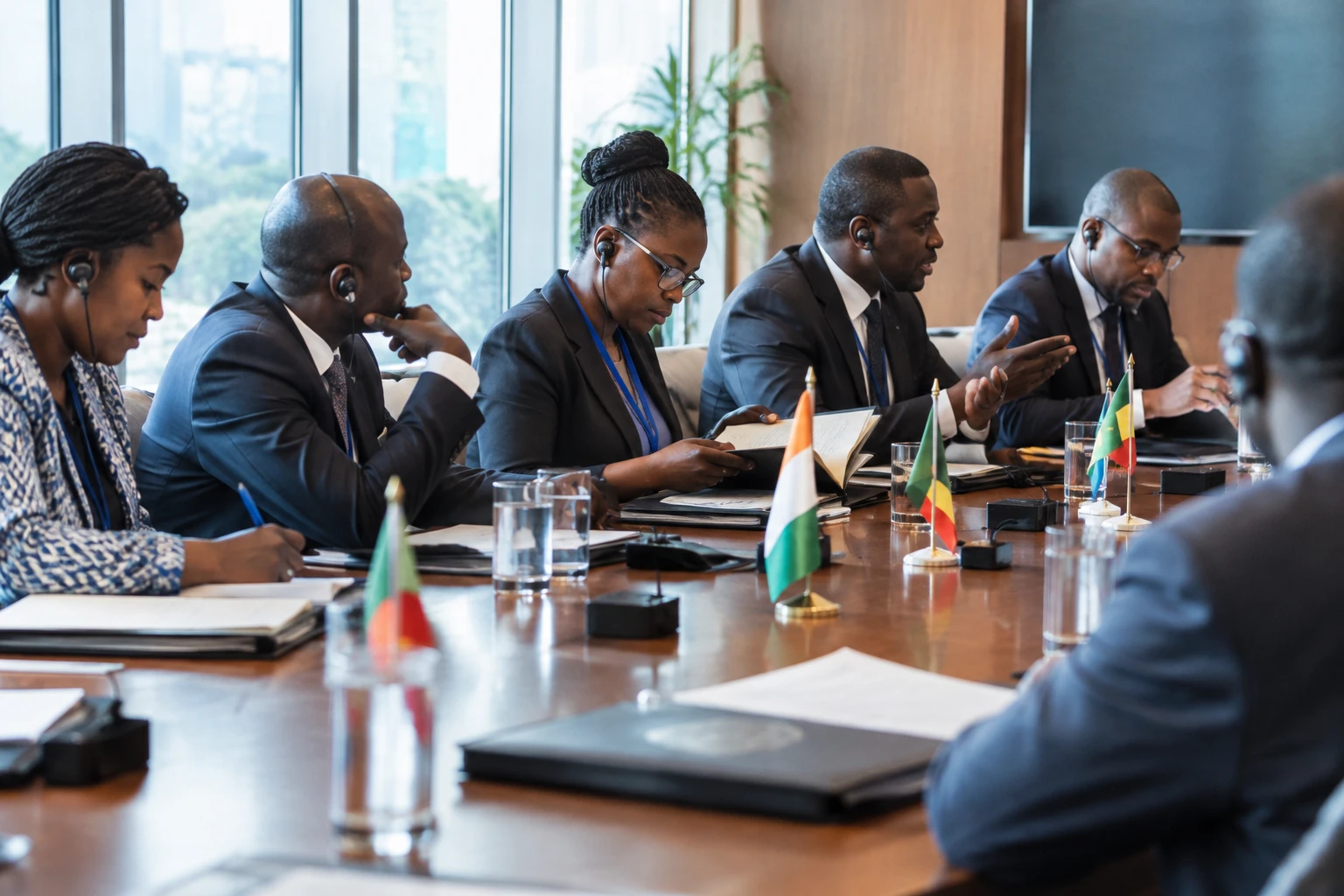
On 16 October 2026, in Bangkok, Côte d’Ivoire and the OPEC Fund for International Development signed a partnership strategy covering 2026 to 2029. The Minister of Planning and Development, Souleymane Diarrassouba, and the Fund’s president, Abdulhamid Alkhalifa, concluded the agreement on the sidelines of the annual meetings of the World Bank and the International Monetary Fund.
The framework provides for up to $500 million in financing and up to $3 million in grants. These are ceilings, not an immediate disbursement or an amount already fully committed to specific projects. The grants are intended in particular to help finance preparatory studies. These studies examine feasibility, cost and expected impact before a decision is made to finance a project.
The agreement formalises an announcement made in April, when the Fund referred to an allocation of up to $500 million for priority projects in Côte d’Ivoire. The new strategy sets out the framework and sectors for cooperation. The stated priorities include transport, energy, water and sanitation, health, agriculture, private-sector development and training.
The Fund says its cooperation with Côte d’Ivoire dates back to 1982 and that more than $530 million in public- and private-sector financing had been approved before this new agreement. The allocation announced for 2026-2029 therefore marks a new programme, but its amount should not be confused with disbursements already made.
Broad ambitions, financing to convert into projects
The partnership forms part of the National Development Plan (PND) 2026-2030, the roadmap that sets out the Ivorian state’s investments and economic objectives. The plan puts planned investment at 114,838.5 billion CFA francs. The private sector is expected to account for 70.2%, while the public sector would represent 29.8%.
In July, the consultative group meeting held in Abidjan gathered pledges and financing intentions totalling 47,820 billion CFA francs, or about $80 billion according to the Ivorian authorities. This figure relates to a collective effort to mobilise partners and investors. It does not mean that all these funds are already available, disbursed or allocated to defined operations.
The distinction matters. Announcements must be followed by detailed agreements, studies, budget decisions and contracts put into effect. Minister Diarrassouba himself stressed the need for «rigorous appraisal of projects», describing it as a condition for mobilising resources and ensuring quality outcomes.
For communities, the value of the partnership will depend on how investment is distributed in practice. A transport project can reduce the time and cost of travel between production areas and markets. Access to water or energy can improve living conditions and support economic activity. But the effects will not be the same in Abidjan, other urban centres and rural areas. The choice of sites, the quality of the works and infrastructure maintenance will matter as much as the amount announced.
The challenge of cost and oversight
The search for external financing comes as the state must carry out a large investment programme while preserving its fiscal balance. The OPEC Fund’s allocation is a framework for cooperation, not a $500 million grant. The terms of each operation — including the type of financing and its conditions — will have to be specified project by project.
This concern echoes a debate raised by Ivorian authorities in Bangkok over the cost of capital for African infrastructure. Financing can support a useful project, but its impact also depends on the price at which it is obtained, the repayment schedule and the administration’s ability to prepare and then oversee the works. Grants for studies can help prepare projects better, but do not in themselves guarantee their completion.
The PND aims to bring Côte d’Ivoire into the ranks of upper-middle-income economies by 2030. The stated targets include GDP per capita of $4,500 and a poverty rate below 20%. These are government targets, whose achievement will depend in particular on growth, job creation and how the benefits of investment are spread across the country.
A West African and continental issue
Côte d’Ivoire is a member of ECOWAS, the economic community of West African countries. Investment in transport, energy or agriculture can therefore extend beyond national borders when it improves trade and regional links. However, the agreement signed in Bangkok does not yet detail the subregional projects that could be selected.
At continental level, this partnership illustrates the role of development finance institutions in African investment plans. For Abidjan, the next test will be less the headline volume than the ability to turn ceilings and commitments into concluded financing agreements, and then into useful services and infrastructure. The selection of projects, their financial terms and their oversight will show what this new cooperation actually changes.