Algeria
 Egypt
 Libya
 Morocco
 Sudan
 Tunisia
 Benin
 Burkina Faso
 Cabo Verde
 Ghana
 Guinea
 Guinea-Bissau
 Liberia
 Mali
 Mauritania
 Niger
 Nigeria
 Senegal
 Sierra Leone
 The Gambia
 Togo
 Cameroon
 Central African Republic
 Chad
 DR Congo
 Equatorial Guinea
 Gabon
 Republic of the Congo
 São Tomé and Príncipe
 Burundi
 Comoros
 Djibouti
 Eritrea
 Ethiopia
 Kenya
 Madagascar
 Malawi
 Mauritius
 Mozambique
 Rwanda
 Seychelles
 Somalia
 South Sudan
 Tanzania
 Uganda
 Angola
 Botswana
 Eswatini
 Lesotho
 Namibia
 South Africa
 Zambia
 Zimbabwe
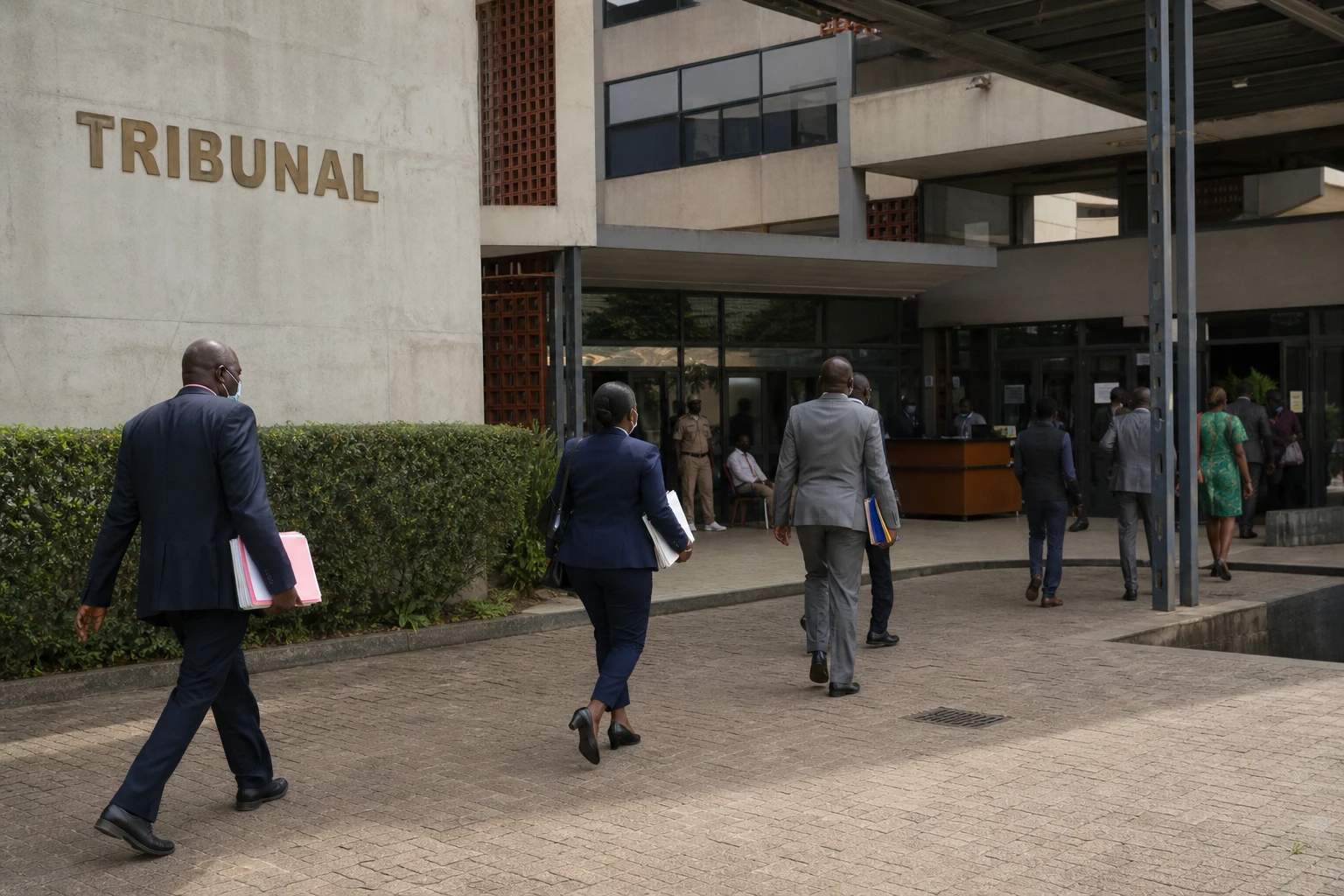
A legal case that goes beyond Katinan alone
In Côte d’Ivoire, proceedings launched over political remarks can quickly take on much wider significance. That is what makes the case against Justin Koné Katinan so sensitive. It touches on the opposition’s freedom of speech, but also on how the state intends to address the aftermath of the 2025 presidential election.
The official of the African Peoples’ Party–Côte d’Ivoire, the PPA-CI, was questioned in Abidjan following a complaint by the RHDP, the ruling party. The case began with an accusation of defamation linked to illegal gold mining, drug trafficking and criticism of the authorities’ actions. But at the end of the proceedings, the prosecutor’s office took the case to a new level, also pursuing allegations of a very different order, including terrorism and alleged electoral unrest in 2025.
Context matters greatly. Côte d’Ivoire, whose political capital is Yamoussoukro, is emerging from a tense electoral period and remains marked by suspicion between the presidential camp and the opposition. In a country central to ECOWAS, Côte d’Ivoire’s political balance has a direct impact across West Africa, where electoral crises can quickly spill across borders.
From verbal dispute to judicial investigation
The facts are now dated and specific. The RHDP filed a complaint with the prosecutor’s office on 7 September 2026 following remarks by Justin Koné Katinan about illegal gold mining and drug trafficking. The opposition figure was summoned to the Abidjan police prefecture on 9 September, then held in police custody before being brought before the prosecutor. On 11 September 2026, he was remanded in custody.
According to information made public by several Ivorian media outlets, the prosecutor’s office opened a judicial investigation on several charges, including “terrorist acts”, “attack on the authority of the state”, “conspiracy against the authority of the state”, “participation in an insurrectionary movement”, disturbing public order, and organising or taking part in banned or undeclared demonstrations. The prosecution also links the case to violence committed during the 2025 electoral period.
The prosecutor’s office says it is following a policy announced as early as October 2025: to identify and prosecute the perpetrators, accomplices and instigators of electoral violence, regardless of their status. This changes everything. The case is no longer just a dispute between a ruling party and an opposition figure. It has become a test of the Ivorian justice system’s ability to handle politically charged cases without giving the impression that it is selecting its targets.
PPA-CI alleges persecution, while the government defends separation of roles
The PPA-CI’s reaction was immediate. Laurent Gbagbo’s party denounces the proceedings as disproportionate and says it sees the change in legal classification as a political manoeuvre. It says the case, which began with a defamation complaint, has shifted to much more serious accusations. The party has called on its supporters to remain mobilised, but within what it describes as a peaceful framework.
The government, for its part, has urged people not to confuse the executive with the ruling party. The government spokesperson recalled that the proceedings are a matter for the justice system, not a political initiative by the president’s office. This distinction matters in a region where opposition parties often suspect the state apparatus of being deployed for partisan purposes. It is not enough, however, to dispel concerns while the precise grounds for the prosecution and its timetable remain unclear.
The opposition links the case to the fate of numerous activists arrested after 2025. The PPA-CI refers to hundreds of detainees or supporters in prison, a figure that available sources do not allow to be independently confirmed. It should therefore be treated as a political claim by the party, not as an established tally. But the claim does reflect the state of the political contest: every new arrest is seen as an extension of a broader stand-off over control of the political space.
What the case says about Ivorian politics and the region
At its core, the Katinan case tells us three things. First, the Ivorian justice system remains central to the regulation of political life. Second, everyday governance issues — illegal gold mining, drugs and public safety — become politicised immediately. Finally, the memory of electoral violence remains vivid, making every case explosive, especially when it involves a prominent figure from Gbagbo’s camp.
For the government, judicial severity may appear to be a show of authority in a country where the state wants to demonstrate that it will no longer tolerate political violence. For the opposition, it risks entrenching the perception that public space is gradually closing. Between the two, the public sees tensions mounting at a time when priorities remain numerous: security, jobs, the cost of living and trust in institutions.
The case’s significance also extends beyond national borders. In West Africa, recent political transitions have shown that a judicial case perceived as unfair can quickly turn into a crisis of confidence. Côte d’Ivoire often plays a stabilising role in the sub-region. If the confrontation between the RHDP and PPA-CI intensifies further, it will affect not only the domestic climate but also the image of a country whose stability remains a benchmark for ECOWAS.
What to watch now is the next stage of the proceedings: the precise direction of the judicial investigation, whether others may be implicated in connection with the 2025 violence, and the response of opposition parties. In an already fragile political landscape, the way Abidjan handles this case will say much about the room left for compromise in Ivorian public life.