Algeria
 Egypt
 Libya
 Morocco
 Sudan
 Tunisia
 Benin
 Burkina Faso
 Cabo Verde
 Ghana
 Guinea
 Guinea-Bissau
 Liberia
 Mali
 Mauritania
 Niger
 Nigeria
 Senegal
 Sierra Leone
 The Gambia
 Togo
 Cameroon
 Central African Republic
 Chad
 DR Congo
 Equatorial Guinea
 Gabon
 Republic of the Congo
 São Tomé and Príncipe
 Burundi
 Comoros
 Djibouti
 Eritrea
 Ethiopia
 Kenya
 Madagascar
 Malawi
 Mauritius
 Mozambique
 Rwanda
 Seychelles
 Somalia
 South Sudan
 Tanzania
 Uganda
 Angola
 Botswana
 Eswatini
 Lesotho
 Namibia
 South Africa
 Zambia
 Zimbabwe
A quiet but decisive front against gold taken from rivers
In Côte d’Ivoire, clandestine gold mining is no longer confined to hidden sites deep in forests. It now affects rivers, farmland, riverside villages and the financing networks that fuel the activity. In a country where gold is playing an increasingly important role in the economy, the challenge is no longer simply to dismantle illegal operations, but to regain control of a sector that has become dispersed and mobile.
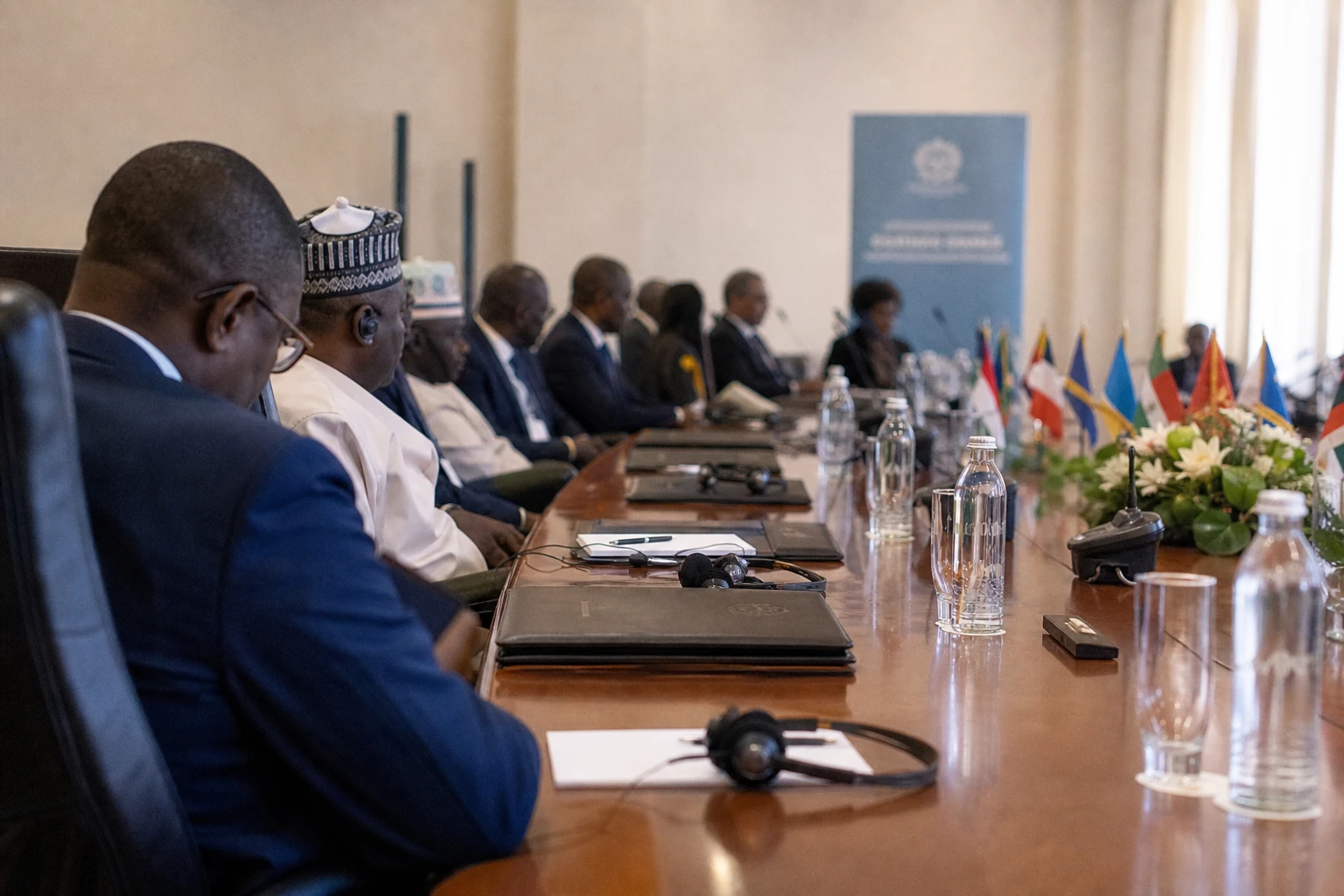
The issue took on new significance in Yamoussoukro, the country’s political capital, where a national workshop brought together those responsible for the response on 4 and 5 September 2026. The workshop was part of the implementation of decisions previously taken by the National Security Council, the body that sets the Ivorian state’s main security policies. A meeting on 17 September 2026 at the Presidential Palace in Abidjan then translated this tough line into operational measures.
From river patrols to tracking down financiers
The government has decided to create 21 river security platoons to monitor the Comoé, Bandama, Cavally and Sassandra rivers, as well as their tributaries, on a permanent basis. The aim is clear: illegal mining operations move quickly, adapt to inspections and use waterways to bypass roadblocks on land. At the same time, the Special Group for the Fight against Illegal Gold Mining is to strengthen its brigades, while a six-month moratorium freezes the issuance of certain artisanal and semi-industrial mining permits.
This shift is not merely symbolic. The latest official figures show that more than 8,500 sites were cleared between 2021 and the first half of 2026, 4,474 people were referred to prosecutors, more than 960 million CFA francs were seized and about 136 kilograms of gold were confiscated. The authorities also say that 29 of the country’s 31 regions are affected. Meanwhile, environmental services report worrying pollution of waterways, difficulties accessing drinking water and health risks for riverside communities.
In the short term, the crackdown is targeting excavators, dredges and clandestine washing sites. But the new approach lies elsewhere: the law announced by Abidjan is also intended to make logistical and financial complicity a standalone offence. In other words, the state plans to trace the chain back to buyers, equipment suppliers, intermediaries and everyone who makes the activity profitable. This approach responds to a point often made by Ivorian services: destroying a site is not enough if the economic network sustaining it remains intact.
An ecological, social and regional battle
The issue goes beyond security. In the northern, eastern and central regions, the effects of illegal gold mining are already evident in damaged fields, degraded riverbanks and tensions between agricultural, fishing and mining activities. In other affected areas, the Environment Ministry has also reported disruption to fishing and increased pressure on food security. For rural communities, this often means less clean water, less usable land and greater economic uncertainty.
The government is nevertheless seeking to avoid a purely confrontational approach. Degraded sites are to be rehabilitated with support from labour-intensive public works programmes, while the Military Engineering Corps is also involved in restoration efforts. Income-generating activities have also been announced for Ivorian gold miners, with the aim of moving some of this workforce out of an underground economy that directly or indirectly employs thousands of people in their areas of origin. In June 2025, the World Bank had already noted that Côte d’Ivoire was seeking to formalise its sizeable informal gold sector to improve safety, traceability and environmental standards.
Across the continent, the issue resonates well beyond Côte d’Ivoire’s borders. At COP17 of the United Nations Convention to Combat Desertification, Côte d’Ivoire launched an African coalition against land degradation linked to illegal artisanal mining. The initiative is part of a broader continental movement to better formalise gold mining, reduce mercury use, protect watersheds and secure supply chains. The question now is whether the six-month moratorium, new river patrols and planned criminal law reform will be enough to curb a system that has so far moved faster than the controls.