Algeria
 Egypt
 Libya
 Morocco
 Sudan
 Tunisia
 Benin
 Burkina Faso
 Cabo Verde
 Ghana
 Guinea
 Guinea-Bissau
 Liberia
 Mali
 Mauritania
 Niger
 Nigeria
 Senegal
 Sierra Leone
 The Gambia
 Togo
 Cameroon
 Central African Republic
 Chad
 DR Congo
 Equatorial Guinea
 Gabon
 Republic of the Congo
 São Tomé and Príncipe
 Burundi
 Comoros
 Djibouti
 Eritrea
 Ethiopia
 Kenya
 Madagascar
 Malawi
 Mauritius
 Mozambique
 Rwanda
 Seychelles
 Somalia
 South Sudan
 Tanzania
 Uganda
 Angola
 Botswana
 Eswatini
 Lesotho
 Namibia
 South Africa
 Zambia
 Zimbabwe
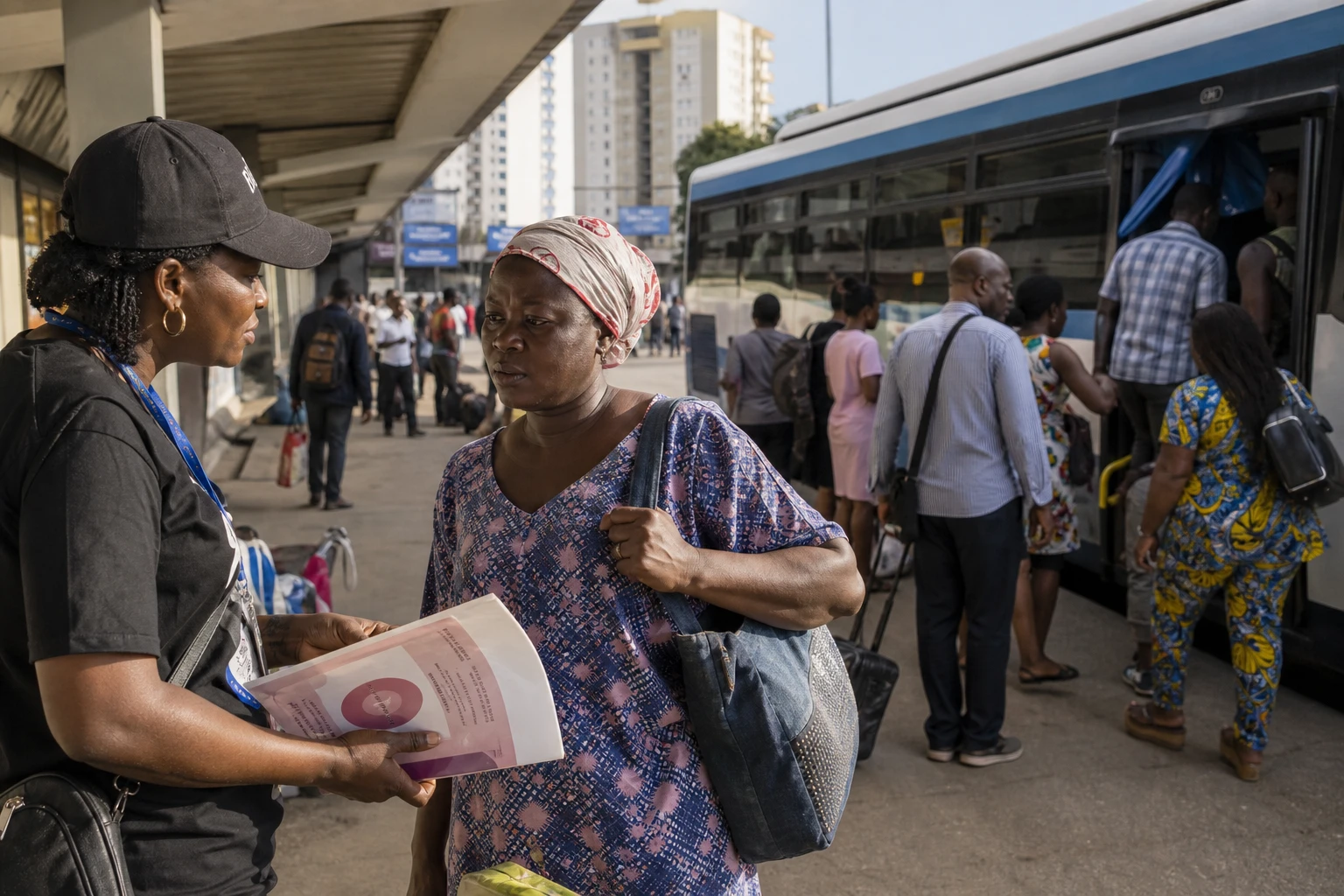
In Côte d’Ivoire, the pink ribbon alone is not enough to change patients’ prospects. The priority is more practical: recognise the signs, seek medical advice without delay and make tests accessible, in Abidjan and across the country’s other regions.
Every October brings this urgent issue to the fore. The Pink October campaign carries a simple message: breast cancer is not inevitable when it is detected early enough. But progress depends as much on information as on women’s actual ability to access diagnosis and care.
A common cancer, often detected too late
Available data rank breast cancer as the most commonly diagnosed cancer among women in Côte d’Ivoire. The Ivorian Ministry of Health says 3,869 new cases and 2,092 deaths were recorded in 2022, according to GLOBOCAN estimates. The Ivorian News Agency reported about 3,800 cases that same year. The figures differ slightly according to sources and counting methods, but they describe the same public health reality.
Breast cancer involves the abnormal multiplication of cells in breast tissue. A lump is not always painful. For this reason, the absence of pain should not in itself be reassuring. A persistent lump, a change in the shape of the breast, a change to the skin or nipple, or unusual discharge should prompt a medical consultation.
Late diagnosis remains one of the main obstacles. In its cooperation strategy with Côte d’Ivoire for 2022-2025, the World Health Organization estimated that nearly 75% of cancers were diagnosed at an advanced stage. This situation limits treatment options and increases the human, financial and social cost of the disease.
Screening does not mean that a woman is ill. It makes it possible to look for an abnormality before symptoms appear or when they remain subtle. Depending on age, family history and clinical examination, health professionals may recommend an ultrasound, a mammogram or other tests.
A mammogram is an X-ray of the breast. It does not replace a professional’s advice and is not recommended in the same way for all women. The options should therefore be discussed with a doctor or midwife, particularly for younger women, pregnant women or those at particular risk.
Providing information, screening and treatment across the country
In Côte d’Ivoire, awareness campaigns seek to bring health services closer to communities. The Coalition of Organisations Against Cancer says it screened 547 women in 15 localities during its 2024 campaign. This kind of initiative can reach women who do not regularly visit a specialist centre.
The issue is not confined to major cities. In Abidjan, medical services are more concentrated. In secondary cities and rural areas, distances, transport costs, the availability of specialists and the price of tests can delay care. A one-off campaign cannot, on its own, address these regional inequalities.
The care pathway has several stages. After an initial consultation, an imaging test may be carried out. If a lesion appears suspicious, a biopsy takes a tissue sample to confirm or rule out the presence of cancer cells. Treatment then depends on the type of tumour and how far it has spread. It may combine surgery, radiotherapy, chemotherapy, hormone therapy or targeted therapies.
Côte d’Ivoire has the Alassane Ouattara National Medical Oncology and Radiotherapy Centre, located at Cocody University Hospital. The centre helps treat cancer and also receives patients from other West African countries. This capacity represents significant progress for the region, although access to care remains unequal depending on resources and place of residence.
The Ivorian government has also highlighted the provision of some free services for people in need as part of care at the national centre. This measure can remove a major obstacle. However, it must be accompanied by clear information, as many patients are unaware of the available schemes or reach hospital when the disease is already advanced.
Associations play an essential role in this chain. They explain warning signs, refer women to the appropriate facilities and sometimes provide psychological support. Their presence is particularly important in low-income neighbourhoods, markets, workplaces and communities far from hospital centres.
An Ivorian challenge on the West African agenda
The issue extends beyond Côte d’Ivoire’s borders. Breast cancer is also one of the most common cancers among women in West Africa. The World Health Organization particularly highlights the gap between the number of diagnoses and the death rate. In several countries, fewer women are diagnosed than in Europe, but more die from the disease. Delays in seeking medical advice, a lack of equipment and difficulties accessing treatment explain part of this difference.
Côte d’Ivoire is a member of the Economic Community of West African States, ECOWAS. The organisation works mainly on regional integration, but public health challenges also cross borders among its member states. Patients, medicines, professionals and equipment do not always stop at national frontiers. Closer regional cooperation could facilitate training, the sharing of expertise and access to specialised treatment.
The fight against breast cancer cannot therefore rely solely on a month of awareness-raising. It requires regularly updated data, campaigns in locally spoken languages, more evenly distributed centres and sustainable financial support. It also means listening to the women concerned, as their experiences reveal obstacles that statistics do not always show.
In Yamoussoukro as in Abidjan, the Pink October message must go beyond the symbol. Early detection improves the chances of recovery, but it only makes a difference if a woman can then quickly access confirmation of the diagnosis and treatment. This continuity, from information to care, is what will make it possible to reduce breast cancer mortality in Côte d’Ivoire in the long term.
Data from the Ivorian Ministry of Health on breast cancer, figures reported by the Ivorian News Agency and the World Health Organization’s guidance agree on one point: information, rapid diagnosis and access to care remain central to the fight.