Algeria
 Egypt
 Libya
 Morocco
 Sudan
 Tunisia
 Benin
 Burkina Faso
 Cabo Verde
 Côte d'Ivoire
 Ghana
 Guinea
 Guinea-Bissau
 Liberia
 Mali
 Mauritania
 Niger
 Nigeria
 Senegal
 Sierra Leone
 The Gambia
 Togo
 Cameroon
 Central African Republic
 Chad
 DR Congo
 Equatorial Guinea
 Gabon
 Republic of the Congo
 São Tomé and Príncipe
 Burundi
 Comoros
 Djibouti
 Eritrea
 Ethiopia
 Kenya
 Madagascar
 Malawi
 Mauritius
 Mozambique
 Rwanda
 Seychelles
 Somalia
 South Sudan
 Tanzania
 Uganda
 Angola
 Botswana
 Eswatini
 Lesotho
 Namibia
 South Africa
 Zambia
 Zimbabwe
For African countries, the outcome of a climate conference is measured not only by how much space is given to oil, coal or gas in a communiqué. It also depends on access to finance, protection for exposed populations and the ability to develop electricity without adding to debt or holding back industrialisation.
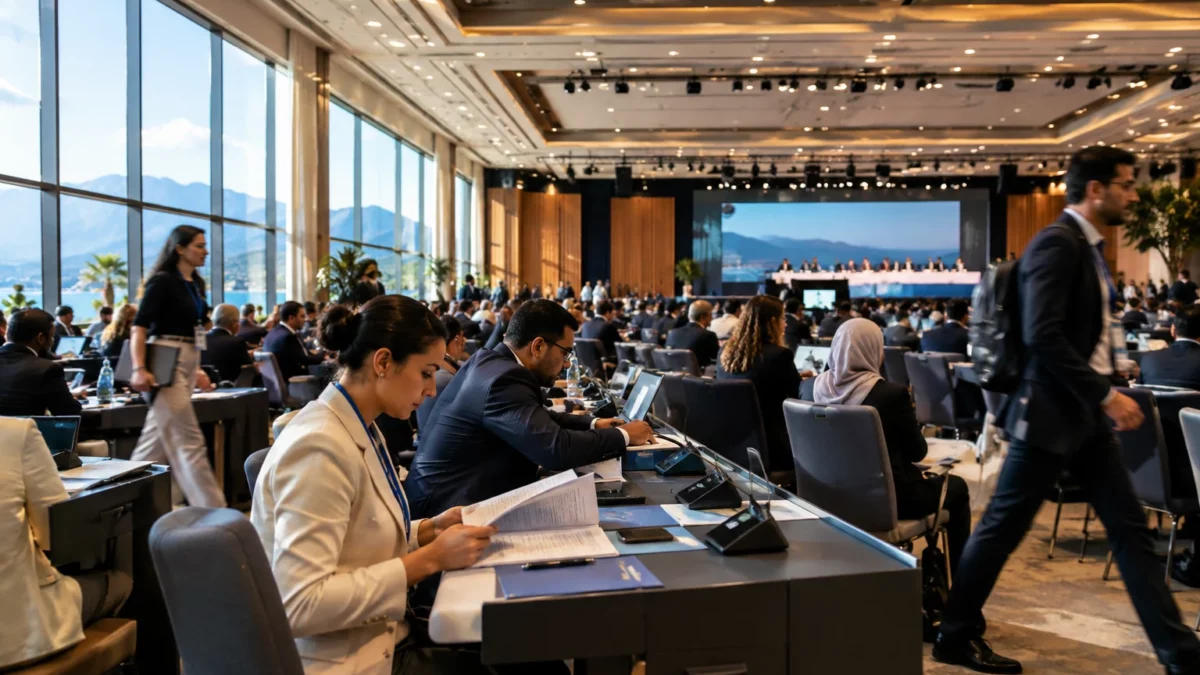
At Antalya, in Türkiye, states ultimately failed to adopt a broad political decision when COP31 closed on 22 November 2026. Disagreement over fossil fuels weighed heavily. But discussions on finance and the energy transition also left open questions that matter to African countries.
A climate compromise blocked at Antalya
The COP brings together countries that have signed the United Nations climate convention. Its decisions are generally taken by consensus, meaning any delegation can challenge a text, even if many states support it.
This rule was central to the closing proceedings in Antalya, a city in southern Türkiye. The conference, hosted by Türkiye and organised with Australia leading the negotiations, ended without the adoption of two decisions put forward by the presidency. The UN’s climate chief, Simon Stiell, confirmed that no agreement had been reached on the texts.
The final draft did not explicitly mention fossil fuels. Several delegations, including the European Union, refused to approve it. Russia and Saudi Arabia opposed including a reference to fossil fuels. Other countries preferred to defend a compromise, even a limited one. The text nevertheless failed to secure the consensus required.
At the closing session, COP31 President Murat Kurum acknowledged that there was no agreement. Chris Bowen, who led the negotiations for Australia, described the outcome as disappointing. Publicly reported positions show that states also differed over the pace of the transition, the role of carbon capture and financial support for developing countries.
A Dubai precedent, but no new common step
The deadlock comes after a diplomatic turning point. At COP28, held in Dubai in 2023, states called for the first time for a transition away from fossil fuels in energy systems. That commitment remains in force. But Antalya produced no new common agreement to clarify how it should be implemented.
The distinction matters. A general call for a transition does not, by itself, set a timetable for phasing out each energy source, determine the financial resources available or assign responsibilities to producer and consumer countries. States must reconcile emissions cuts, energy security and economic costs. Delegations disagree on how these efforts should be shared.
The absence of a broad decision does not mean that all the conference’s work failed. Simon Stiell pointed to progress on several areas, including a just transition, agriculture, and the resilience of cities and infrastructure. According to the UN, a separate set of commitments on electrification also advanced. These results, however, do not replace a political compromise on the questions left unanswered.
African priorities go beyond energy alone
African negotiating positions are represented in particular by the African Group of Negotiators. It champions shared priorities without overlooking differences between hydrocarbon-producing countries, states heavily dependent on coal and economies banking on renewable energy.
For the group, access to predictable climate finance is central. Its demands also cover adaptation — measures to reduce harm caused by climate impacts —, implementation of loss and damage mechanisms, and an energy transition deemed fair. The UN Economic Commission for Africa says the continent also wants to harness its renewable resources, minerals and capacity for innovation.
These priorities have different practical implications across territories. Investment in electricity grids and clean energy can support households, public services and productive activities. But the needs of a capital city connected to the grid differ from those of a remote rural region. Financing choices also affect public budgets: additional loans can weigh on national finances, while grants or resources accessed through African institutions offer different ways of implementing projects.
The debate over fossil fuels is therefore not simply a choice between climate action and development. Countries must cut emissions, expand access to energy and create jobs. How these transformations are financed, how responsibilities are shared and how quickly the transition proceeds remain political questions. African delegations are calling for their constraints and priorities to be taken into account in international decisions.
The next step will be to follow up on commitments
With the general text rejected, several issues will have to return in subsequent negotiations, including the transition away from fossil fuels and the financing needed for adaptation. The UN has also said that preparatory work for the next global stocktake must build on commitments already adopted, rather than revisit existing gains.
For African countries, the challenge will be to turn a shared position into verifiable results: resources actually disbursed, projects tailored to local needs and a meaningful role in decisions that affect them. COP31 raised the profile of these demands, but did not resolve the political disagreement surrounding them.
The setback in Antalya does not bring climate negotiations to an end. It does, however, show the limits of a process in which consensus can block a common decision, even when the issues are urgent. The next rounds of work will have to clarify commitments on fossil fuels while answering the question that matters to many countries on the continent: what resources will be available to finance adaptation and a just energy transition?