Algeria
 Egypt
 Libya
 Morocco
 Sudan
 Tunisia
 Benin
 Burkina Faso
 Cabo Verde
 Côte d'Ivoire
 Ghana
 Guinea
 Guinea-Bissau
 Liberia
 Mali
 Mauritania
 Niger
 Nigeria
 Senegal
 Sierra Leone
 The Gambia
 Togo
 Cameroon
 Central African Republic
 Chad
 DR Congo
 Equatorial Guinea
 Gabon
 Republic of the Congo
 São Tomé and Príncipe
 Burundi
 Comoros
 Djibouti
 Eritrea
 Ethiopia
 Kenya
 Madagascar
 Malawi
 Mauritius
 Mozambique
 Rwanda
 Seychelles
 Somalia
 South Sudan
 Tanzania
 Uganda
 Angola
 Botswana
 Eswatini
 Lesotho
 Namibia
 South Africa
 Zimbabwe
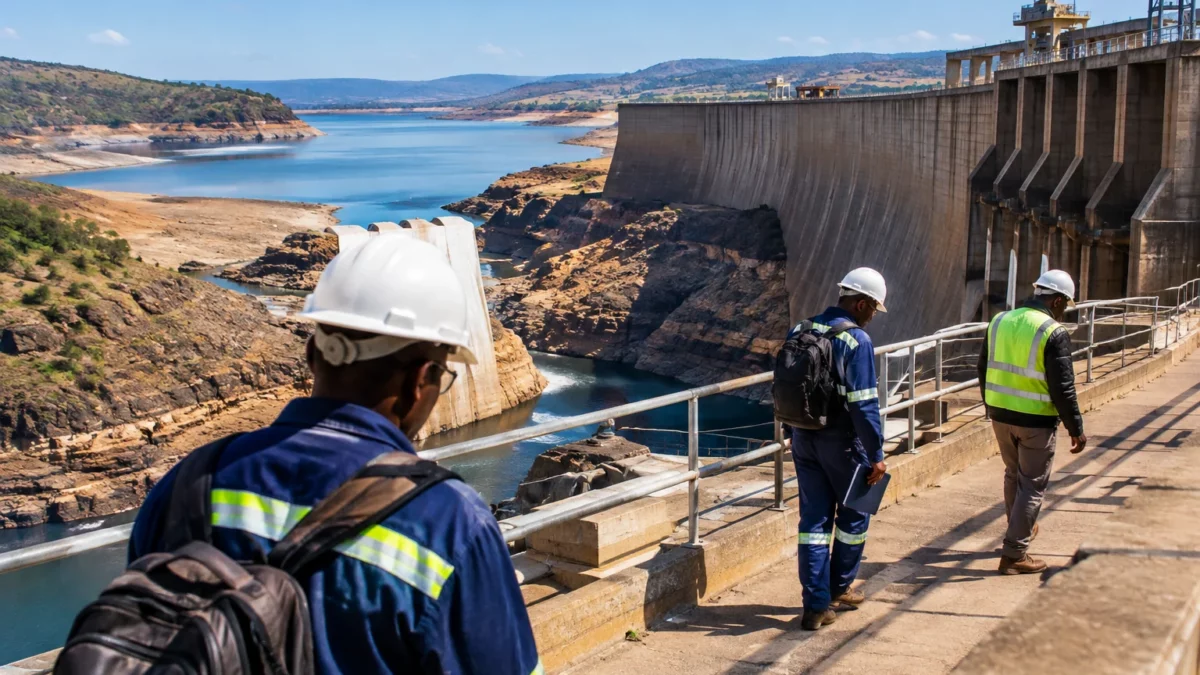
At Kariba, water does more than generate electricity. It also supports fishing, tourism and communities living along the shores. But when reservoir levels fall, these uses come into conflict, with consequences that extend far beyond the lake.
A shared reservoir at the heart of the Zambezi system
Lake Kariba stretches between Zambia and Zimbabwe, in the Zambezi basin. At full capacity, it covers about 5,580 km². It extends for nearly 280 kilometres and can hold around 181 km³ of water, according to the Zambezi River Authority (ZRA), the bi-national body responsible for managing the dam and reservoir. These measurements vary according to the water level. The ZRA’s technical data on Lake Kariba provides these figures.
The dam, built in the Kariba Gorge on the Zambezi River, was commissioned in the late 1950s. The concrete structure is 128 metres high. It supplies two power stations: Kariba North Bank, on the Zambian side, and Kariba South Bank, on the Zimbabwean side. The ZRA, jointly owned by the two states, co-ordinates, among other things, the management of water needed for their electricity production. The dam’s technical specifications published by the ZRA set out its capacity and operating thresholds.
The infrastructure also has a human history. Filling the reservoir displaced tens of thousands of people, including Tonga communities living in the Zambezi Valley. A historical study held by the University of Zambia examines the displacement and changes to livelihoods after construction. Operation Noah, meanwhile, involved rescuing animals trapped by the rising waters. These accounts are a reminder that the dam was both an energy project and a profound reshaping of the region. The University of Zambia study on the Tonga of the Gwembe Valley explores these changes.
Electricity, fishing and local incomes
Kariba remains a pillar of electricity supply in both countries. This dependence leaves their power grids exposed to fluctuations in flows from the Zambezi. In 2024, drought linked in part to the El Niño phenomenon sharply reduced available reserves. The ZRA reported acute hydrological stress, while data from the US agency USDA showed exceptionally low levels at the start of June. Taken together, these sources indicate the scale of the shock, without making every dry year a new norm. The ZRA’s update on water allocation for power generation and the USDA’s hydrological analysis document the episode.
A decline in output affects different sectors in different ways. Households may face power cuts, while businesses sometimes have to absorb the cost of back-up solutions. In Zambia, hydroelectricity is also important to mining and industrial activity. In Zimbabwe, constraints also affect consumers and producers reliant on the grid. The ZRA’s water-sharing rules therefore weigh on both economies, although the practical effects vary by region and according to each party’s ability to adapt.
The lake also sustains commercial fishing, particularly for kapenta, a small fish introduced into the reservoir that has become an important resource. The activity connects fishers, traders, sellers and consumers on both sides of the border. It generates income and contributes to food supplies. But catches depend on the state of the ecosystem, fishing practices and conditions in the lake. A study of Kariba’s commercial fisheries traces their development in Zambia and Zimbabwe. This research on kapenta fishing practices highlights the importance of managing a shared body of water appropriately.
A natural heritage that also depends on its management
The shores of Kariba and nearby protected areas are home to a wide range of wildlife, including hippos, crocodiles, elephants and many bird species. Cruises, sport fishing and wildlife watching support the local tourism economy. These activities do not replace electricity or fishing, but they diversify incomes. They, too, depend on habitat quality, access to the shores and safe travel on the lake.
The reservoir is therefore not a store of water insulated from the seasons. Its level varies with rainfall, inflows from the basin, evaporation and the volumes drawn off for the turbines. The ZRA sets water allocations for the two power stations and monitors changes in the reservoir. The trade-off is difficult: generating more power today may reduce the available margin if future inflows remain low. Conversely, limiting output protects reserves but can worsen immediate shortages.
The next challenge: sharing climate risk more effectively
Kariba brings a regional question into focus: how can electricity supplies be secured without leaving households, fishing workers or less well-equipped businesses to bear all the risk? The answer does not depend on the dam alone. It also requires a more diverse energy mix, predictable allocation management and the sharing of hydrological data among countries along the Zambezi.
For Zambia and Zimbabwe, the immediate challenge remains reconciling the lake’s level with the needs of both power grids and lakeside activities. In the longer term, decisions about Kariba matter to the entire Zambezi basin: its resources cross several countries and their uses are interconnected. Monitoring seasonal inflows and the ZRA’s allocation decisions will show whether the two states are strengthening their ability to manage years of low water levels together.