Algeria
 Egypt
 Libya
 Morocco
 Sudan
 Tunisia
 Benin
 Burkina Faso
 Cabo Verde
 Côte d'Ivoire
 Ghana
 Guinea
 Guinea-Bissau
 Liberia
 Mali
 Mauritania
 Niger
 Nigeria
 Senegal
 Sierra Leone
 The Gambia
 Togo
 Cameroon
 Central African Republic
 Chad
 DR Congo
 Equatorial Guinea
 Gabon
 São Tomé and Príncipe
 Burundi
 Comoros
 Djibouti
 Eritrea
 Ethiopia
 Kenya
 Madagascar
 Malawi
 Mauritius
 Mozambique
 Rwanda
 Seychelles
 Somalia
 South Sudan
 Tanzania
 Uganda
 Angola
 Botswana
 Eswatini
 Lesotho
 Namibia
 South Africa
 Zambia
 Zimbabwe
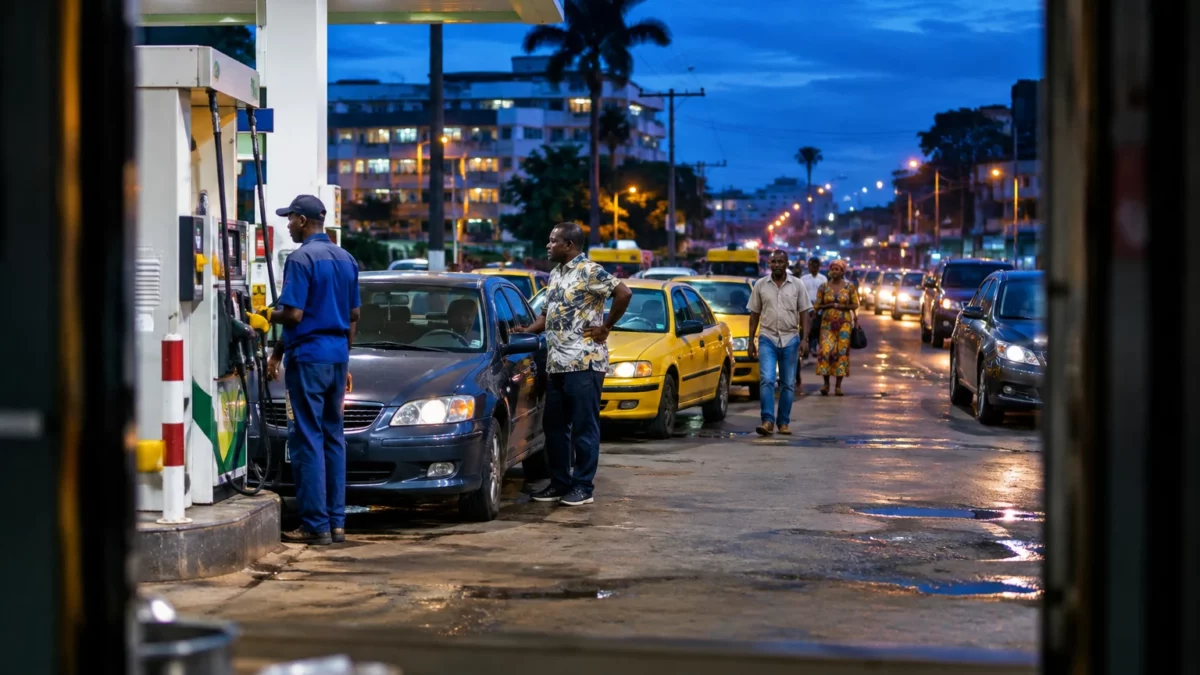
When petrol is in short supply, the effects go beyond queues at service stations. Transport slows, small businesses pay more to get around, and activities that depend on fuel lose time. In Congo, the shortage has therefore brought a practical question to the fore: how can supplies be guaranteed when the national refinery shuts down and imports are delayed?
A vulnerable supply chain
On 28 November 2026, in Brazzaville, Denis Sassou-Nguesso addressed the crisis before Parliament sitting in Congress on Republic Day. He acknowledged that the difficulties were « gravely disrupting the national economy » and hitting the informal sector in particular, which is important for small-scale trades. The president attributed the shortage to several successive factors rather than a single cause.
According to figures cited in his speech, the Congolaise de raffinage (CORAF) supplies about 60% of the fuel consumed in the country. The remaining 40% comes from imports. The refinery, however, underwent a technical shutdown for maintenance and an overhaul of its equipment. The fall in local production coincided with insufficient stocks and delays to imports.
The head of state also referred to tensions on maritime routes linked to conflicts in the Middle East. In his account, these are driving up the cost of oil, shipping and insurance. Such costs make it harder to buy and transport products, while the government intends to keep prices at the pump affordable.
The shortage is not confined to Brazzaville, however. On 20 November, authorities and industry representatives meeting in Pointe-Noire agreed to establish a departmental crisis unit. It is to monitor stocks and plan management measures in the event of supply disruptions. The meeting brought together, among others, CORAF, the Société commune de logistique and hydrocarbon services.
Stocks and distribution put to the test
The president asked the government to expand storage capacity, improve the transport of products within the country and modernise CORAF. He also wants to build up a national reserve capable of covering a longer period of consumption. These measures are intended to cushion the impact of future disruptions, but will not by themselves eliminate dependence on imports.
The problem affects economic players in different ways. Motorists may face queues and have to travel further. For taxi drivers, transport operators and sellers reliant on daily deliveries, a supply disruption can directly reduce their income. In cities, visible queues make the crisis immediate; in less well-served areas, the issue is also the regularity and cost of delivery.
The president’s speech explicitly acknowledges the impact on the informal economy. But the announced response will have to be judged against verifiable results: stock availability, delivery frequency and continuity of service outside the capital. The unit set up in Pointe-Noire is a local monitoring mechanism; it does not replace a national storage and distribution strategy.
This vulnerability predates the 2026 technical shutdown. A 2024 report by the International Monetary Fund said that CORAF covered an average of about two-thirds of demand for refined products, but that frequent supply disruptions led to highly variable imports. The document also linked recurring difficulties to ageing infrastructure and a lack of investment. This diagnosis does not confirm the immediate causes cited for the current crisis; rather, it sheds light on the supply chain’s structural vulnerability.
A second refinery announced, with no timetable specified
Denis Sassou-Nguesso presents the construction of a second refinery at Fouta, in the urban commune of Tchiamba-Nzassi, Pointe-Noire department, as a lasting solution. The project is intended to increase national refining capacity and reduce reliance on imported products. The president has also called for the accelerated development of the oil pipeline project between Pointe-Noire, Loutété and Maloukou-Tréchot.
These announcements set out long-term projects, but the speech provides no detailed operational timetable or expected production capacity for the new refinery among the information available. In the meantime, continuity will depend on CORAF returning to service, external purchases and the operation of storage and transport facilities. Keeping prices affordable adds a financing constraint to the equation.
At regional level, Congo is a member of the Economic and Monetary Community of Central Africa (CEMAC), which brings together six states around economic and monetary integration. The shortage in Congo does not mean neighbouring countries are facing the same situation. It nevertheless serves as a reminder that energy supplies remain exposed to infrastructure shutdowns and the costs of international maritime trade.
The next steps will therefore play out over two time horizons. In the short term, stocks and distribution will have to address disruptions affecting households and businesses. In the longer term, the second refinery and the oil pipeline will have to move from announcements to financing decisions, construction and a documented start of operations. This is the measure by which the promise to reduce dependence on imports will be tested.