Algeria
 Egypt
 Libya
 Morocco
 Sudan
 Tunisia
 Benin
 Burkina Faso
 Cabo Verde
 Côte d'Ivoire
 Ghana
 Guinea
 Guinea-Bissau
 Liberia
 Mali
 Mauritania
 Niger
 Nigeria
 Senegal
 Sierra Leone
 The Gambia
 Togo
 Cameroon
 Chad
 DR Congo
 Equatorial Guinea
 Gabon
 Republic of the Congo
 São Tomé and Príncipe
 Burundi
 Comoros
 Djibouti
 Eritrea
 Ethiopia
 Kenya
 Madagascar
 Malawi
 Mauritius
 Mozambique
 Rwanda
 Seychelles
 Somalia
 South Sudan
 Tanzania
 Uganda
 Angola
 Botswana
 Eswatini
 Lesotho
 Namibia
 South Africa
 Zambia
 Zimbabwe
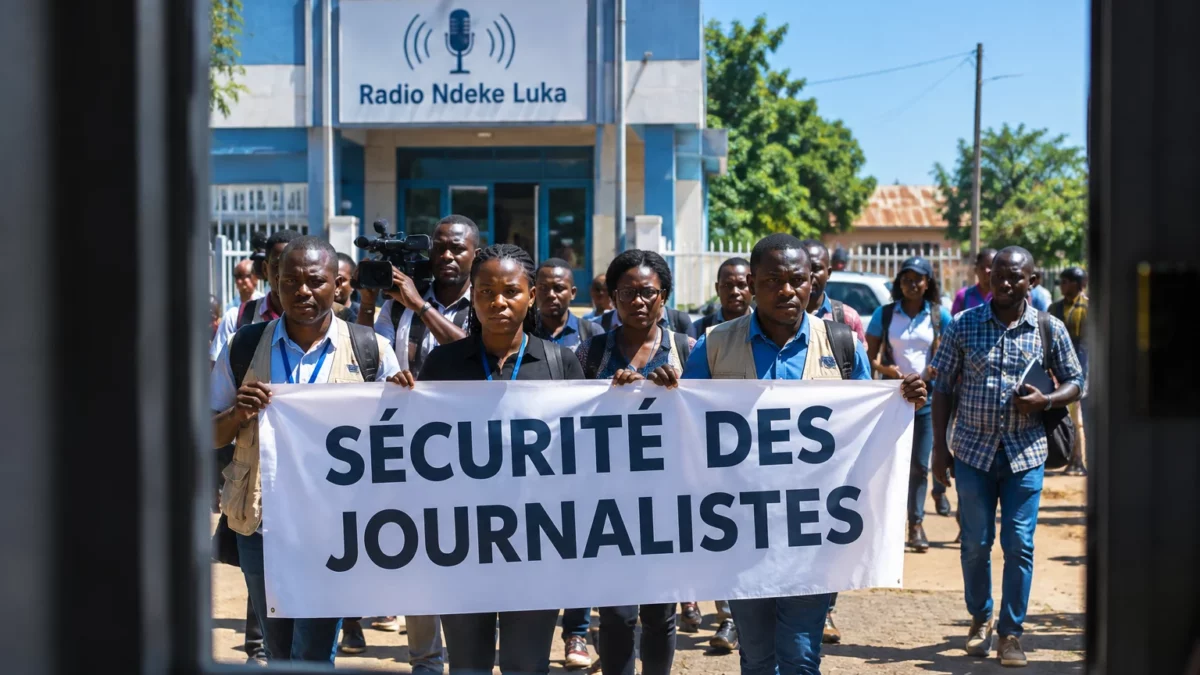
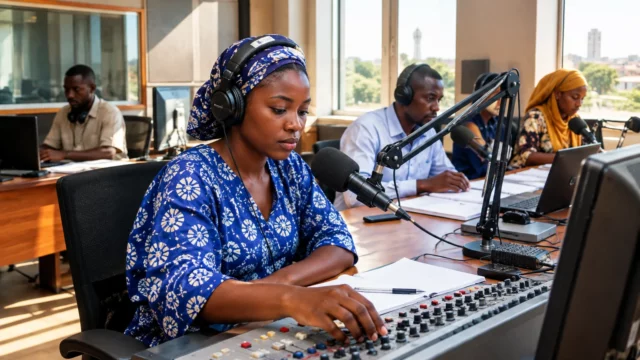
When news bulletins fall silent, residents also lose regular access to verified information, even if only temporarily. In the Central African Republic, the Central African Journalists’ Union (UJCA) has called on the media to suspend their news editions on Wednesday 25 November 2026. The union aims to denounce threats and intimidation targeting media professionals, particularly at Radio Ndeke Luka.
Protest outside a radio station rekindles tensions in Bangui
The dispute came to a head on Tuesday 17 November outside Radio Ndeke Luka’s premises in Bangui. A group of protesters accused the station of covering current affairs in a way that was unfavourable to the government and called for it to be shut down, according to a report by the radio station. The UJCA condemned the demonstration and called for journalists to be protected.
The accusations made during the gathering do not, on their own, demonstrate bias or the dissemination of false information. Similarly, the claim that the demonstration was intended to intimidate the newsroom reflects the station’s interpretation and that of its supporters. What several reports establish is that a gathering took place outside its premises and criticised its editorial line.
A week later, the UJCA announced a day without newspapers or news broadcasts. The call applies to print and broadcast media. It asked radio stations to suspend their usual news bulletins and broadcast a message explaining the protest. This is union action, not an official decision to close media outlets.
UJCA president Eustache Michaël Mounzatela described the action as a protest against pressure on newsrooms. He stressed that the union did not consider itself opposed to the government or state institutions. The organisation is calling for threats and insults to be condemned, for journalists to receive practical protection, and for measures to prevent such acts from recurring.
Regulator urged to play its part
The High Council for Communication (HCC), which regulates the media and oversees compliance with professional standards, has called for calm. A meeting between Central African media and the Minister of Communication was scheduled to take place in Bangui on Friday 27 November, with the HCC taking part. The talks are intended to allow the parties to set out their concerns, but their announcement does not yet amount to a commitment to provide protection or a response to the UJCA’s demands.
The HCC’s role is particularly sensitive: it must enforce the rules governing the media without turning regulation into pressure on critical content. Reporters Without Borders notes that the Central African Republic’s 2020 law on freedom of communication provides a framework for the press, but also describes persistent difficulties in practising independent journalism. The organisation highlights concerns over legislative changes and attacks on journalists.
The tension extends beyond a dispute between a radio station and its detractors. In a country where radio remains an important source of information, journalists’ safety also affects the public’s right to hear different accounts of events. A newsroom anticipating threats may decide not to cover certain subjects, even in the absence of a formal ban. Residents of Bangui, as well as those in secondary cities and rural areas, may then have fewer sources for following public decisions and local issues.
A symbolic strike, with a cost to the public
A day without news makes the pressure denounced by journalists visible, but it carries a paradox: to defend the freedom to inform, media outlets temporarily suspend their news service. The action draws attention to newsroom working conditions. It also deprives listeners and readers of some of the day’s news, including those who rely on radio for information.
The decision to limit the suspension to a specific period sets this protest apart from a lasting interruption. But its effectiveness will depend on how the UJCA’s demands are addressed: public condemnation of intimidation, safety guarantees and a dialogue mechanism that goes beyond a one-off meeting. At this stage, the available information does not establish that these commitments have been made.
Care is also needed in handling the accusations made against the station. Criticism of the media is legitimate in public debate. It does not justify threats or pressure intended to impose an editorial line. In turn, the demand for press freedom does not exempt journalists from verifying facts and correcting their mistakes. That is precisely the purpose of professional standards applied fairly.
A Central African issue with regional resonance
The Central African Republic is a member of CEMAC, the Central African Economic and Monetary Community, and ECCAS, the sub-regional organisation for political and economic cooperation. The current controversy remains a national one. It nonetheless highlights an issue shared across the region’s societies: the media play a role in public debate, while institutions must balance efforts to combat disinformation with pluralism and the protection of journalists.
The immediate next step is the meeting announced in Bangui for 27 November. It remains to be seen whether it will lead to specific measures and whether the authorities will guarantee the safety of media professionals without interfering in their choice of subjects. For Central Africans, the issue is not limited to the survival of one radio station: it concerns the ability to access information without intimidation and to challenge it through public responses, evidence and avenues of redress.