Algeria
 Egypt
 Libya
 Morocco
 Sudan
 Tunisia
 Benin
 Burkina Faso
 Cabo Verde
 Côte d'Ivoire
 Ghana
 Guinea
 Guinea-Bissau
 Liberia
 Mali
 Mauritania
 Niger
 Nigeria
 Senegal
 Sierra Leone
 The Gambia
 Togo
 Cameroon
 Central African Republic
 Chad
 DR Congo
 Equatorial Guinea
 Gabon
 São Tomé and Príncipe
 Burundi
 Comoros
 Djibouti
 Eritrea
 Ethiopia
 Kenya
 Madagascar
 Malawi
 Mauritius
 Mozambique
 Rwanda
 Seychelles
 Somalia
 South Sudan
 Tanzania
 Uganda
 Angola
 Botswana
 Eswatini
 Lesotho
 Namibia
 South Africa
 Zambia
 Zimbabwe
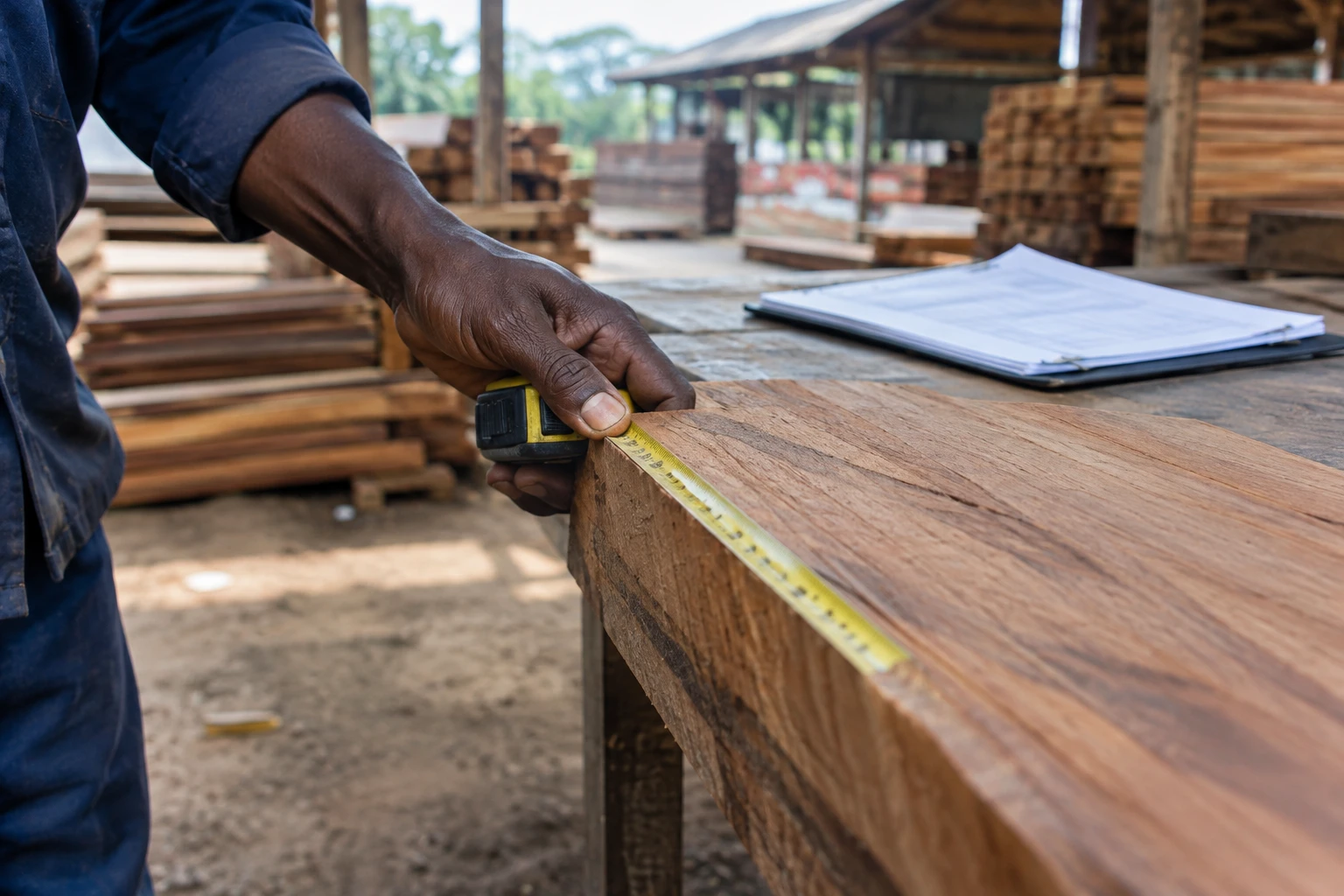
A global decline in deforestation can mask opposing trends. In the Congo Basin, forests remain under significant pressure, while monitoring and enforcement efforts must contend with national borders, economic needs and local practices.
The issue directly concerns the Republic of the Congo, whose capital is Brazzaville, but regional figures cover a much larger area. They do not, on their own, describe the situation in each country or among every community that depends on the forest.
A global improvement that does not tell the whole story
The Forest Declaration Assessment, an annual review conducted by a coalition of researchers and civil society organisations, says nearly 7 million hectares of forest were cleared worldwide in 2025. The total represents a 15% fall compared with 2024. However, it remains above the rate required to meet the international commitment to end deforestation by 2030.
The decline is largely driven by Brazil, where public measures and stronger enforcement have helped reduce forest loss. But a year-on-year improvement is not enough to establish a lasting trend. Fires, political decisions and agricultural expansion can quickly reverse the gains.
The data are not all directly comparable. The forest assessment report estimates deforestation worldwide. The World Resources Institute (WRI), meanwhile, uses satellite imagery and data from the University of Maryland to track, among other things, the loss of primary tropical forests. It estimates that loss at 4.3 million hectares in 2025, down 36% year on year. These indicators measure different areas, so they should neither be added together nor confused.
Interconnected pressures in the Congo Basin
According to the 2026 assessment, the Congo Basin lost about 2.4 million hectares of forest in 2025. This regional figure, reported by the Inter Press Service news agency, is close to that attributed to tropical Latin America. It does not mean the two regions face the same causes or that every country in the basin is following the same trajectory.
The basin includes the Republic of the Congo, the Democratic Republic of the Congo, Cameroon, Gabon, the Central African Republic and Equatorial Guinea. The Central African Forest Observatory (OFAC), a technical body of the Central African Forests Commission (COMIFAC), brings together monitoring tools and analysis on these ecosystems. Cooperation is therefore already in place. The challenge is to make data, rules and their enforcement more consistent across countries.
The drivers of forest loss are interconnected: the expansion of farming, logging, mining, roads and the harvesting of fuelwood. Their significance varies from place to place. For households, farming and firewood for cooking can meet immediate needs. On a larger scale, concessions, infrastructure and extraction projects involve economic interests and land-use decisions that extend beyond the villages concerned.
This distinction matters for public policy. Reducing pressure does not simply mean penalising illegal logging. It also requires implementing land-use rules, monitoring concessions and involving communities in decisions affecting their land. Without economic alternatives or access to energy, some restrictions risk shifting activities rather than reducing them.
A national and regional issue
For people in the Republic of the Congo, the forest is a place to live, a resource and an issue of national economic importance. The effects of forest degradation are not the same for everyone: forest communities depend directly on local resources, while decisions on permits, infrastructure and revenues also involve government authorities and businesses. Urban centres, including Brazzaville, are affected by energy choices and timber markets, even though changes in forest cover take place far from the capital.
Across the region, the basin’s forests regulate water cycles, host significant biodiversity and store carbon. COMIFAC and OFAC provide a framework for coordination and monitoring. The challenge is to turn this cooperation into sustained enforcement and compatible policies, despite differences in administrations and available resources from one country to another.
The report also notes an increase in tropical forest degradation in Africa, despite a global decline in fire-related losses. Degradation does not always mean the complete disappearance of forest cover: it can result from selective logging, fires or repeated clearings. It nevertheless weakens ecosystems and makes deforestation figures alone harder to interpret.
What to monitor between now and 2030
The next step will be to distinguish, country by country, losses linked to farming, timber, mining and fires, and then to check whether announced measures deliver lasting results. Satellite data can quickly flag changes. However, they cannot replace field inspections or consultation with the communities concerned.
The contrast between the decline observed in Brazil and the significant pressures reported in the Congo Basin shows that a global trend does not sum up national realities. For Central African states, the challenge is to balance income, jobs and forest protection without shifting the costs on to local communities alone. The 2030 commitment will be judged less by declarations than by the ability to coordinate rules, funding and enforcement.
Background sources: Forest Declaration Assessment, Inter Press Service, World Resources Institute and Central African Forest Observatory.