Algeria
 Egypt
 Libya
 Morocco
 Sudan
 Tunisia
 Benin
 Burkina Faso
 Cabo Verde
 Côte d'Ivoire
 Ghana
 Guinea
 Guinea-Bissau
 Liberia
 Mali
 Mauritania
 Niger
 Nigeria
 Senegal
 Sierra Leone
 The Gambia
 Togo
 Cameroon
 Central African Republic
 Chad
 DR Congo
 Equatorial Guinea
 Gabon
 Republic of the Congo
 São Tomé and Príncipe
 Burundi
 Djibouti
 Eritrea
 Ethiopia
 Kenya
 Madagascar
 Malawi
 Mauritius
 Mozambique
 Rwanda
 Seychelles
 Somalia
 South Sudan
 Tanzania
 Uganda
 Angola
 Botswana
 Eswatini
 Lesotho
 Namibia
 South Africa
 Zambia
 Zimbabwe
A first milestone for Moroni, but above all a test of capacity
For Comorians, the inscription of the historic medinas on the World Heritage List does more than add a line to a cultural map. It now requires the Union of the Comoros to turn a symbol of recognition into a tool for urban management, training and sustainable economic activity. Without that, the designation risks remaining honorary, while the old centres of Moroni, Mutsamudu, Domoni, Iconi, Itsandra and Mitsamiouli already bear the weight of time, marine humidity and often fragile buildings.
The stakes are all the greater because the archipelago rarely features on the World Heritage List. The Comorian nomination was examined in Busan, Republic of Korea, during the 48th session of the World Heritage Committee, held from 19 to 29 July 2026. The session confirmed a broader shift: UNESCO is seeking to better represent African countries still absent from the List, as part of its Africa strategy for 2022-2029.
Six old cities, one Indian Ocean story
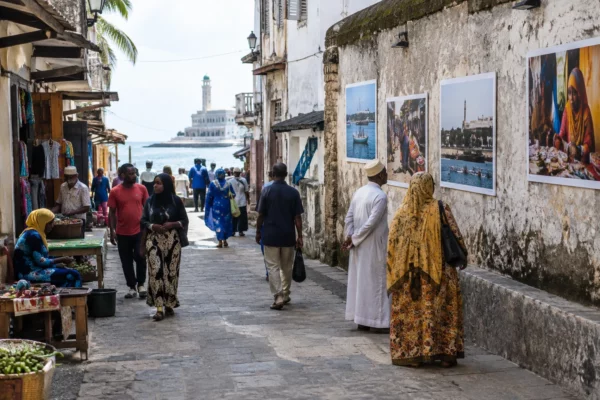
The listed property is a serial property. It brings together six historic cities that grew around urban cores dating back at least to the 11th century, and which became city-states linked to the archipelago’s sultanates in the 14th and 15th centuries. UNESCO also highlights their distinctive social organisation, with matrilineal and matrilocal customs, age groups and patrilineal Islamic traditions that remain alive today. In other words, these medinas are not frozen backdrops: they tell the story of an island society, engaged in trade and connected to Indian Ocean routes.
This perspective matters for the Comoros, but also for East Africa and the Indian Ocean region. Comorian heritage shows that African urban history is not confined to the great continental empires or colonial capitals. It also runs through port cities, commercial exchanges, forms of architecture adapted to the climate, and living heritage passed down in neighbourhoods, mosques, houses and markets.
Recognition is not the challenge; what comes next is
The first risk is financial. The World Bank notes that investment related to tourism in the archipelago is based mainly on projects supported by technical and financial partners, rather than on a fully dedicated national budget line for site restoration. The report also points out that Comorian tourism remains at an early stage of development, even though it can support jobs and local services.
The second risk is material. UNESCO paved the way in 2025 with the Comoros’ first submission of a nomination dossier, then supported the country through to inscription in 2026. But the organisation also stresses in its Africa strategy that inscription is only a starting point. Sites must then be preserved, documented, managed and passed on. This requires urban planning rules, heritage professions, regular budgets and coordination between the state, municipalities, local communities and tourism stakeholders.
For Moroni, this means protecting the medina without turning it into a museum. For Mutsamudu or Domoni, it means restoring without erasing everyday use. For residents, it could create jobs in crafts, cultural interpretation, hospitality and renovation. For public authorities, however, it requires administrative and budgetary discipline that the archipelago has not always been able to sustain over time.
An inscription that speaks to the whole continent
The decision goes beyond the Comoros. It comes at a time when several African countries without World Heritage sites have finally secured their first inscription. UNESCO explicitly names the Comoros, Sao Tome and Principe and South Sudan as three countries that joined the List for the first time at the Busan session. The signal is a powerful one for small island developing states, whose technical resources are often limited but whose heritage is historically rich.
The message is also economic. World Heritage status can support cultural tourism, but it cannot replace a national strategy. The World Bank estimates that the Comoros has untapped potential in tourism and fisheries, and that growth depends on private investment, connectivity, resilience and stronger institutions. In this context, the medinas can become an asset for local development, provided they are integrated into a coherent urban, land and tourism policy.
The stakes across Africa are clear. The continent is not short of sites or stories. Too often, it still lacks the means to document, defend and sustain them over the long term. The inscription of the Comorian medinas therefore opens a new chapter: one in which results will be the test, and heritage value will have to be measured by the quality of conservation, the inclusion of residents and the country’s ability to make the past a lever for the future.