Algeria
 Egypt
 Libya
 Morocco
 Sudan
 Tunisia
 Benin
 Burkina Faso
 Cabo Verde
 Côte d'Ivoire
 Ghana
 Guinea
 Guinea-Bissau
 Liberia
 Mali
 Mauritania
 Niger
 Nigeria
 Senegal
 Sierra Leone
 The Gambia
 Togo
 Cameroon
 Central African Republic
 Chad
 DR Congo
 Equatorial Guinea
 Gabon
 Republic of the Congo
 São Tomé and Príncipe
 Burundi
 Djibouti
 Eritrea
 Ethiopia
 Kenya
 Madagascar
 Malawi
 Mauritius
 Mozambique
 Rwanda
 Seychelles
 Somalia
 South Sudan
 Tanzania
 Uganda
 Angola
 Botswana
 Eswatini
 Lesotho
 Namibia
 South Africa
 Zambia
 Zimbabwe
For Comoros, the next IMF disbursement still depends on a formal decision. But the agreement reached by the authorities and the institution’s staff highlights a more immediate challenge: meeting budget commitments without allowing external shocks and public spending to further weaken the country’s finances.
A staff-level agreement, not yet a disbursement
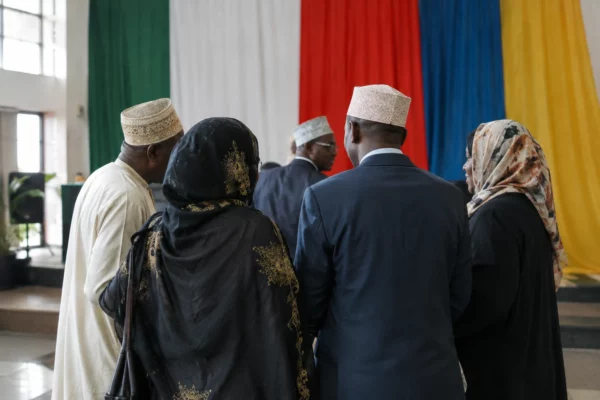
On 25 November 2026, the Comorian authorities and a team from the International Monetary Fund (IMF) reached a staff-level agreement on the sixth and seventh reviews of the programme supported by the Extended Credit Facility (ECF), a financing mechanism tied to economic targets and reforms. The announced disbursement is therefore not yet guaranteed: it must be approved by the IMF management and then by its Executive Board.
If approved, Comoros would receive 7.12 million special drawing rights (SDRs), equivalent to about $9.56 million. Total disbursements under the programme would then reach nearly $38.13 million. The four-year agreement, approved in June 2023, provides for total financing of about $43 million.
The IMF mission took place in Moroni from 21 October to 3 November, before discussions continued remotely. The two reviews were combined after delays in implementing the programme. The institution cites uneven results, uncertainty over public policies, the effects of the fuel-price shock and the financing of the Indian Ocean Island Games, scheduled for 2027.
Targets met, but tax revenue falls short
The IMF’s assessment shows an improvement at the end of June 2026. Quantitative criteria were met, with the exception of the tax revenue target. Targets for reserves and external arrears were achieved. The authorities also exceeded the domestic primary balance target — the budget balance before interest payments — by restraining spending.
This discipline has not, however, prevented fresh financing pressures. Domestic and external payment arrears have accumulated since July, according to the IMF mission’s report. Structural reforms have also slowed: two of the five steps expected between mid-February and the end of October were completed.
The economic situation remains exposed to simultaneous pressures. Inflation reached 3.9% in September 2026. The current account deficit widened, notably because of imports linked to preparations for the Games and a decline in official transfers. The current account deficit is the gap between a country’s receipts and payments in its dealings with the rest of the world.
Fuel and the Games: budget choices under pressure
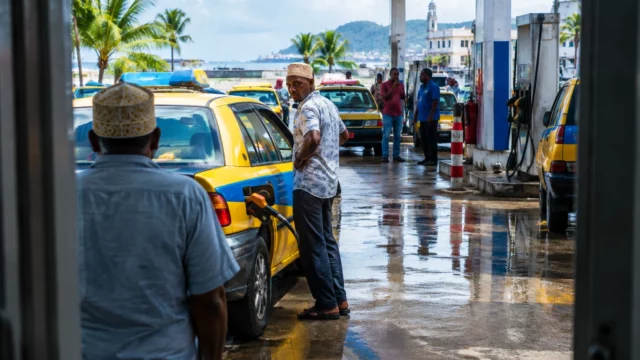
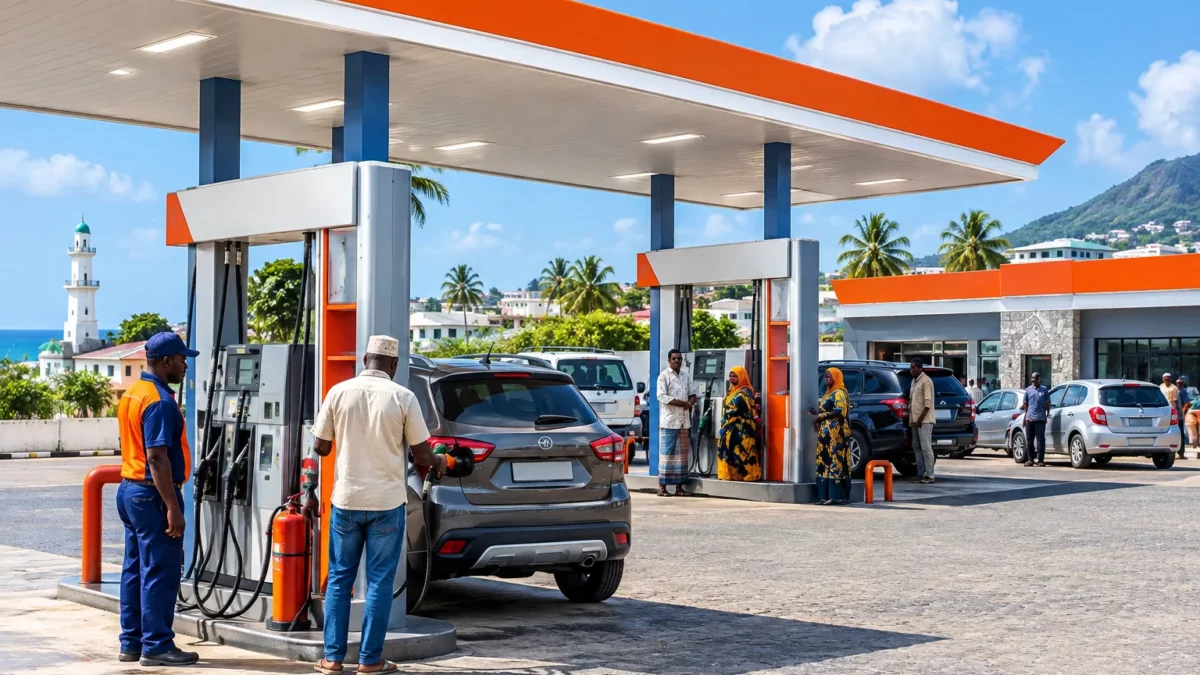
Fuel prices are at the heart of some of these pressures. On 25 November, the authorities raised retail prices to limit losses at the state-owned fuel importer, SCH, and reduce the risk of shortages. An earlier, larger increase had been suspended after social unrest, according to the IMF. The decision illustrates the difficulty of passing on import costs to households and businesses without adding to the pressure on their purchasing power.
The 2026 supplementary budget provides for a transfer to SCH as well as new tax measures. The 2027 budget is to add revenue to put public debt on a downward path. The IMF also stresses the need to fully incorporate spending related to the Games and make financial commitments that could weigh on the state more visible.
This spending affects more than public accounts. Investment linked to a regional event can support economic activity and infrastructure, but its cost, financing and legacy matter just as much as its timing. For the authorities, the challenge is to reconcile preparations for the Games with the continuity of public services and regular payments to suppliers. For businesses and households, tax revenue and fuel prices can feed through to the cost of transport and imported goods.
Reform commitments also concern cash and debt management, the monitoring of fiscal risks and the transparency of public procurement. The IMF is calling, in particular, for better oversight of accounts and arrangements outside the regular budget. These are governance issues, but also tools for better anticipating financing needs and limiting the emergence of new arrears.
A national challenge in the Indian Ocean
The programme is part of a trajectory already being closely monitored by the IMF. In February 2026, its Executive Board completed the fifth review and authorised a disbursement of about $4.87 million. At the time, the institution estimated Comorian growth at 3.8% in 2025 and forecast 4.1% in 2026, driven in particular by public investment and a recovery in domestic credit. These earlier projections do not prejudge the final outcome for 2026.
The regional dimension is tangible: the 2027 Games will bring together delegations from across the Indian Ocean, while spending on fuel imports leaves Comoros exposed to international prices and transport costs. The country also participates in Indian Ocean cooperation, where economic, maritime and logistical issues extend beyond its borders. At a pan-African level, this case is a reminder that development financing also depends on states’ ability to mobilise revenue, monitor their commitments and negotiate their priorities within support programmes.
The next step is now institutional: consideration of the agreement by IMF management and the Executive Board. Until then, attention will focus on implementing budget measures, clearing arrears and restarting reforms. Securing the financing would matter to the Comorian authorities; demonstrating that targets can be met without building up new pressures will be just as important.
The statement on the reviews and the agreement data can be consulted in the 25 November report on the agreement between Comoros and the IMF. Background on the previous disbursement is available in the IMF statement on the fifth review. Information on the November agreement is also reported by Traders Union.