Algeria
 Egypt
 Libya
 Morocco
 Tunisia
 Benin
 Burkina Faso
 Cabo Verde
 Côte d'Ivoire
 Ghana
 Guinea
 Guinea-Bissau
 Liberia
 Mali
 Mauritania
 Niger
 Nigeria
 Senegal
 Sierra Leone
 The Gambia
 Togo
 Cameroon
 Central African Republic
 Chad
 DR Congo
 Equatorial Guinea
 Gabon
 Republic of the Congo
 São Tomé and Príncipe
 Burundi
 Comoros
 Djibouti
 Eritrea
 Ethiopia
 Kenya
 Madagascar
 Malawi
 Mauritius
 Mozambique
 Rwanda
 Seychelles
 Somalia
 South Sudan
 Tanzania
 Uganda
 Angola
 Botswana
 Eswatini
 Lesotho
 Namibia
 South Africa
 Zambia
 Zimbabwe
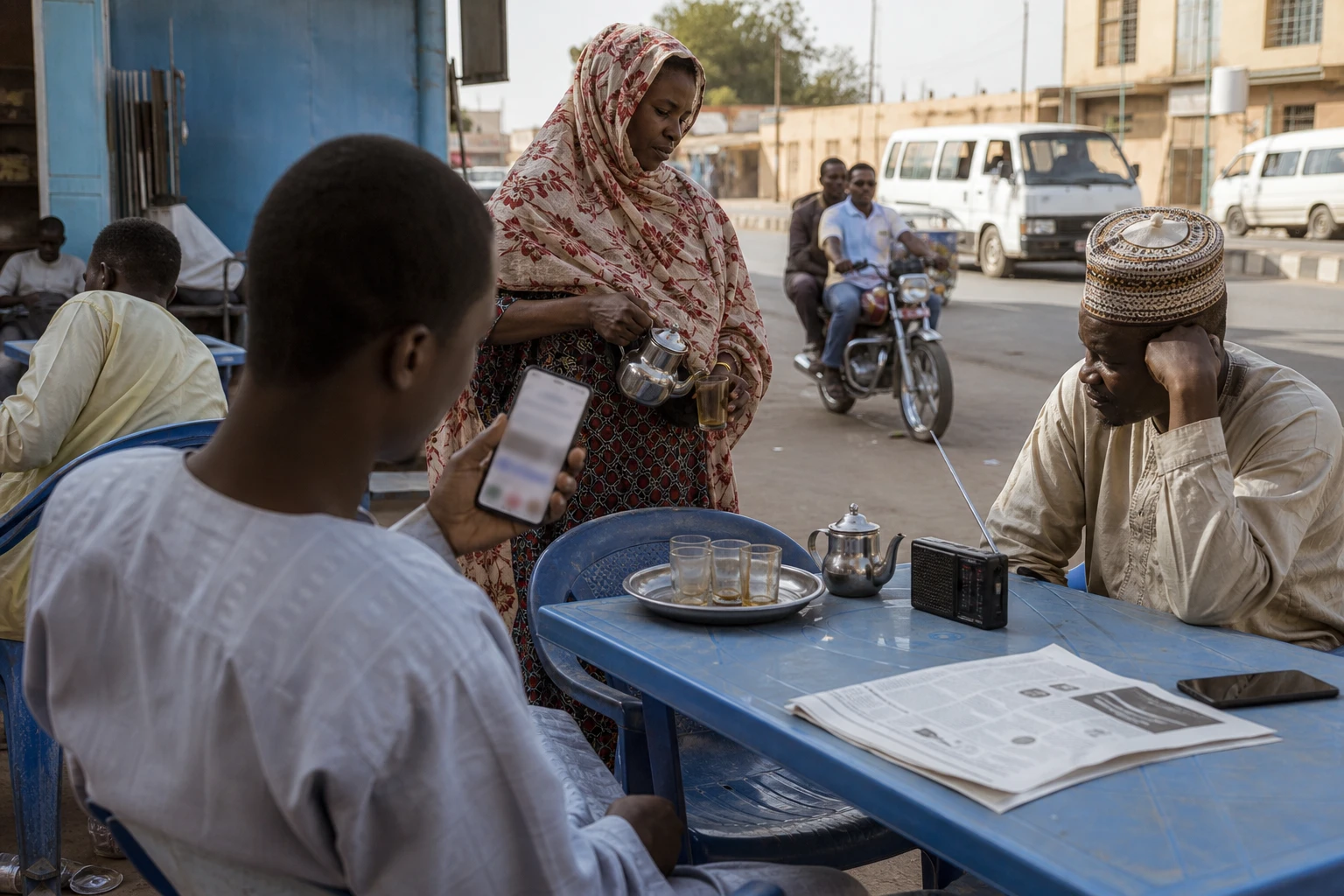
When the Sudanese war spills into eastern Chad
In eastern Chad, the border with Sudan is no longer just a line on a map. It has become a zone of passage, flight and, now, attack. For the people of Ennedi-Est, the question is not an abstract one: how much further can the war next door advance without crossing another political threshold?
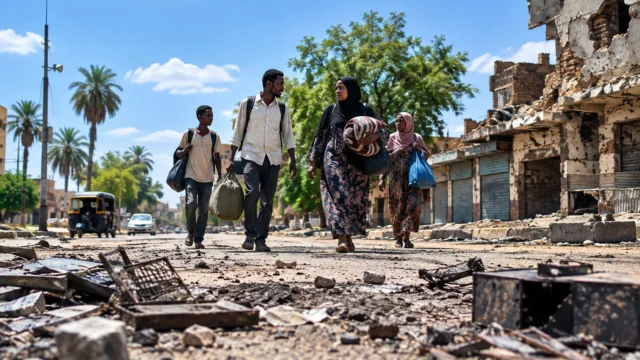
Since the Sudanese war began in April 2023, Chad has already borne the weight of a conflict that does not stop at the border. The country hosts around 1.5 million refugees, nearly 900,000 of them from Sudan, according to the World Food Programme, while humanitarian agencies describe eastern Chad as one of the region’s main pressure points. In this context, every armed incident near Mourdi or Tiné has significance beyond the military sphere alone.
What happened near Mourdi
On 20 August, at around 8pm, air strikes were reported in the department of Mourdi, in Ennedi-Est, more than 100 kilometres from the Sudanese border. The Chadian army says it verified the reports the following day using aerial and ground resources. Its conclusion is clear: aircraft and drones linked to Sudanese forces, or their backers, allegedly pursued and then targeted a column of vehicles that had entered Chadian territory.
Chadian military authorities describe the incident as “a new violation of territorial integrity” and have placed their troops on the highest alert. Images circulated locally show signs of fire and several charred vehicles in a desert area in the east of the country. Analysis published in the regional press refers to around 70 burn marks visible by satellite at the site of the strike. These observations support the view that this was a deep incursion, far from a simple border incident.
One important caveat remains: the Sudanese army has not publicly responded to the accusations. In such a sensitive case, the absence of a denial does not amount to confirmation. It does, however, leave the field open to the Chadian account, which fits into an already familiar pattern of spillover from the Sudanese conflict.
A war of convoys, drones and porous borders
The convoy itself lies at the heart of the affair. According to information attributed to the joint forces allied with the Sudanese army, nearly 200 vehicles are said to have set out from Libya to reinforce the Rapid Support Forces (RSF), the paramilitary group that has been fighting Sudan’s regular army since April 2023. The column was then reportedly targeted. Several dozen vehicles are said to have been hit, around 30 recovered by allied forces and fighters captured. These figures are based on military sources and should therefore be treated with caution.
The pattern is not unprecedented. In March 2026, a drone attack from Sudan struck Tiné, in eastern Chad, killing at least 17 people according to Chadian authorities, while UN agencies later cited at least 24 civilians killed and around 70 injured. In July, another incident hit Tiné and injured civilians. In other words, Mourdi does not appear to be an isolated accident, but the deepest episode yet in a series of cross-border incursions and retaliatory strikes.
The sequence also reveals a strategic reality: the Sudanese war is increasingly being fought through logistics. Supply lines, Saharan corridors, links in Libya and transit zones in eastern Chad are becoming military targets in their own right. In north-eastern Chad, this puts already fragile areas at risk, often far from administrative centres and difficult to monitor continuously.
What this means for N’Djamena, the region and Africa
For N’Djamena, the stakes are twofold. First, security: defending the country’s sovereignty without giving the impression of entering an open war with Khartoum. Second, politics: maintaining a position of neutrality even as Chad is regularly suspected, rightly or wrongly, by various sides of serving as a transit route, providing support or facilitating evasion. The Chadian government is walking a narrow line between military firmness and the diplomatic management of an increasingly explosive neighbourhood.
For the people of eastern Chad, the impact is immediate. Border areas are already absorbing a mass influx of Sudanese refugees, rising humanitarian needs and pressure on water, healthcare and local markets. The country is also part of a wider regional framework, CEMAC, where Chad’s stability affects trade, movement and security balances in Central Africa. When eastern Chad catches fire, it is not just a bilateral matter: an entire region absorbs the shock.
At the continental level, the affair is a reminder of a simple reality: the war in Sudan has gone beyond Sudan’s borders. The African Union has recently renewed its call for external actors to show restraint and for Sudan’s territorial integrity to be respected, while the mediation mechanism known as the Quintet, which brings together the AU, IGAD, the Arab League, the European Union and the UN, is still trying to prevent the conflict from spreading. But on the ground, drones, convoys and desert routes move faster than communiqués. The next alert is therefore more likely to come from Chad’s eastern fringes and Darfur’s supply zones than from Addis Ababa.