Algeria
 Egypt
 Libya
 Morocco
 Sudan
 Tunisia
 Benin
 Burkina Faso
 Cabo Verde
 Côte d'Ivoire
 Ghana
 Guinea
 Guinea-Bissau
 Liberia
 Mali
 Mauritania
 Niger
 Nigeria
 Senegal
 Sierra Leone
 The Gambia
 Togo
 Cameroon
 Central African Republic
 DR Congo
 Equatorial Guinea
 Gabon
 Republic of the Congo
 São Tomé and Príncipe
 Burundi
 Comoros
 Djibouti
 Eritrea
 Ethiopia
 Kenya
 Madagascar
 Malawi
 Mauritius
 Mozambique
 Rwanda
 Seychelles
 Somalia
 South Sudan
 Tanzania
 Uganda
 Angola
 Botswana
 Eswatini
 Lesotho
 Namibia
 South Africa
 Zambia
 Zimbabwe
A case that also says something about Chadian justice
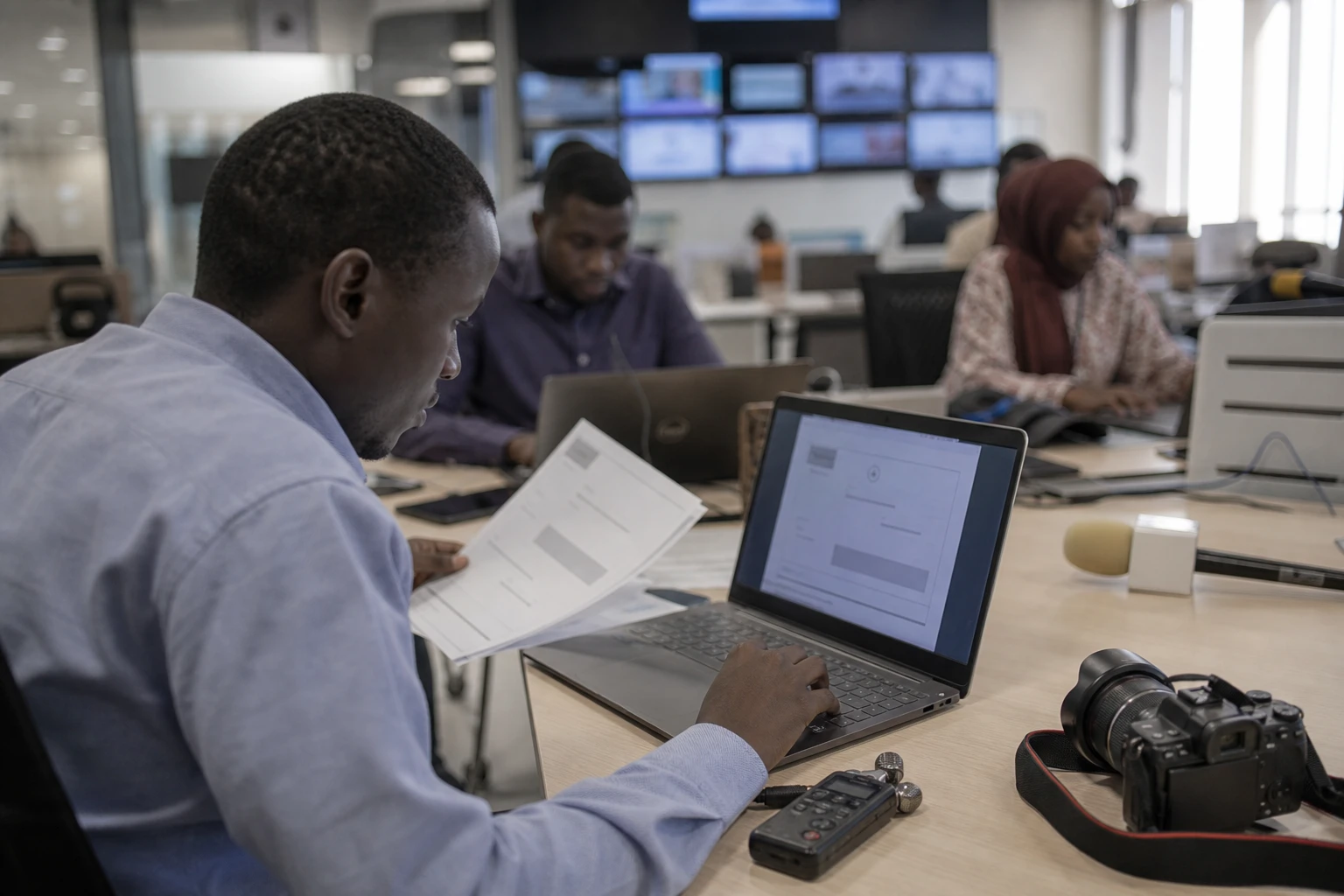
In N’Djamena, a criminal trial is never only about the alleged offences. It also measures the justice system’s ability to see a sensitive case through without allowing doubts to arise over the timetable, procedure or strength of the charges. In the Abdoulaye Miskine case, this is precisely the tension at its heart: on one side, civil parties seeking redress; on the other, a defence challenging the coherence of the prosecution’s case and citing an incomplete investigation.
Chad remains a judicial and security crossroads in Central Africa. Its position within CEMAC puts it in direct contact with crises originating in the Central African Republic, Sudan and the Lake Chad basin. When a Central African rebel leader is tried in N’Djamena, the case therefore goes beyond the criminal sphere alone. It touches on arms flows, cross-border rivalries and cooperation between neighbouring states.
What the prosecution alleges, and what the defence disputes
The trial of Abdoulaye Miskine, whose real name is Martin Koumtamadji, resumed at the N’Djamena courthouse with the hearing of the civil parties and defendants. The hearing was then interrupted after the public prosecutor requested an adjournment, saying that its representative was ill. The trial was adjourned until Friday 4 September, when the prosecution was due to present its closing arguments.
The defence sees this as a sign of weakness. In the view of his lawyers, the case contains no new evidence and the statements heard in court are not enough to support such serious accusations. They also say that some of the civil parties heard in court did not bring identity documents, which they argue undermines the value of their testimony. In their view, the adjournment requested by the prosecution mainly reflects difficulty in sustaining its case at the decisive moment.
The civil parties’ lawyers reject this criticism. They argue that the accounts heard in court are not inconsistent and point out that the victims have been awaiting this trial for years. Their position is simple: the courts must rule, and redress can no longer be postponed. This clash between the logic of evidence and that of redress gives the case its significance.
A former Central African warlord on trial in Chad
Abdoulaye Miskine is the founder of the Central African Democratic Front of the Central African People, or FDPC, an armed Central African group active since the 2000s. UN documents recall that he signed the Political Agreement for Peace and Reconciliation in the Central African Republic on 6 February 2019, before being arrested in Chad in November that year. The Chadian authorities subsequently kept him in N’Djamena despite extradition requests from Bangui.
His case has taken time to reach court. Brought before an investigating judge on 1 June 2020, he then spent many months in pre-trial detention. Chadian press reports over the years have noted that he and three co-defendants were being prosecuted for creating an insurrectionary movement, rape, murder, torture, kidnapping and other serious offences. In such a context, every hearing adjournment weighs on the credibility of the judicial response.
UN sources have also noted that the FDPC continued to be considered a destabilising actor in the Central African Republic. The group has appeared in annexes to Security Council reports, showing that the Miskine case is not merely an internal dispute in Chad. It forms part of a broader chain in which regional security, criminal justice and diplomatic pressure intersect without being conflated.
Why this trial goes beyond the Miskine case alone
For the Chadian authorities, the stakes are twofold. They must show that the justice system can handle a sensitive case without resorting to exceptional measures. They must also prevent the prolonged detention of a defendant of this stature from being seen as a procedural weakness. In the countries of the region, where political and military transitions have often blurred the line between security and justice, the way a trial is conducted matters as much as the verdict itself.
For the civil parties, by contrast, judicial time is not abstract. It means years without formal recognition of the harm, clear compensation or a public response to the alleged acts. This is where the case becomes tangible: in the Chadian justice system’s ability, or inability, to deliver a clear, adversarial and enforceable decision. This matters in N’Djamena, but also in Bangui, where the political and security implications of the FDPC remain sensitive.
At the regional level, the case is also a reminder of a point that is often underestimated: conflicts in Central Africa do not stop at borders. An armed leader may be prosecuted in one country, sought by another and cited by the United Nations in a third legal framework. For CEMAC and the African Union, this kind of trial tests judicial cooperation between states and the continent’s ability to address its crises through the law, without erasing national responsibilities.