Algeria
 Egypt
 Libya
 Morocco
 Sudan
 Tunisia
 Benin
 Cabo Verde
 Côte d'Ivoire
 Ghana
 Guinea
 Guinea-Bissau
 Liberia
 Mali
 Mauritania
 Niger
 Nigeria
 Senegal
 Sierra Leone
 The Gambia
 Togo
 Cameroon
 Central African Republic
 Chad
 DR Congo
 Equatorial Guinea
 Gabon
 Republic of the Congo
 São Tomé and Príncipe
 Burundi
 Comoros
 Djibouti
 Eritrea
 Ethiopia
 Kenya
 Madagascar
 Malawi
 Mauritius
 Mozambique
 Rwanda
 Seychelles
 Somalia
 South Sudan
 Tanzania
 Uganda
 Angola
 Botswana
 Eswatini
 Lesotho
 Namibia
 South Africa
 Zambia
 Zimbabwe
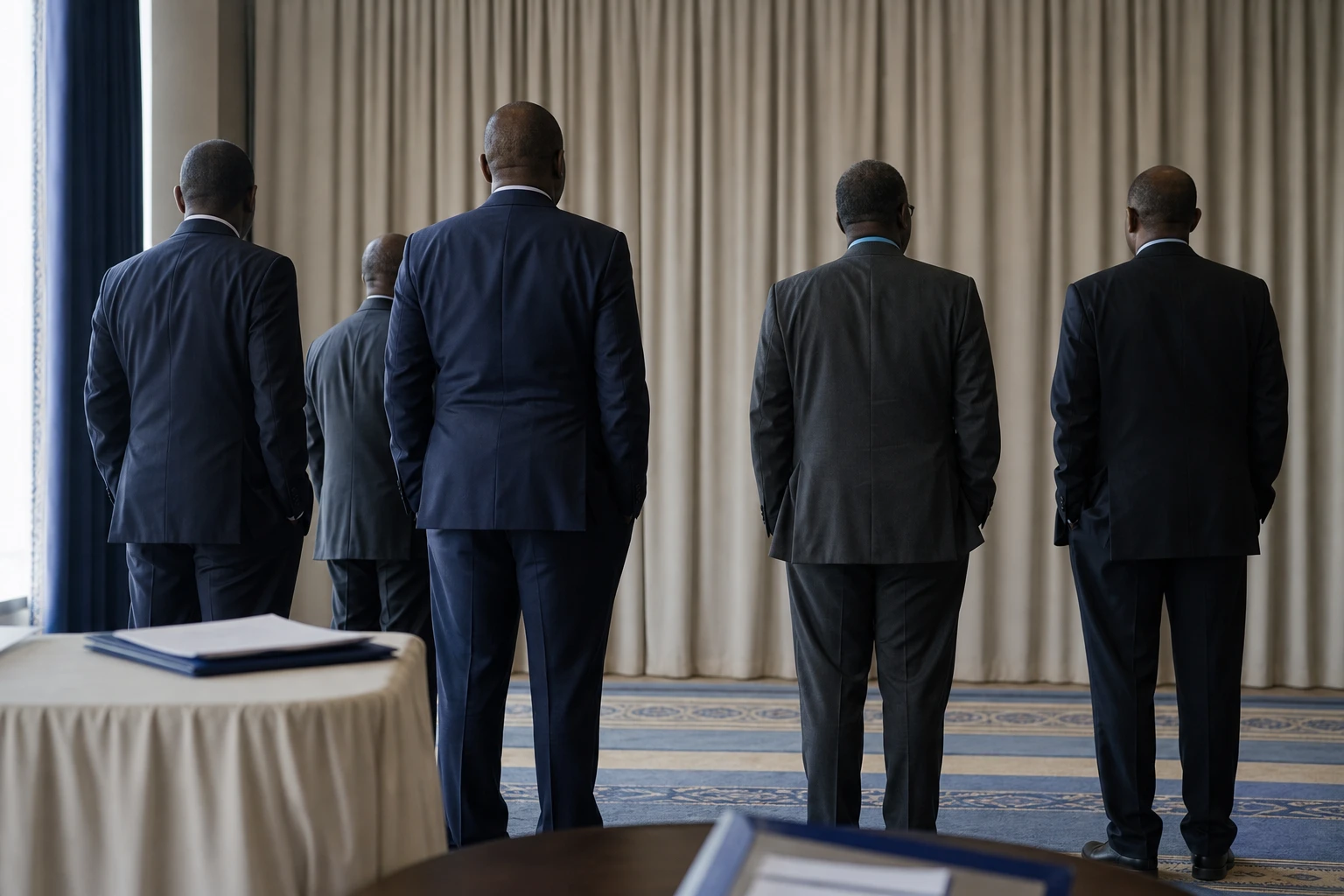
In N’Djamena, a withdrawal that means more than a diplomatic gesture
Chad has not simply turned its back on an international court. In N’Djamena, the decision announced on 27 July 2026 is part of a broader sequence: Sahelian states are increasingly challenging the judicial and political architecture inherited from the post-1998 international order. For the Chadian authorities, the debate is therefore not only about the International Criminal Court, but also about Africa’s place in institutions regarded as too distant and unbalanced in their workings.
Chad is nevertheless part of a dense regional framework. The country is a member of ECCAS, the Economic Community of Central African States, and CEMAC, the Central African monetary community that brings together six states around the CFA franc issued by the BEAC. In this institutional landscape, every diplomatic decision by N’Djamena extends beyond its borders. It affects the balance in Central Africa, as well as broader discussions about sovereignty, international justice and the credibility of multilateral organisations in Africa.
What the decision says exactly
The Chadian government notified the UN secretary-general, depositary of the Rome Statute, of its decision to withdraw from the International Criminal Court. Chad’s foreign ministry cited “limited effectiveness” and action perceived as selective, particularly to the detriment of African countries. According to information corroborated by several media outlets, the notification was made public on 27 July 2026.
This distinction matters. In law, withdrawal does not take effect immediately. Article 127 of the Rome Statute provides that a state party may withdraw, but that the withdrawal takes effect only one year after notification to the UN secretary-general. The text also states that withdrawal does not remove obligations to co-operate in investigations or proceedings already under way before the departure takes effect. In other words, the political decision is immediate, but the legal exit is delayed.
Chad is thus joining a broader Sahelian front. Burkina Faso, Mali and Niger have also begun or announced their departure from the ICC. In this context, Chad’s withdrawal adds to other diplomatic breaks, including the Alliance of Sahel States (AES) members’ departure from ECOWAS and the International Organisation of La Francophonie (OIF). The message is clear: these governments want to demonstrate greater autonomy from regional and international frameworks they consider restrictive.
Why this break matters in Central Africa and the Sahel
Chad is not an isolated case, but it occupies a particular position. The country is a crossroads between the Sahel, Central Africa and the Lake Chad Basin. It also plays a major security role in the fight against armed groups and in managing flows linked to the conflict in neighbouring Sudan. In this context, leaving the ICC sends a strong political signal at a time when international justice is being closely watched across the region.
The announcement also comes at a sensitive time for Chadian justice. In 2026, several cases have fuelled debate about the independence of institutions, the handling of political violence and the space afforded to opposition groups. When a state withdraws from the ICC, the question is not limited to war crimes or crimes against humanity. It also touches on citizens’ confidence in their country’s ability to deliver justice on its own, without outside help or suspicion of selective treatment.
The institutional debate is longstanding. The ICC has for years faced criticism in Africa over the concentration of its first cases on the continent. But the Court’s texts also recall that the Rome Statute remains an instrument for combating impunity, particularly where national courts are failing or obstructed. A state’s withdrawal therefore does not resolve the underlying issue: who can try the gravest crimes, and with what credibility?
The continental significance of a sovereign choice
For the African Union, the issue goes beyond the Chadian case alone. It reflects a recurring tension between sovereignty and universal justice, and between demands for equality among states and the need for tools capable of prosecuting the gravest crimes. When several African countries withdraw or threaten to do so, the discussion shifts from the legal to the political sphere: that of trust, power relations and the ability of international institutions to treat Africa as more than simply a field of investigation.
In Central Africa, the impact is even more direct. ECCAS and CEMAC face major issues: cross-border security, mobility, economic integration and monetary stability. In this environment, a decision such as Chad’s can prompt two opposing interpretations. The authorities see it as an act of sovereignty. Others read it as a further weakening of international safeguards at a time when African societies are chiefly calling for institutions that are closer, more predictable and fairer.
What happens next will depend on the formal progress of the procedure, which is expected to take twelve months from notification, and on how N’Djamena aligns its withdrawal with its regional commitments and its own judicial mechanisms. For now, Chad’s move erases neither ongoing cases nor the fundamental debates. Above all, it opens a new chapter in Africa’s challenge to the ICC, one in which the question of justice can no longer be separated from that of sovereignty.