Algeria
 Egypt
 Libya
 Morocco
 Sudan
 Tunisia
 Benin
 Burkina Faso
 Cabo Verde
 Côte d'Ivoire
 Ghana
 Guinea
 Guinea-Bissau
 Liberia
 Mali
 Mauritania
 Niger
 Nigeria
 Senegal
 Sierra Leone
 The Gambia
 Togo
 Cameroon
 Central African Republic
 DR Congo
 Equatorial Guinea
 Gabon
 Republic of the Congo
 São Tomé and Príncipe
 Burundi
 Comoros
 Djibouti
 Eritrea
 Ethiopia
 Kenya
 Madagascar
 Malawi
 Mauritius
 Mozambique
 Rwanda
 Seychelles
 Somalia
 South Sudan
 Tanzania
 Uganda
 Angola
 Botswana
 Eswatini
 Lesotho
 Namibia
 South Africa
 Zambia
 Zimbabwe
Funding that reflects Chad’s current priorities
In N’Djamena, the debate is no longer just about how to extract more value from oil. It is also about how to move goods, cut transport costs and bring Chad closer to its neighbours. In this landlocked country, trade depends as much on roads, customs and regional corridors as it does on crude oil.
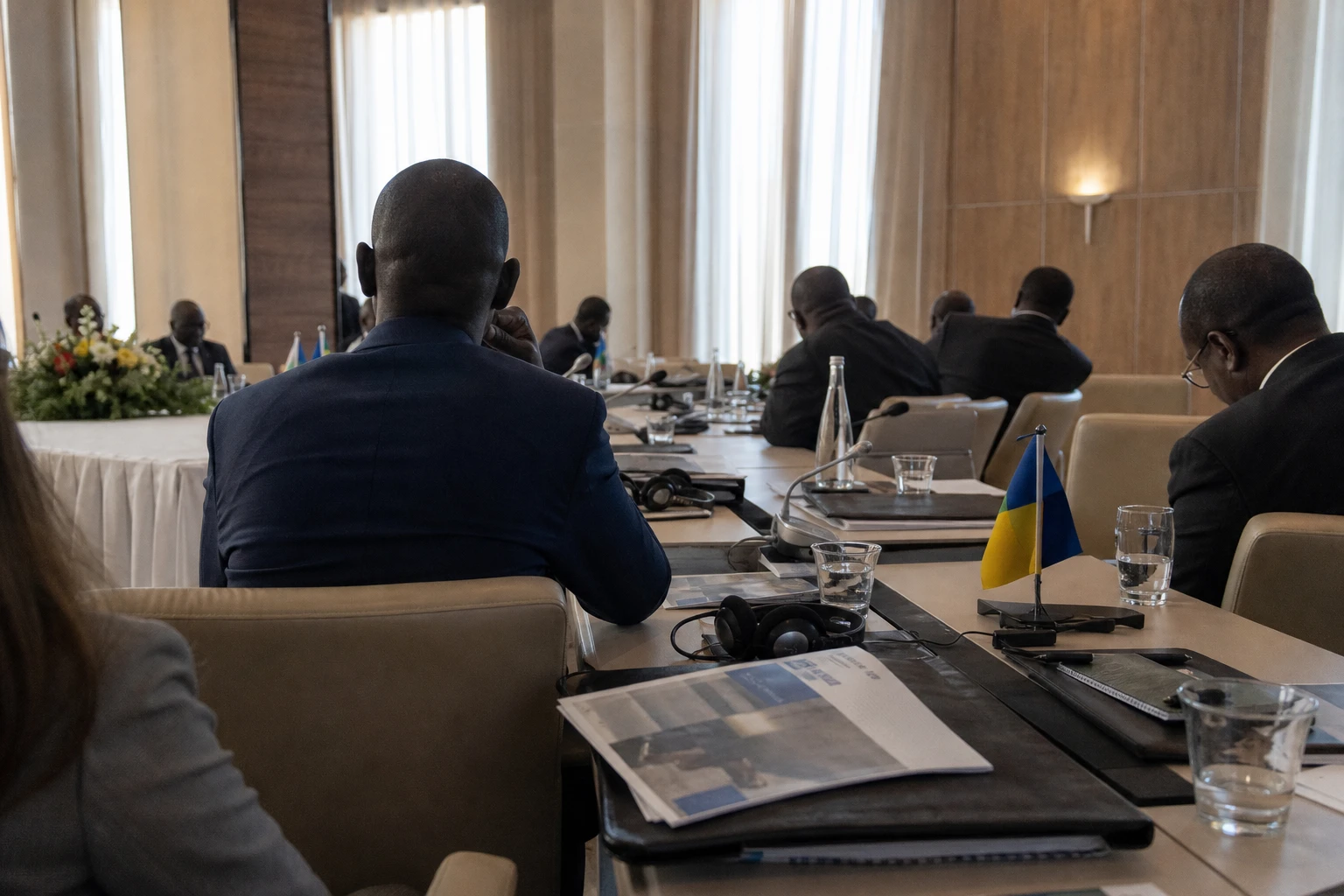
That is the context in which Afreximbank’s new funding takes on significance. The pan-African trade finance bank has granted Chad a facility equivalent to 110 million euros in local currency, or about $127 million. Chad’s finance ministry confirmed in June 2025 that it had signed a cooperation protocol with the institution, focused on agro-pastoral activities, export agriculture, gold, navigation on Lake Chad and crude oil refining.
A landlocked country banking on corridors
Chad is a member of CEMAC, the Economic and Monetary Community of Central Africa, a bloc where borders, currencies and roads have a direct bearing on the cost of trade. For a country with no access to the sea, every investment in an inland port, road, warehouse or customs post can make a difference. This is also one of the drivers behind the national plan “Chad Connection 2030”, presented as a roadmap for the country’s economic transformation. The United Nations welcomed the programme in November 2025, highlighting its focus on infrastructure, human capital and inclusive growth.
Since June 2025, the Chadian government has sent repeated signals in favour of an economy less dependent on oil revenues. In July 2025, President Mahamat Idriss Déby Itno announced visa exemptions for African nationals, a measure intended to facilitate travel and business in a country that shares borders with Libya, Sudan, the Central African Republic, Cameroon, Nigeria and Niger. This direction is in keeping with the African Continental Free Trade Area, which is based on the movement of goods, services and people.
What the facility will actually fund
The loan announced by Afreximbank is not abstract financing. It is intended to support projects already included in the national budget and linked to trade infrastructure. Chad’s finance minister, Tahir Hamid Nguilin, said the funds would go towards projects considered essential to facilitating trade. The challenge is straightforward: smoother trade requires reliable roads, better-equipped crossing points and more predictable logistics.
The funding also follows a memorandum of understanding signed in Abuja on the sidelines of Afreximbank’s annual general meeting in June 2025. The cooperation framework covers several sectors with potential for N’Djamena: agro-pastoral activities, export agriculture, gold, navigation on Lake Chad and crude oil refining. In other words, the bank is not simply providing liquidity. It is supporting a strategy for productive diversification.
This diversification has become urgent. According to the World Bank, Chad’s economy is expected to grow by 3.4% in 2025, mainly on the strength of the non-oil sector, while oil gross domestic product is projected to edge down. The institution also notes that military spending rose in 2025 and extreme poverty remains very high. The World Bank then forecasts average growth of 3.9% in 2026-27, well below the ambitions set out in the national plan.
Figures that highlight the priorities
Chad’s intra-African trade reached 312.5 billion CFA francs in 2025, or about $550 million, mainly with Cameroon, Nigeria and Libya, according to data from INSEED cited by local media and included in regional analyses. For a large, landlocked country that still depends on hydrocarbon revenues, this figure shows that the greatest scope for growth lies first in its immediate neighbourhood.
The “Chad Connection 2030” plan aims to mobilise up to $30 billion for 268 projects and reforms. The World Bank, meanwhile, says its new partnership strategy with Chad prioritises private-sector job creation, energy, human capital and food security. The message is consistent: public investment alone will not be enough; private capital must also be attracted and economic networks secured.
Chad is not alone in this sequence of events. In July 2025, the IMF approved a new 48-month arrangement under the Extended Credit Facility, worth $625.3 million, to support fiscal reforms, governance and the business climate. The country is therefore drawing on several financial levers from different development partners to ease budgetary pressures and fund its economic transition.
Regional significance beyond N’Djamena
The operation goes beyond Chad itself. It speaks to how African financing institutions can support landlocked states, which are often disadvantaged by transport costs and slow procedures. It also shows that African integration becomes tangible when it translates into roads, cross-border markets, payments in local currencies and shorter supply chains. Afreximbank champions precisely this kind of financial architecture, designed to support intra-African trade.
In the Lake Chad basin and along the corridors to Cameroon and Libya, the challenge is now to turn announcements into results. The key question will be less the amount secured than how effectively it is used, the quality of the projects and their impact on prices, employment and non-oil revenues. The credibility of Chad’s diversification strategy, and its significance for Central Africa, will be determined in the months ahead.