Algeria
 Egypt
 Libya
 Morocco
 Sudan
 Tunisia
 Benin
 Burkina Faso
 Cabo Verde
 Côte d'Ivoire
 Ghana
 Guinea
 Guinea-Bissau
 Liberia
 Mali
 Mauritania
 Niger
 Nigeria
 Senegal
 Sierra Leone
 The Gambia
 Togo
 Cameroon
 Central African Republic
 DR Congo
 Equatorial Guinea
 Gabon
 Republic of the Congo
 São Tomé and Príncipe
 Burundi
 Comoros
 Djibouti
 Eritrea
 Ethiopia
 Kenya
 Madagascar
 Malawi
 Mauritius
 Mozambique
 Rwanda
 Seychelles
 Somalia
 South Sudan
 Tanzania
 Uganda
 Angola
 Botswana
 Eswatini
 Lesotho
 Namibia
 South Africa
 Zambia
 Zimbabwe
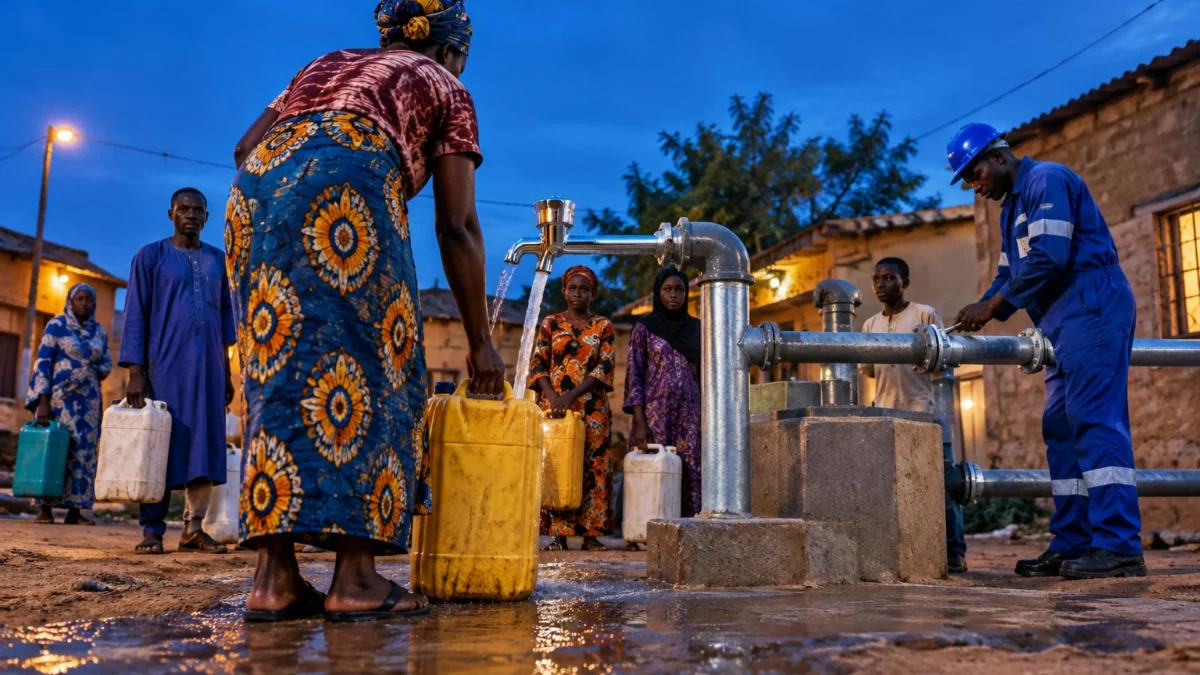
In Chad, a higher investment allocation does not yet guarantee passable roads, well-equipped health centres or regular access to water. The challenge for the 2027 budget will therefore lie as much in its execution as in its size: turning accounting forecasts into visible services, in the capital as well as in the regions.
A rising budget faces the test of execution
On 23 November 2026, the National Assembly adopted the draft Finance Bill for 2027, presented by Minister of State Tahir Hamid Nguilin. The text provides for FCFA 1,456.8bn in public investment, compared with FCFA 1,172.3bn in 2026, an increase of about 24%. These figures were reported by the African news agency APA and the Chadian Press and Publishing Agency, which details the breakdown between domestic and external financing.
In detail, investment financed from domestic resources would reach FCFA 794.2bn, compared with FCFA 618.2bn in 2026. External financing would amount to FCFA 662.6bn, against FCFA 554.1bn. The announced total is therefore slightly below the FCFA 1,458bn figure rounded off in some presentations of the draft.
The general budget provides for about FCFA 3,070bn in resources, including revenue and grants. Expenditure is estimated at around FCFA 3,007bn. This is still a forecast framework: after the National Assembly’s vote, the text must complete its institutional process before becoming the law authorising the state’s revenue and expenditure.
The government presents this approach as a way to accelerate strategic investment and improve living conditions. A significant share of the announced funding is aimed at roads, health, water, agriculture, energy and local authorities. But budget announcements alone do not specify the timetable for construction work or the results expected in each area.
Roads, water and health among the stated priorities
For roads, the draft provides for FCFA 420bn from public resources, with more than FCFA 90bn in external financing expected to be added. The stated aim is to connect production zones and facilitate trade. For people living in remote regions, the impact will depend in particular on the routes selected, the quality of the work and maintenance after completion.
The health sector would receive an increase of more than FCFA 70bn from domestic resources. Health investment would rise by 27%, according to the minister’s announcements. Infrastructure rehabilitation and the provision of more equipment are among the priorities. It remains to be seen how this funding will be divided between facilities in N’Djamena and those in the provinces, and whether it will be accompanied by staff and operating resources.
The government is also planning an additional FCFA 75bn for water. The aim is to strengthen drinking-water supply, as well as support livestock farming and agricultural irrigation. These uses meet different needs: households want a reliable service, while producers need infrastructure suited to the seasons and production areas.
Allocations to autonomous local authorities would rise to FCFA 58bn. Including other resources earmarked for them, their total allocation would reach FCFA 84.9bn. This component is important for decentralisation, meaning the transfer of responsibilities and resources to local authorities. Its effectiveness will depend on local authorities’ ability to plan projects, manage funds and account for how they are used.
Economic diversification, a long-term goal
The budget forms part of the national development plan “Chad Connection 2030”, which aims to transform the economy and reduce its dependence on hydrocarbons. Oil remains a major source of public finances and exports. Developing transport, energy, agriculture and local processing should therefore broaden productive activity, although the announcements do not yet make it possible to measure the actual share of projects outside the oil sector.
The plan sets out the ambition to mobilise about $30bn in public and private investment between 2025 and 2030. For 2027, the government is also banking on economic growth of 7.3%, following a forecast of 6% in 2026. These are projections, not results already achieved. Their fulfilment will depend in particular on project execution, the availability of financing and the ability of the targeted sectors to create sustainable activity.
The increase in externally financed investment highlights another challenge: projects will have to proceed in line with disbursements and agreements with partners. Domestic-resource funding, meanwhile, involves public revenue, its stability and trade-offs between investment, recurrent expenditure and debt service. The minister stressed the quality of investment, budgetary discipline and the evaluation of results. These criteria will be crucial in assessing the gap between the amounts approved and the services actually delivered.
A Chadian challenge within the CEMAC framework
Chad is a member of the Economic and Monetary Community of Central Africa (CEMAC), which brings together six states around economic integration and a common currency, the Central African CFA franc. Chadian investment can therefore have an impact beyond the country’s borders, particularly when roads, trade and productive activity improve regional connections. However, the impact will depend on the coordination of infrastructure and trade with neighbouring countries; a national budget alone is not enough to create effective corridors.
The next step will be to follow the budget’s completion of the institutional process, and then its execution in 2027: contracts awarded, funding released, construction completed and equipment actually available. The reach of Chad’s budget bet will be judged by this concrete measure — by region and by sector.