Algeria
 Egypt
 Libya
 Morocco
 Sudan
 Tunisia
 Benin
 Burkina Faso
 Cabo Verde
 Côte d'Ivoire
 Ghana
 Guinea
 Guinea-Bissau
 Liberia
 Mali
 Mauritania
 Niger
 Nigeria
 Senegal
 Sierra Leone
 The Gambia
 Togo
 Cameroon
 Central African Republic
 Chad
 DR Congo
 Equatorial Guinea
 Gabon
 Republic of the Congo
 São Tomé and Príncipe
 Burundi
 Comoros
 Djibouti
 Eritrea
 Ethiopia
 Kenya
 Madagascar
 Malawi
 Mauritius
 Mozambique
 Rwanda
 Seychelles
 Somalia
 South Sudan
 Tanzania
 Uganda
 Angola
 Botswana
 Eswatini
 Lesotho
 Namibia
 Zambia
 Zimbabwe
In Cape Town, the growth of digital infrastructure raises a very practical question: how can the city attract investment without worsening inequalities in access to water and electricity? In some neighbourhoods, residents are still queuing at water points, while new data centres are being planned nearby.
The debate is not only about a building’s consumption. It also concerns the transparency of permits, the capacity of utility networks and the role given to neighbouring communities in planning decisions.
Digital expansion under local pressure
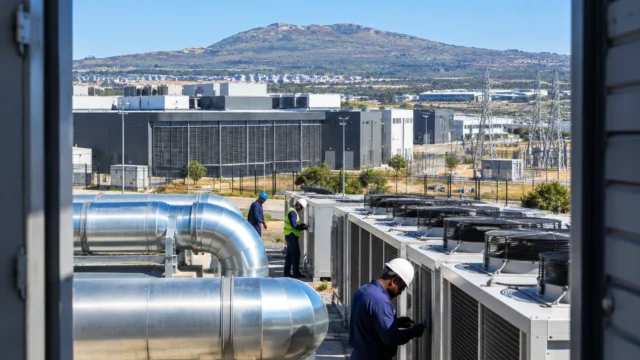
South Africa is seeking to strengthen its role as a regional digital hub. Data centres host servers and online services, including those used for cloud computing and artificial intelligence. The sector can attract investment and support services essential to the economy.
But in Cape Town, in the Western Cape province, several projects have faced opposition. Residents’ associations have, in particular, challenged approval for a large site linked to Equinix, near neighbourhoods where access to basic services remains unequal. The appeal takes issue with the lack of available information on water and electricity needs and the project’s local effects. The municipal decision remains subject to the appeal process, according to information published by the Mail & Guardian.
The dispute forms part of a national debate. In September 2026, several South African organisations asked the South African Human Rights Commission to examine the effects of the sector’s rapid growth. The Commission said it was receiving numerous submissions on resource needs, land use and the consequences for communities. The Associated Press reports that the government presents this expansion as an economic opportunity, while organisations are calling for clearer rules.
Water use: projections versus actual consumption
The figures cited in the dispute should be treated with caution. Civil society groups estimate that planned hyperscale facilities in Cape Town could use up to 4.4 billion litres of water a year if they relied on conventional cooling systems. This projection, reported by Business Day, is not a measurement of the site’s current consumption. It depends, among other things, on the equipment actually installed and how it is operated.
Equinix says its data centres use closed-loop dry cooling, designed to limit direct water use. Opponents, meanwhile, argue that operators’ actual needs and commitments must be made public and subject to scrutiny. Neither position can replace detailed project-by-project data: this is precisely at the heart of the disagreement.
The issue is also sensitive because of Cape Town’s recent history. In 2018, after several seasons of low rainfall, the city came close to “Day Zero”, the point at which authorities were considering cutting the usual water supply and setting up distribution points. The scenario was averted through reduced consumption, emergency measures and the return of rain. The OECD notes that the crisis also exposed issues of governance, resource allocation and access to services.
The benefits are not evenly distributed
Data centres require substantial construction work, but their day-to-day operation generally employs fewer people than their construction. Temporary jobs may therefore benefit some workers without, on their own, guaranteeing lasting gains for host neighbourhoods. Civil society groups want permits to take account of effects on the electricity grid, land, nuisances and public infrastructure as well.
The issue is particularly tangible around the Barcelona neighbourhood, near Bishop Lavis and Gugulethu. Residents there describe difficulties accessing water and sanitation. In these areas, the question is not simply how much a site will consume over the course of a year: it is also necessary to establish where the water will be drawn from, when, and how household needs will be protected.
The City of Cape Town has said it is working on more specific guidance for applications for large data centres, while key information about projects remains disputed or incomplete. An investigation published by A Pública highlights questions about the publication of energy requirements and how projects are assessed. Clear rules also matter to investors: they make it possible to compare projects and reduce uncertainty, rather than treating each application on a case-by-case basis.
An issue for southern Africa
For South Africa, the challenge is to regulate a strategic sector without ignoring the resources it uses. Pretoria, the country’s capital, sets national policy, but planning decisions and day-to-day water management also involve provincial and municipal authorities. The effects, meanwhile, are felt first in the localities where the infrastructure is built.
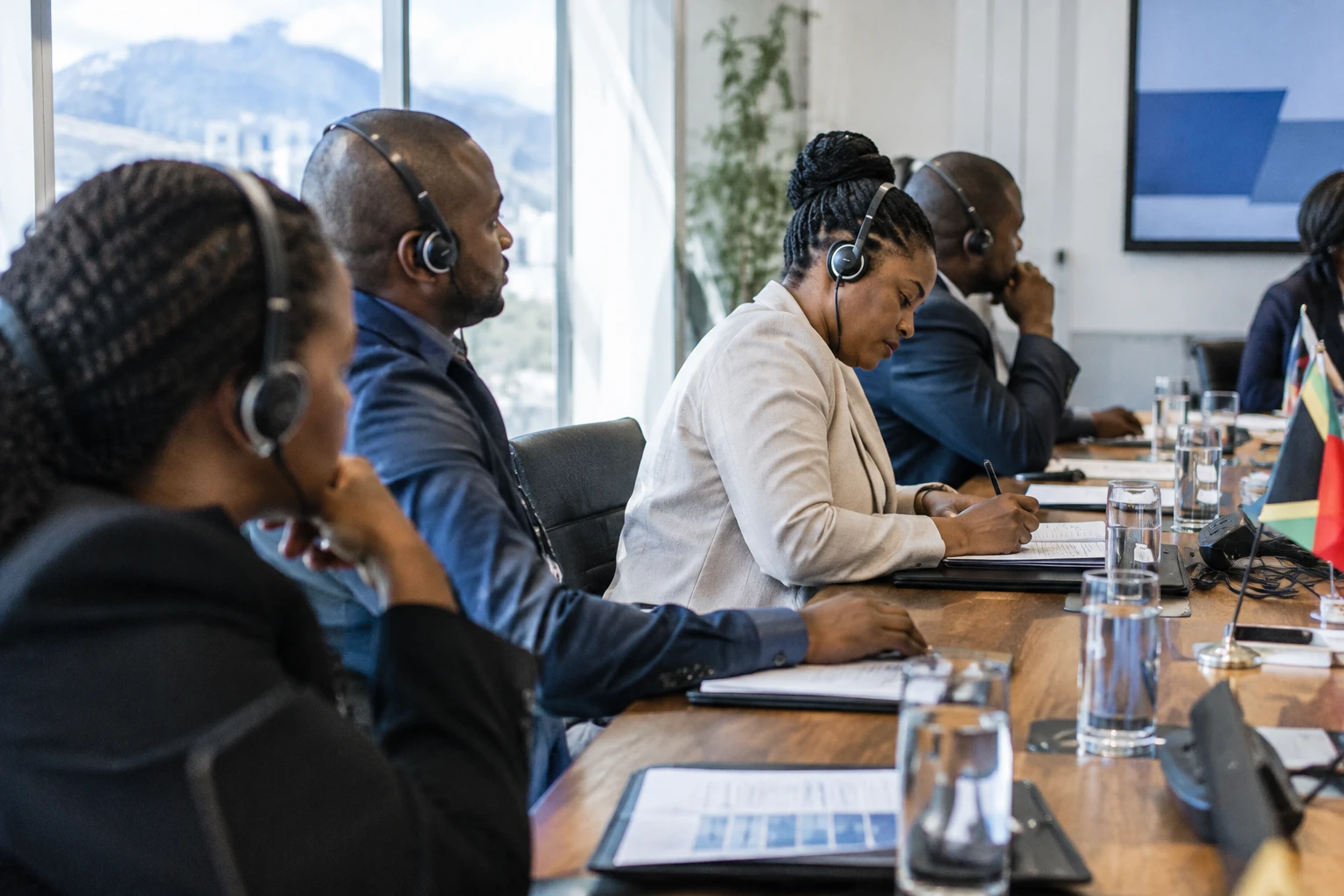
The issue extends beyond South Africa’s borders. Within the Southern African Development Community (SADC), a regional co-operation organisation, the growth of digital services also depends on reliable electricity grids, connected infrastructure and sustainable water management. Cape Town’s experience could therefore inform regional debate on how to attract digital investment while assessing its local costs.
The next step will be less a general promise of growth than a test of transparency: publishing forecasts of usage, monitoring environmental commitments and considering community appeals. Digital development can then be assessed against comparable data, rather than only on the basis of announced capacity or expected jobs.