Algeria
 Egypt
 Libya
 Morocco
 Sudan
 Tunisia
 Benin
 Burkina Faso
 Cabo Verde
 Côte d'Ivoire
 Ghana
 Guinea
 Guinea-Bissau
 Liberia
 Mali
 Mauritania
 Niger
 Nigeria
 Senegal
 Sierra Leone
 The Gambia
 Togo
 Cameroon
 Central African Republic
 Chad
 DR Congo
 Equatorial Guinea
 Gabon
 Republic of the Congo
 São Tomé and Príncipe
 Burundi
 Comoros
 Djibouti
 Eritrea
 Ethiopia
 Kenya
 Madagascar
 Malawi
 Mauritius
 Mozambique
 Rwanda
 Seychelles
 Somalia
 South Sudan
 Tanzania
 Uganda
 Angola
 Botswana
 Eswatini
 Lesotho
 Namibia
 South Africa
 Zambia
 Zimbabwe
European football, a decisive product in the African market
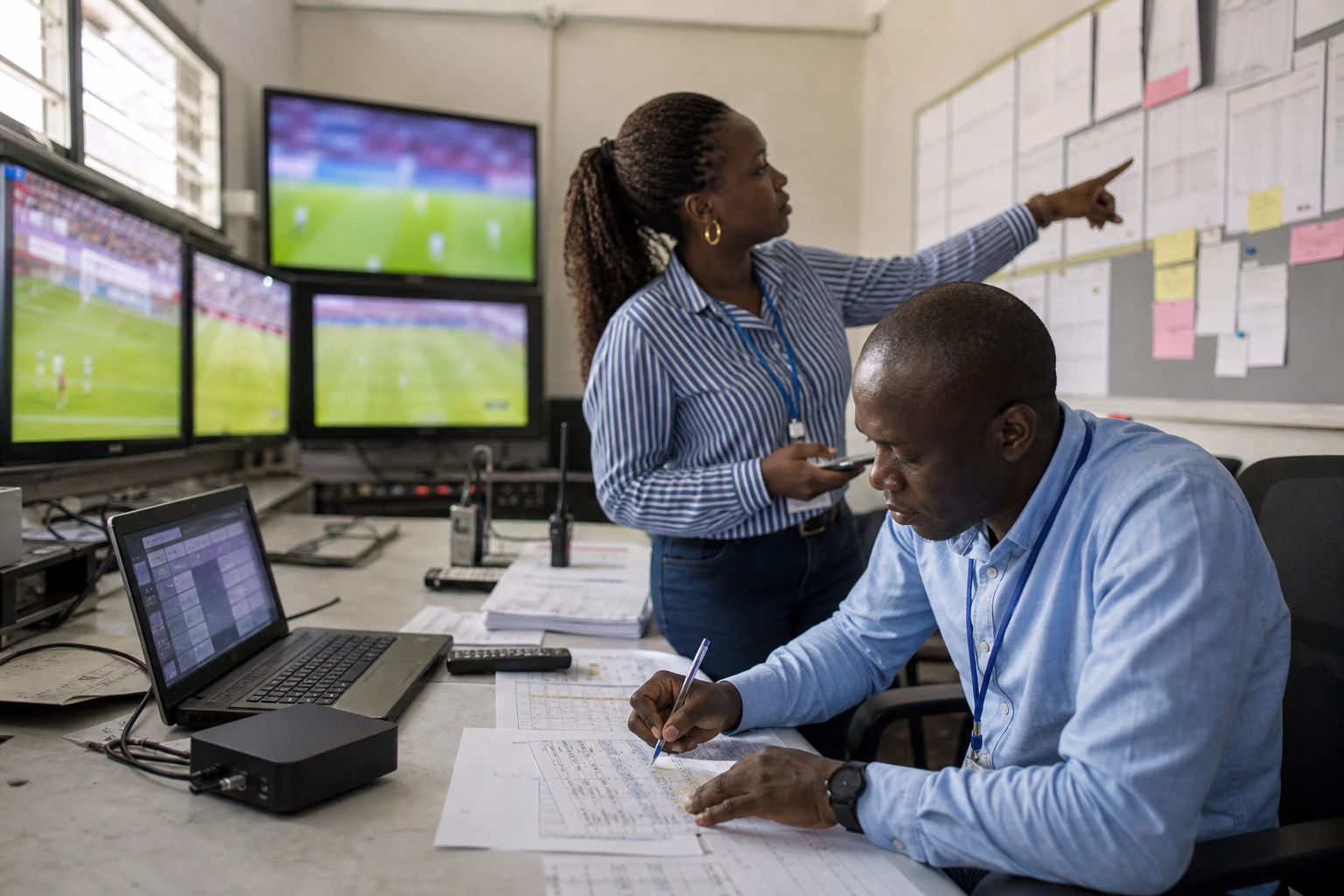
In sub-Saharan Africa, the battle for viewers is often fought in the evening, around a Champions League match. For pay-TV operators, these nights matter as much as recruitment campaigns. They build loyalty, drive subscriptions and establish a brand in households in major cities and smaller towns alike.
Canal+ has just secured a strategic asset: all UEFA men’s club competitions in sub-Saharan Africa, in every language, from the 2027-2028 season through to 2030-2031. The deal covers the Champions League, Europa League and Europa Conference League. The group describes it as a full renewal of its rights for this cycle, while UEFA says the sale of media rights for 2027-2031 forms part of a new commercial framework established with its partner UC3.
The message is clear: Canal+ is no longer merely a broadcaster. It is increasingly becoming an essential gateway to premium football across a large part of the continent.
An African market reshaped around a handful of powerful players
The move comes amid an already more concentrated landscape. Canal+ took effective control of MultiChoice in September 2025, following the final regulatory approvals in South Africa. The group now combines its long-standing operations in francophone Africa with one of the largest pay-TV operators in anglophone and lusophone Africa. It says it serves more than 40 million subscribers in nearly 70 countries.
On the ground, this is changing the geography of the offer. In North Africa and the Arabic-speaking world, beIN Sports retains a central position. In sub-Saharan Africa, Canal+ and, depending on the competition, SuperSport and New World TV remain among the most prominent names. UEFA.com also lists SuperSport, New World TV and Canal+ among the broadcasters in sub-Saharan Africa for the 2025-2026 season.
For Canal+, the value goes beyond prestige. European football remains one of the continent’s most widely consumed products because it brings together several African realities: popular passion, African players at major European clubs, and the growth of mobile and hybrid viewing. In other statements, the group has already said that its sports offering in Africa is built around a high volume of matches and multilingual distribution.
What the deal says about Canal+’s strategy
For Canal+, this rights acquisition is part of a consolidation strategy. For several years, the group has been building strong positions in sports content. It has extended its European rights in France until 2031, while also strengthening its presence in Africa through MultiChoice and other distribution agreements. The broader strategy is that of an operator seeking to secure scarce content to protect the value of its subscriptions.
The exact cost has not been made public. This is common in the industry, but it fuels speculation. Major European sports rights deals often run to hundreds of millions of euros over several cycles, as UEFA competitions carry considerable weight in programming schedules and advertising revenues. UEFA and UC3 have set a target of raising commercial revenues from club competitions to more than €5bn per season by 2027-2031, according to AFP.
In African capitals, the impact will be felt by operators, but also by subscribers. The most affluent households will continue to choose between several packages. More price-sensitive households, meanwhile, will be hit harder by rising costs as premium content becomes concentrated in fewer hands. This does not necessarily mean less football, but access that is more segmented and more dependent on packages and distribution areas. This shift is already under way in pay television across the continent.
A continental reach beyond entertainment
The issue goes beyond football. It touches on cultural sovereignty, the circulation of images and the place of African companies in the media economy. Canal+ now presents itself as a fully pan-African player, with a strong presence in Europe, Africa and Asia. The integration of MultiChoice gives it a broader base from which to negotiate rights, sell advertising and distribute content across several markets.
This concentration could also prompt competitors to reposition themselves. New World TV will have to defend its ability to compete for some major events. SuperSport, backed by MultiChoice, retains an important role in several anglophone territories. And the Confederation of African Football (CAF), which regularly launches tenders for its own competitions, will inevitably be watching the strategic value of broadcasters capable of reaching several language regions at once.
The next point to watch will be the transition from the current cycle to the new one, starting in 2027-2028. Until then, Canal+ will have time to turn these rights into a commercial advantage, as well as a tool of editorial influence. For the continent, the issue is simple: whoever controls the big screens also partly controls how global football is consumed in Africa.