Algeria
 Egypt
 Libya
 Morocco
 Sudan
 Tunisia
 Benin
 Burkina Faso
 Cabo Verde
 Côte d'Ivoire
 Ghana
 Guinea
 Guinea-Bissau
 Liberia
 Mali
 Mauritania
 Niger
 Nigeria
 Senegal
 Sierra Leone
 The Gambia
 Togo
 Central African Republic
 Chad
 DR Congo
 Equatorial Guinea
 Gabon
 Republic of the Congo
 São Tomé and Príncipe
 Burundi
 Comoros
 Djibouti
 Eritrea
 Ethiopia
 Kenya
 Madagascar
 Malawi
 Mauritius
 Mozambique
 Rwanda
 Seychelles
 Somalia
 South Sudan
 Tanzania
 Uganda
 Angola
 Botswana
 Eswatini
 Lesotho
 Namibia
 South Africa
 Zambia
 Zimbabwe
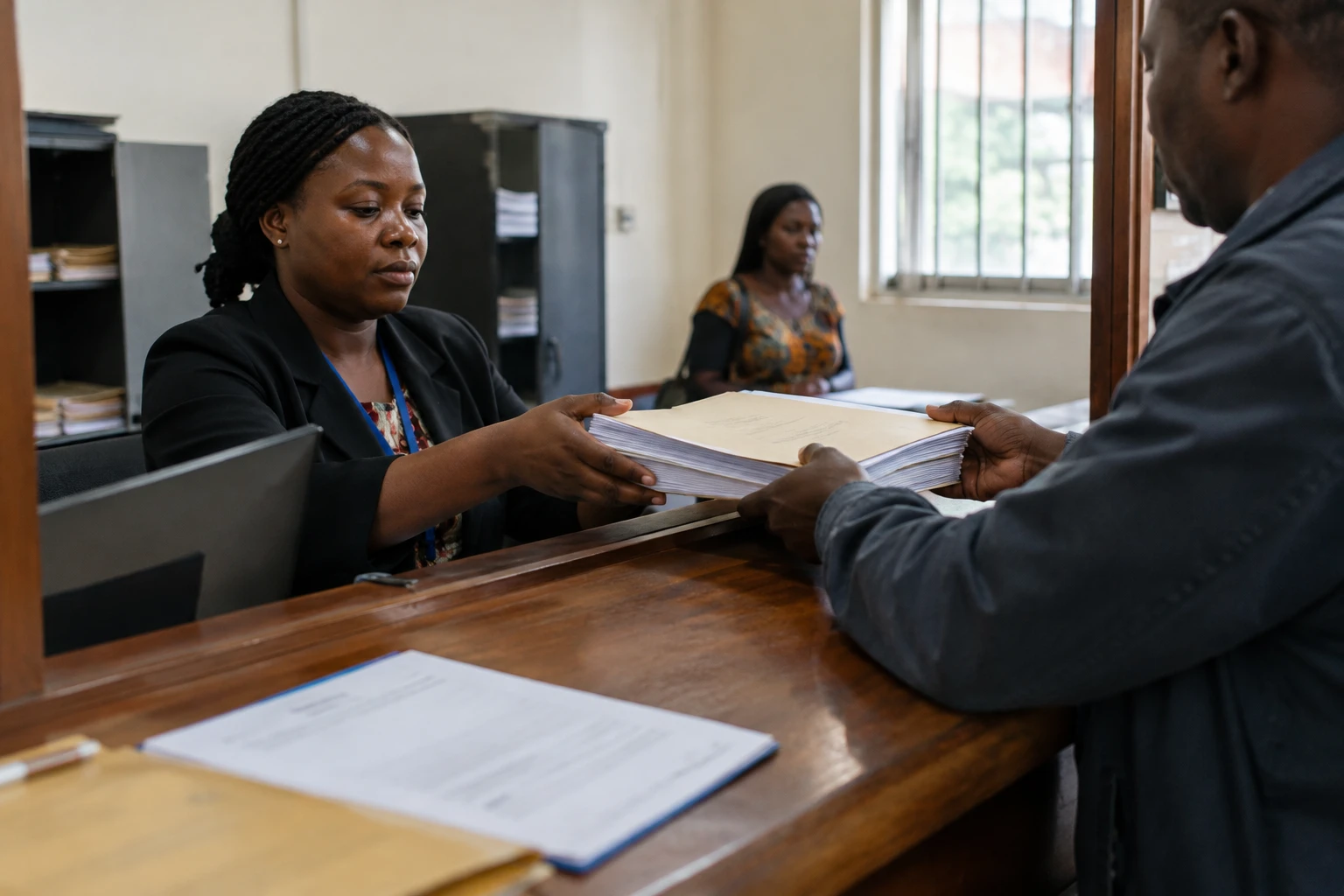
In the Martinez Zogo case, the question is not only who the suspected perpetrators are. It also concerns the reliability of the leads pursued and how a sensitive investigation can be examined publicly when several of those involved belong to the security services.
A trial in which the investigation itself is under scrutiny
Cameroonian journalist Martinez Zogo was abducted on 17 January 2023. His body was found five days later near Yaoundé, Cameroon’s capital. Since then, hearings have brought together the accused, witnesses from the security services and the victim’s next of kin. The case concerns a crime, but also the conditions in which the initial investigations were conducted.
Lieutenant-Colonel Parfait Ayissi Nanga served on the joint police-gendarmerie commission tasked with investigating the case in its early stages. Before the Yaoundé military court, he says the investigation was steered towards false leads to protect the real perpetrators. These are his allegations, disputed by lawyers for several defendants and not, in themselves, established facts.
The forensic report cited in the case attributes Martinez Zogo’s death to the violence he suffered. Reporters Without Borders, which says it has seen the report, states that forensic doctors identified nearly 30 injuries. These findings alone do not confirm the witness’s claim that the journalist died by strangulation. RSF’s account of the forensic evidence in the case also highlights unanswered questions surrounding the precise circumstances of the death.
Allegations still to be tested
In his testimony, Ayissi Nanga named Martin Savom, the former mayor of Bibey and a defendant in the case, as the man who allegedly strangled Martinez Zogo. Martin Savom’s defence rejects the accusation. The witness also accused officers involved in the investigation of fabricating “assassins and masterminds” and steering the inquiry under political pressure.
These are serious allegations, but they must be distinguished from judicial findings. Those named remain presumed innocent until their guilt has been established by the court. The case referred to the military court involves 17 people facing different charges. The Committee to Protect Journalists notes that Martin Savom, Justin Danwe and other defendants face separate accusations, rather than a finding of collective responsibility.
The civil parties questioned the witness about the delay before he made his allegations, his criticism of his superiors and his decision to continue his inquiries after leaving the joint commission. According to accounts of the hearing, Ayissi Nanga said he wanted to clarify an internet outage reported in the area on the evening of the abduction and understand why the lead involving Martin Savom’s phone had allegedly not been pursued.
Lawyers for the civil parties also set his claims about strangulation against the forensic doctors’ report. This is central to the process: cross-examination allows the parties to test the consistency of testimony and the strength of its evidential basis. A dramatic statement does not become corroborated evidence simply because it is striking.
The witness’s credibility at stake
Lawyers for Martin Savom portrayed their client as collateral damage in a conflict between gendarmes. They accuse the witness of criticising his colleagues and superiors without, in their view, substantiating the conclusions he draws. By contrast, a lawyer for Maxime Eko Eko, a former head of external intelligence who is also accused, said the proceedings risked straying from the search for truth. These are positions taken by parties to the trial; they do not prejudge the court’s decision.
On 28 October 2026, Ayissi Nanga appeared before the Yaoundé military court. Local reports say his testimony could not be completed and the hearing was adjourned to 16 and 17 November 2026. The next session is expected to allow questioning of the witness to continue. A Cameroonian report on the adjournment says the witness requested a break after reporting that he felt unwell. The next stage should therefore clarify the alleged contradictions, rather than turn accusations into a premature verdict.
A case that goes beyond rivalries between services
The institutional context matters. The joint commission brought together the police and gendarmerie, while the case is being heard by a military court. Disputes over jurisdiction, investigative methods and chain-of-command relations can therefore affect confidence in the proceedings. They do not, however, relieve the court of its duty to examine each piece of evidence and each individual responsibility.
For Cameroonians, the case also touches on the safety of journalists and the ability to report on matters involving powerful figures. For media professionals, the murder is a reminder of the risks involved in covering corruption allegations. Reporters Without Borders notes that questions remain about responsibility and several practical aspects of the investigation. This assessment reinforces the need for a thorough process, without taking the place of the judges.
Across Central Africa, the case is being watched as a test of judicial transparency and the protection of freedom of information. It does not, on its own, represent the whole regional picture, but its lessons extend beyond Cameroon’s borders: when state officials are implicated, access to evidence, the testing of testimony and the independence of proceedings become decisive. The resumption scheduled for November should clarify what the witness can substantiate, what remains disputed and what the court ultimately accepts.