Algeria
 Egypt
 Libya
 Morocco
 Sudan
 Tunisia
 Benin
 Burkina Faso
 Cabo Verde
 Côte d'Ivoire
 Ghana
 Guinea
 Guinea-Bissau
 Liberia
 Mali
 Mauritania
 Niger
 Nigeria
 Senegal
 Sierra Leone
 The Gambia
 Togo
 Central African Republic
 Chad
 DR Congo
 Equatorial Guinea
 Gabon
 Republic of the Congo
 São Tomé and Príncipe
 Burundi
 Comoros
 Djibouti
 Eritrea
 Ethiopia
 Kenya
 Madagascar
 Malawi
 Mauritius
 Mozambique
 Rwanda
 Seychelles
 Somalia
 South Sudan
 Tanzania
 Uganda
 Angola
 Botswana
 Eswatini
 Lesotho
 Namibia
 South Africa
 Zambia
 Zimbabwe
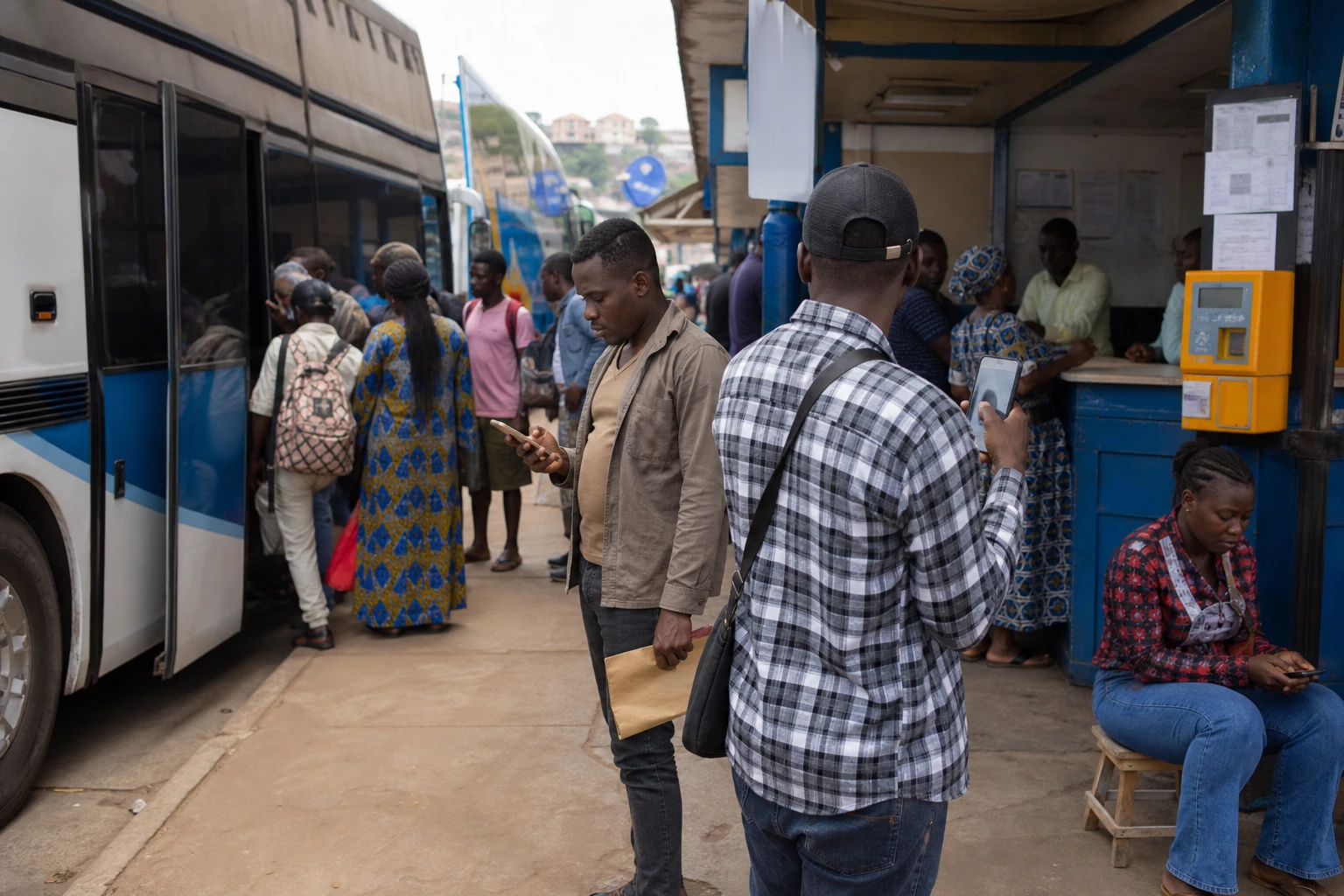
In Cameroon, a promise of a job, public aid or funding can now become the starting point for an organised scam. Fraudsters no longer rely only on clumsy messages. They imitate the practices of government agencies, banks and humanitarian organisations to gain trust before demanding an initial payment.
Scams that tap into everyday hopes
The phenomenon primarily affects young people looking for work, small business owners and households with limited incomes. For these groups, a recruitment notice or support programme can represent a rare opportunity. Scammers exploit precisely this expectation.
In Cameroon, Facebook accounts, WhatsApp groups and websites that sometimes imitate the look of a public institution are used to spread fake notices. Victims are then asked to pay application, registration, training or administrative processing fees.
The method is a form of advance-fee fraud. The payment requested may seem small at first. Yet several successive payments are enough to strain a family’s budget. In some cases, victims borrow money, sell an asset or use savings set aside for food and schooling.
Another method is to offer a job abroad. The applicant exchanges messages with a supposed intermediary, sends personal documents, then pays money for a visa, plane ticket or recruitment process. The job may not exist. More serious cases can also lead to forms of exploitation and trafficking, according to an analysis of job scams in Cameroon and Chad by the Institute for Security Studies.
In Chad, more direct methods in a less connected environment
Chad faces similar schemes, although the channels may differ. Where internet access remains more limited, fraudsters make greater use of text messages and phone calls. They pose as bank employees, telecoms operators or representatives of humanitarian organisations.
Displaced people and refugees are among those at risk. Their administrative and economic circumstances can make them dependent on information received by phone. A false notification about aid, registration or a money transfer can prompt a quick response.
The United Nations High Commissioner for Refugees warns against messages and calls impersonating humanitarian organisations. The agency says that any request for money or personal data presented as a condition for receiving aid should be treated as suspicious.
This vulnerability comes amid a strained regional situation. Since 2023, Chad has hosted significant numbers of people fleeing the war in Sudan. In host areas, pressure on social services, incomes and access to information makes it harder to identify fake schemes.
Networks that cross borders
Digital scams do not stop at the borders of Cameroon or Chad. Exchanges may begin in Yaoundé, Douala, N’Djamena or Buea, then continue through bank accounts, phone numbers or intermediaries based in other countries.
This cross-border dimension complicates investigations. Investigators must identify the perpetrators, trace payments, obtain data from private platforms and co-ordinate judicial proceedings. A network may use a Cameroonian identity, a number registered elsewhere and a mobile wallet controlled from a third country.
Cameroon and Chad belong to CEMAC, the Central African Economic and Monetary Community, which comprises six states that share, among other things, economic integration mechanisms and the Central African CFA franc. Regional police and judicial co-operation is therefore essential to handling cases that extend beyond a single territory. Interpol’s I-CEMAC project aims in particular to strengthen the exchange of criminal intelligence and border surveillance in the region.
Few complaints help perpetuate impunity
After being scammed, many victims decide not to file a complaint. Some feel ashamed. Others think the sums lost are too small to justify taking legal action. Yet this lack of reporting deprives investigators of useful evidence to link separate cases.
In Cameroon, CIRT-CM, the national cybersecurity incident response team attached to ANTIC, urges citizens to report fraud involving Mobile Money, social media, fake investments and identity theft. The official CIRT-Cameroon reporting portal sets out the steps to follow.
Reporting a scam does not guarantee that the money will be recovered. It does, however, help preserve evidence: screenshots, numbers used, transfer receipts, links to accounts and exchanges with the fraudsters. This information can help identify shared infrastructure.
Prevention cannot, however, rest solely on users. Platforms must respond more quickly to fake accounts and fraudulent adverts. Telecoms operators and financial services must also improve the blocking of suspicious transactions, while protecting customers who use digital services for legitimate activities.
A question of trust in the digital economy
The rise in scams threatens more than individual savings. It undermines trust in online services, at a time when digital commerce, mobile payments and online administrative services are playing an increasingly important role in Cameroon.
The consequences are not the same for everyone. In cities, victims may lose money through a mobile wallet or bank card. In rural areas, a false promise of agricultural funding can directly affect a growing season. For young graduates, job scams add financial losses to a period of professional uncertainty.
The next challenge is therefore twofold. States will have to strengthen their investigative capacity and co-operation within CEMAC. They will also have to make complaint procedures accessible beyond capital cities, particularly in regions where the presence of specialised services remains limited.
In Yaoundé and N’Djamena alike, the fight against cyber scams will ultimately depend on the credibility of official information. Public notices that are easy to verify, clearly identified channels and a rapid response to fake accounts can reduce the space available to criminal networks.