
 Algeria
 Egypt
 Libya
 Morocco
 Sudan
 Tunisia
 Benin
 Burkina Faso
 Cabo Verde
 Côte d'Ivoire
 Ghana
 Guinea
 Guinea-Bissau
 Liberia
 Mali
 Mauritania
 Niger
 Nigeria
 Senegal
 Sierra Leone
 The Gambia
 Togo
 Central African Republic
 Chad
 DR Congo
 Equatorial Guinea
 Gabon
 Republic of the Congo
 São Tomé and Príncipe
 Burundi
 Comoros
 Djibouti
 Eritrea
 Ethiopia
 Kenya
 Madagascar
 Malawi
 Mauritius
 Mozambique
 Rwanda
 Seychelles
 Somalia
 South Sudan
 Tanzania
 Uganda
 Angola
 Botswana
 Eswatini
 Lesotho
 Namibia
 South Africa
 Zambia
 Zimbabwe
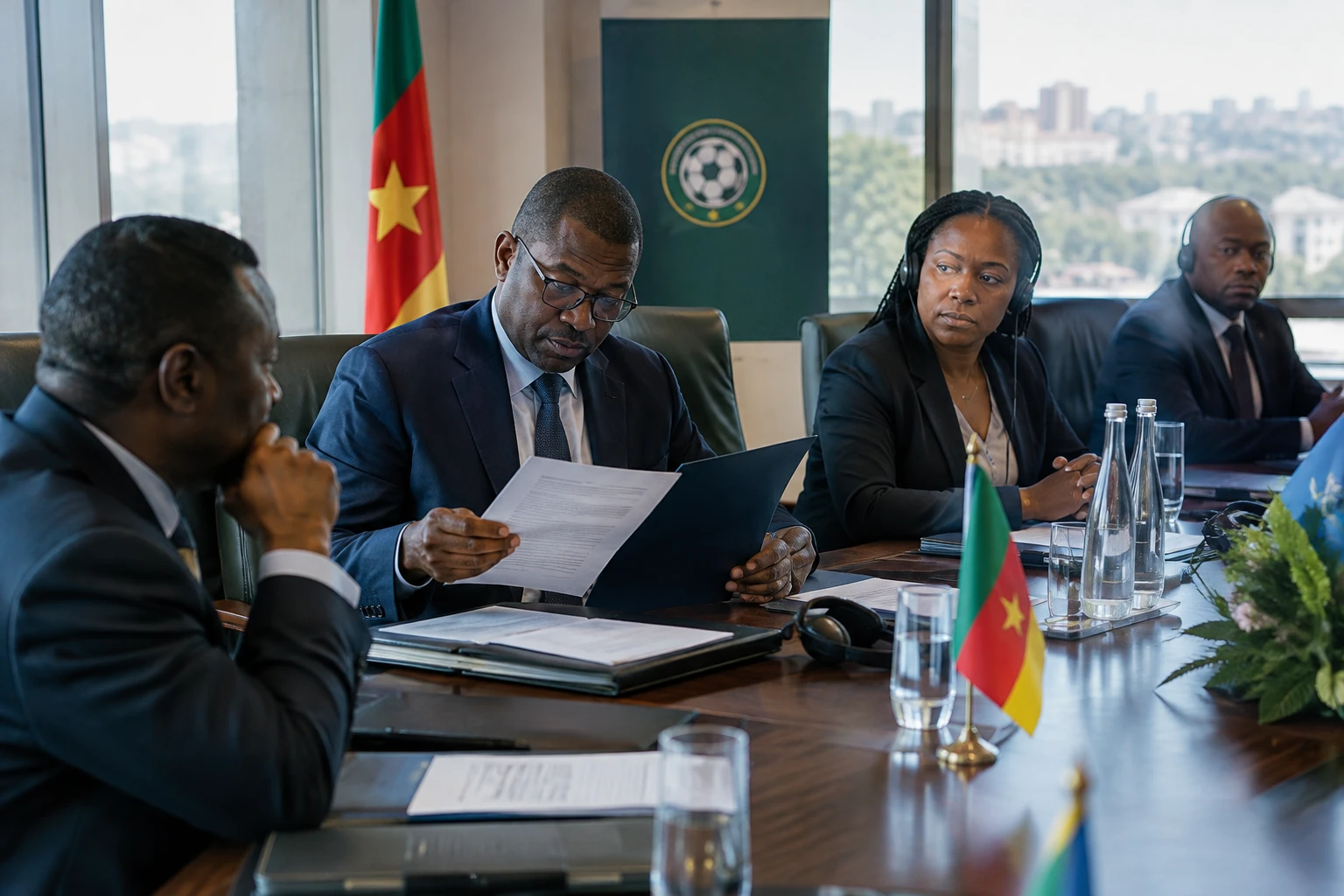
A friendly is played on the pitch, but its revenues and expenses are also settled in the accounts. In Cameroon, a legal move has brought that question to the fore: who received the sums linked to several Indomitable Lions matches, and how were they recorded?
The case touches on the management of the Cameroon Football Federation (Fécafoot), public funding cited by the complainants and clubs’ confidence in their national governing body. In Yaoundé, it is now for the competent authorities to examine the documents and determine whether procedures were followed.
Legal action examines four matches
The Association of Amateur Football Clubs of Cameroon (ACFAC) has petitioned the Special Criminal Court (TCS), a Cameroonian court with jurisdiction over certain economic and financial cases. Its complaint concerns revenue and expenditure associated with four national-team friendlies: against Uzbekistan, South Korea, Mexico and Russia.
In an account dated 23 September, the ACFAC said it had submitted commercial contracts and administrative documents to the court relating to funding released by the state. On 13 October, its president, Abdouraman Hamadou Babba, announced that the complaint had been registered under number 872, according to Cameroonian media. Registration confirms receipt of the file, but is neither an indictment nor a judicial finding on the facts.
The most detailed case concerns the Russia-Cameroon match played in Moscow on 12 October 2023. Documents examined by Cameroonian media outlet Camfoot indicate a contractual amount of €567,570, or about 372 million CFA francs. The contract and invoices described in the investigation reportedly identify an account in the name of Samuel Eto’o, Fécafoot’s president, at a bank in Qatar. The Russian Football Union reportedly issued a transfer order in November 2023.
These documentary elements are not, in themselves, enough to establish that money was misappropriated or never reached the federation’s accounts. The central question also concerns the funds’ final destination and how they were recorded in Fécafoot’s accounts. A judicial investigation will have to determine, among other things, what the documents prove, whether they are authentic and whether the relevant internal authorisations were granted.
Conflicting accounts, questions over the books
The ACFAC alleges possible irregularities in the contracts and expenses that may have been covered by both the state and the match organisers. If established, such double funding would raise questions about the oversight of public money. At this stage, these are allegations by the association, not facts established by a court.
Fécafoot has disputed the allegations reported in coverage of the case. It has denounced the circulation of internal documents obtained or shared fraudulently and argued that the financial decisions in question were authorised by its governing bodies. That response does not settle the accounting question: investigators will have to compare the contracts, bank transfer orders, federation entries and expense receipts.
The debate is therefore not simply about the reputation of Samuel Eto’o, the former Indomitable Lions captain and current head of the federation. It concerns the rules that should apply to any federation receiving commercial revenue or managing public funds. For amateur clubs, the issue is also institutional: transparency over resources can build trust or, conversely, heighten tensions among football stakeholders.
The practical consequences are not the same for everyone. Leaders and finance officials are directly affected by requests for explanations and any potential proceedings. Clubs, particularly those with limited resources, have an interest in knowing how football revenues are managed. For supporters, the case may distract from sporting results, but it raises a straightforward question: can the management rules be verified?
A governance issue beyond Cameroon
The case comes amid recurring disputes over Fécafoot’s governance since Samuel Eto’o was elected president in December 2021. This does not prejudge the outcome of the present case. However, the episode is a reminder that internal disputes in Cameroonian football play out as much before sporting bodies as in the courts and in the public arena.
Regionally, Cameroon is a member of the Central African Economic and Monetary Community (CEMAC), which brings six countries together in economic and monetary cooperation. CEMAC is not the body responsible for judging Fécafoot’s management. But the movement of sports revenue, public funding and the credibility of federations are shared concerns for football institutions across Central Africa.
What happens next will depend on the TCS: examination of documents, possible hearings and decisions on how to proceed with the case. Until then, it is important to distinguish three things: the registration of a complaint, the allegations made by the ACFAC and the facts that may be established by the courts. No decision known at this stage has found Samuel Eto’o guilty.
For Cameroonians and other African football stakeholders, the test will be verifiable transparency: tracing payments, explaining how they were recorded and making official findings public, in accordance with due process. Only then can the questions raised by these matches be clarified without turning suspicions into a verdict.
To put the elements of the case in context, see the account of the financial documents relating to the Russia-Cameroon match, as well as reports on the ACFAC’s legal action and the announced registration of its complaint.



