Algeria
 Egypt
 Libya
 Morocco
 Sudan
 Tunisia
 Benin
 Burkina Faso
 Cabo Verde
 Côte d'Ivoire
 Ghana
 Guinea
 Guinea-Bissau
 Liberia
 Mali
 Mauritania
 Niger
 Nigeria
 Senegal
 Sierra Leone
 The Gambia
 Togo
 Central African Republic
 Chad
 DR Congo
 Equatorial Guinea
 Gabon
 Republic of the Congo
 São Tomé and Príncipe
 Burundi
 Comoros
 Djibouti
 Eritrea
 Ethiopia
 Kenya
 Madagascar
 Malawi
 Mauritius
 Mozambique
 Rwanda
 Seychelles
 Somalia
 South Sudan
 Tanzania
 Uganda
 Angola
 Botswana
 Eswatini
 Lesotho
 Namibia
 South Africa
 Zambia
 Zimbabwe
Ten years after the first anglophone protests, Cameroon is still grappling with the consequences of a dispute that began in courtrooms and classrooms. In Bamenda and Buea, the initial demands concerned the language of work, the training of magistrates and the preservation of the Common law system — that is, the British-inspired law applied in the anglophone regions.
A crisis born in the courts and schools
On 6 October 2016, lawyers from the North-West and South-West launched a protest against what they saw as a rollback of the safeguards afforded to the anglophone legal system. The movement then became more visible on the streets, with rallies in Bamenda on 8 November and in Buea on 10 November.
This chronological distinction matters. 6 October marks the start of the protest campaign and the first coordinated actions. The public marches by lawyers documented by Cameroon’s Ministry of Justice took place on 8 and 10 November 2016. The official report on the anglophone crisis confirms this sequence.
Lawyers objected in particular to the appointment in anglophone courts of magistrates trained mainly in francophone civil law. They also called for better translations of legal texts, more specialists in Common law and effective recognition of the bilingualism enshrined in Cameroon’s Constitution.
The problem was not limited to the language used in hearings. For many lawyers, it concerned the legal method itself. Common law is based on a tradition, references and practices that differ from those of civil law. In the courts, the difficulty could therefore involve vocabulary, procedures and an understanding of what those seeking justice expected.
Another point of tension concerned the Organisation for the Harmonisation of Business Law in Africa, OHADA. The organisation brings together several African states around common rules intended to make commercial law more secure. Anglophone lawyers argued at the time that the lack of accessible English versions of some texts contradicted Cameroon’s bilingualism requirement.
From professional mobilisation to social protest
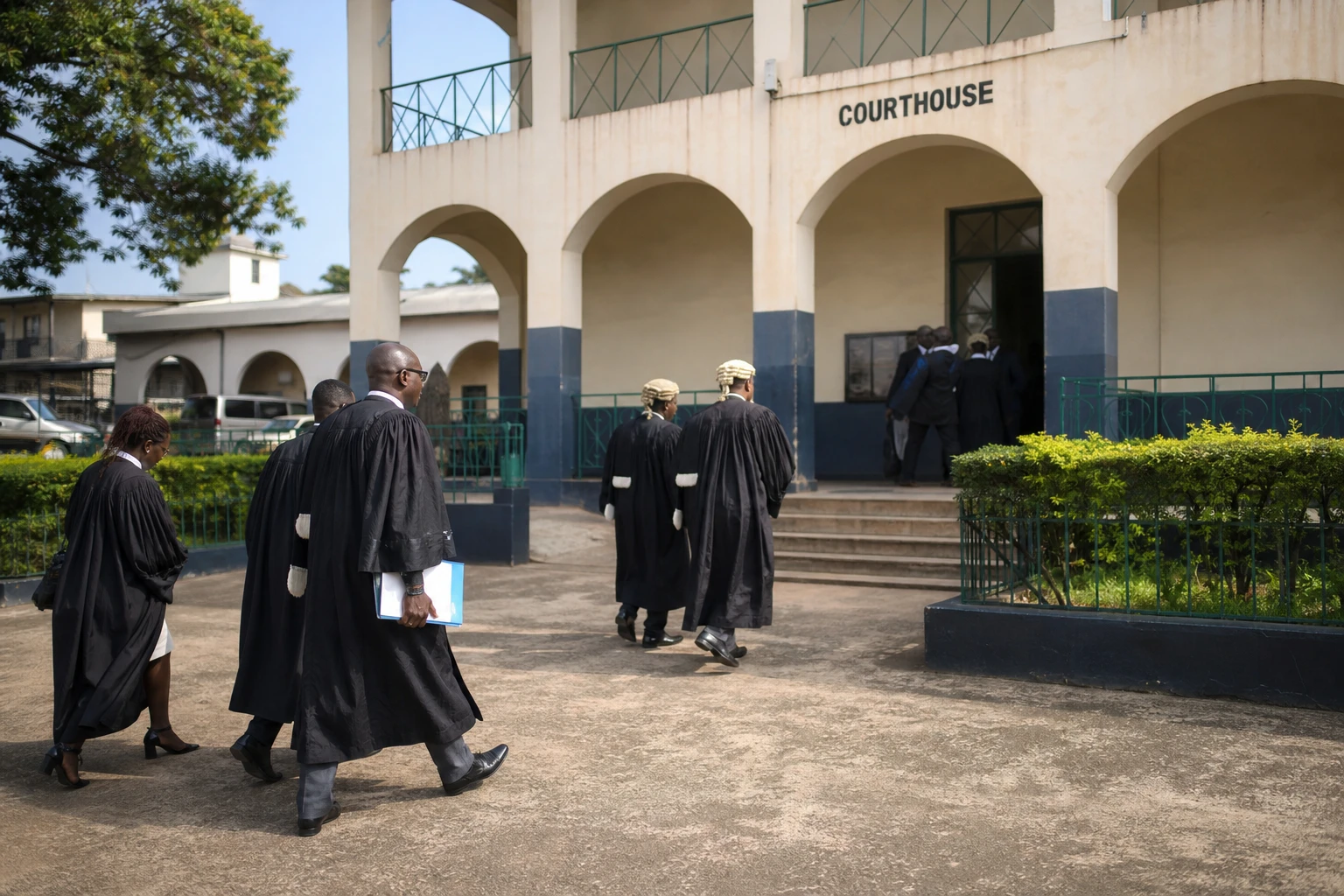
In Bamenda, lawyers marched in their robes to the courthouse before heading to public places such as T Junction and Liberty Square. The movement was intended to be peaceful. Witnesses and human rights organisations nevertheless reported the use of tear gas and arrests at several rallies.
A few days later, teachers joined the protests. They objected to francophone teachers being posted to anglophone schools, difficulties at the universities of Buea and Bamenda, and what they saw as the gradual marginalisation of their education system.
The mobilisation thus grew in scale. It no longer concerned only legal professionals. Students, trade unions and part of civil society began to advance broader demands concerning governance, employment, access to public services and the place of the anglophone regions within the Cameroonian state.
Human Rights Watch described the crackdown on the first demonstrations as a factor that worsened the crisis. Amnesty International, for its part, called for an investigation into the use of excessive force during rallies in Bamenda in December 2016. The organisations do not document every event using the same methods, but they agree on one point: the security response helped turn an occupational protest into a political crisis.
The 2017 turning point and the entrenchment of violence
In early 2017, calls for “ghost town” days, school boycotts and internet shutdowns created a lasting climate of confrontation. The authorities made arrests and restricted the flow of information. At the same time, separatist groups gradually replaced the original demands with a project to break away from Cameroon.
The situation subsequently became militarised. Clashes pitted defence and security forces against armed groups calling for the creation of an independent state in the two anglophone regions. Civilians found themselves caught between separatist orders, government operations and the economic consequences of movement restrictions.
The crisis has hit families hard, but its effects have not been uniform. In Bamenda and other urban centres, businesses, transport and schools have been directly affected. In rural areas, access to markets, healthcare and government services has become less reliable. Workers in the informal economy have often suffered an immediate loss of income, while formal businesses have had to scale back or move some of their operations.
Children and teachers have also paid a heavy price. Attacks on schools by armed groups, as well as military operations in some localities, have contributed to the disruption of education. This situation has weakened a generation of pupils in regions where anglophone education was precisely one of the most important symbols of local institutional identity.
A national dispute with regional effects
The anglophone conflict remains a Cameroonian affair, but it is part of a regional space shaped by the movement of people between Cameroon and Nigeria. Population movements, trade and family ties cross the border. Any prolonged deterioration in the North-West and South-West therefore has effects beyond Cameroonian territory.
Cameroon belongs to the Central African Economic and Monetary Community, CEMAC, which brings together six states in a common economic and monetary area. Yet political and security management of the crisis rests first and foremost with Cameroon’s institutions. CEMAC and the African Union have a regional role, but no lasting solution can be imposed from outside without addressing the grievances expressed locally.
The national dialogue held in 2019 led to the adoption of a special status for the North-West and South-West. The measure was intended to give the regions concerned greater decision-making powers, particularly in education, justice and local development. Its impact, however, depends on how it is implemented in practice and on the trust of the population.
Ten years after the mobilisation began, the central issue therefore remains trust. Demands concerning language and justice opened up a deeper debate on representation, decentralisation and equality between Cameroon’s constituent parts. The course of the crisis will depend as much on security as on the institutions’ ability to guarantee, in practice, bilingualism, local autonomy and access to public services in the anglophone regions.