Algeria
 Egypt
 Libya
 Morocco
 Sudan
 Tunisia
 Benin
 Burkina Faso
 Côte d'Ivoire
 Ghana
 Guinea
 Guinea-Bissau
 Liberia
 Mali
 Mauritania
 Niger
 Nigeria
 Senegal
 Sierra Leone
 The Gambia
 Togo
 Cameroon
 Central African Republic
 Chad
 DR Congo
 Equatorial Guinea
 Gabon
 Republic of the Congo
 São Tomé and Príncipe
 Burundi
 Comoros
 Djibouti
 Eritrea
 Ethiopia
 Kenya
 Madagascar
 Malawi
 Mauritius
 Mozambique
 Rwanda
 Seychelles
 Somalia
 South Sudan
 Tanzania
 Uganda
 Angola
 Botswana
 Eswatini
 Lesotho
 Namibia
 South Africa
 Zambia
 Zimbabwe

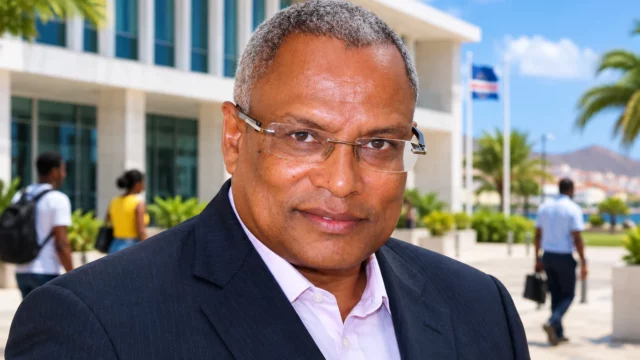
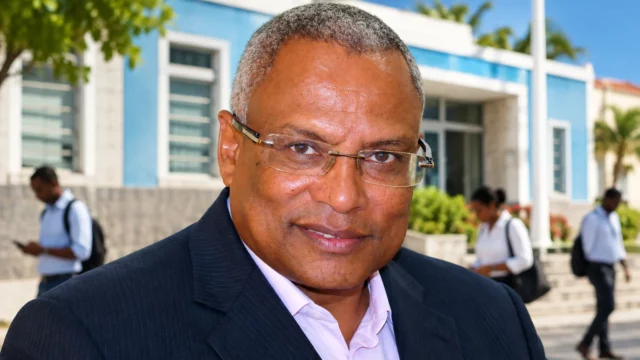
In São Vicente, national promises take on a very practical dimension: how can jobs, public services and investment be distributed more evenly among the islands? Incumbent President José Maria Neves has put these questions at the heart of his campaign speech, two weeks before Cabo Verde’s presidential election.
A national campaign, with distinct issues on each island
On 30 October, José Maria Neves held a rally in Monte Sossego, in the city of Mindelo on the island of São Vicente. The following day, he travelled to Santo Antão. There, he made the case for a campaign focused on proposals and mutual respect. These visits give visible attention to islands beyond Santiago, where the capital Praia and the main national institutions are located. Cabo Verde’s Inforpress news agency reported on these stops and the candidate’s remarks.
This geography matters in the political debate. Cabo Verde is an archipelago of ten islands, nine of which are inhabited. Sea and air links determine access to services, trade and opportunities to develop activity beyond the most popular tourist destinations. São Vicente, an important urban and port centre, therefore has different priorities from islands where tourism attracts more investment.
The country is approaching this presidential election after the May 2026 parliamentary elections, won by the PAICV, which secured 37 of 72 seats. Francisco Carvalho became prime minister in June, succeeding Ulisses Correia e Silva. This new configuration reshapes relations between the presidency and the government. The World Bank notes this institutional change in its political overview of the country.
Incumbent president defends role as arbiter
Elected in 2021, Neves is seeking a second five-year term. A former prime minister from 2001 to 2016 and former leader of the African Party for the Independence of Cape Verde (PAICV), he says he has learned to perform the presidential role better. In São Vicente, he emphasised the head of state’s role as arbiter and moderator of the political system, rather than as a party spokesperson.
His nomination by the PAICV does not erase this constitutional distinction. The presidency is a state institution, even when its holder has a party background. The candidate says he wants to unite people beyond his camp and present a record of his term. He has also championed progress in health, education, energy and digital technology, linking competitiveness to higher household incomes.
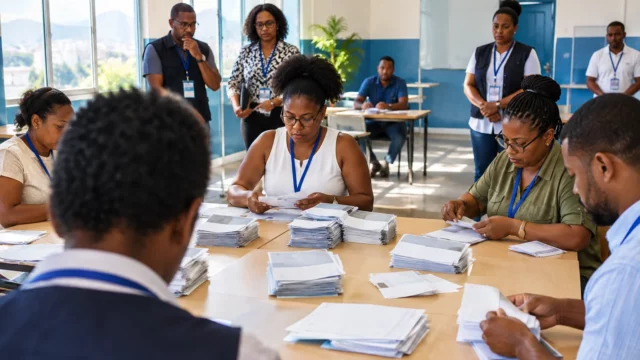
The list of candidates requires one clarification: the final electoral documents record six approved candidacies, including Neves’s, not ten. The National Electoral Commission published the list after the Constitutional Court’s decisions. The election is scheduled for 15 November 2026; a second round could take place on 29 November if necessary. Cabo Verde’s National Electoral Commission sets out the approved candidacies.
Growth alone does not settle the question of incomes
The debate over wages is taking place in an economy that is growing, but whose gains are not automatically shared among households and regions. According to the World Bank’s 2026 economic update, real gross domestic product grew by 6.3% in 2025. Tourism made a substantial contribution to this growth. The institution nevertheless notes that opportunities to create sustainable, better-paid jobs remain uneven.
Tourism supports incomes and economic activity, but remains concentrated on a few islands and relies heavily on European visitors. Businesses linked to travel benefit directly. By contrast, workers in lower-paid sectors, young people seeking their first job and small businesses on less-touristed islands do not necessarily benefit from the same momentum. The World Bank also identifies difficulties with inter-island transport as a barrier to local production chains and economic diversification. Its study of connectivity between the islands examines this issue.
The promise of higher wages therefore raises practical questions: which sectors can create productive jobs, how can skills be improved, and what measures can help incomes keep pace with the cost of living? The presidency can contribute to public debate and institutional mediation. But it does not decide economic policy alone: the government and parliament play a central role in shaping and funding it.
An election watched beyond the archipelago
Cabo Verde is a member of the Economic Community of West African States (ECOWAS), the regional organisation that supports integration and co-operation in West Africa. Its elections attract attention in a region with diverse political trajectories. The point is not to present it as a model to replicate, but to observe how its institutions work in practice: the approval of candidacies, electoral competition and acceptance of the rules of the election. ECOWAS lists Cabo Verde among its member states.
For voters, the 15 November election will pit messages of continuity against calls for change, particularly on purchasing power and services across the different islands. Candidates will need to win support beyond their party bases. The result will also show what role Cabo Verdeans want a mediating presidency to play, in a country where the executive and parliamentary majority now come from the same party.