Algeria
 Egypt
 Libya
 Morocco
 Sudan
 Tunisia
 Benin
 Burkina Faso
 Cabo Verde
 Côte d'Ivoire
 Ghana
 Guinea
 Guinea-Bissau
 Liberia
 Mali
 Mauritania
 Niger
 Nigeria
 Senegal
 Sierra Leone
 The Gambia
 Togo
 Cameroon
 Central African Republic
 Chad
 DR Congo
 Equatorial Guinea
 Gabon
 Republic of the Congo
 São Tomé and Príncipe
 Comoros
 Djibouti
 Eritrea
 Ethiopia
 Kenya
 Madagascar
 Malawi
 Mauritius
 Mozambique
 Rwanda
 Seychelles
 Somalia
 South Sudan
 Tanzania
 Uganda
 Angola
 Botswana
 Eswatini
 Lesotho
 Namibia
 South Africa
 Zambia
 Zimbabwe
There is more to water than the tap
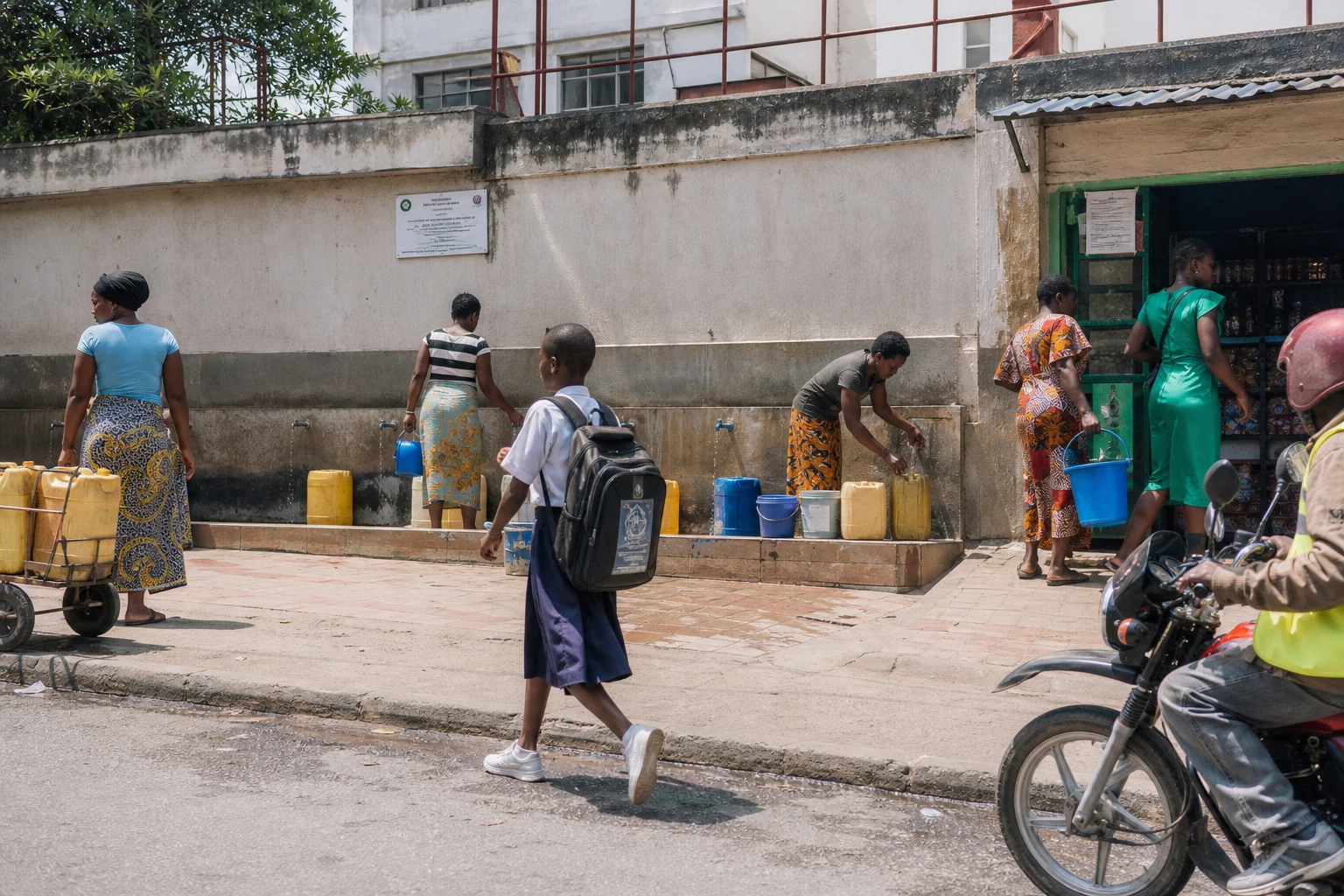
In Burundi, drinking water is not just an infrastructure issue. It is also a matter of lost time, public health and the balance between towns and rural areas. In rural areas, the distance to the nearest water point continues to weigh on households, schools and health centres. Available figures show that in 2022, 62% of Burundi’s population had access to a basic water service, compared with 46% for basic sanitation. The country therefore remains a long way from universal coverage.
It is against this backdrop that Burundi’s government is now setting out its water strategy within Vision Burundi 2040-2060, a national framework that sets specific targets for access to water, hygiene and sanitation. The reference document aims, by 2040, to significantly increase access to a source of drinking water within a 30-minute round trip, followed by broader progress by 2060. The government is thus framing the issue as part of development, rather than as a simple emergency response.
A 2040 target, a funding challenge starting now
On Saturday 18 July 2026, Burundi’s authorities reaffirmed their ambition to raise to 80% the share of the population with access to drinking water and sanitation services by 2040, ahead of universal coverage in 2060. This announcement builds on commitments already made by the Ministry of Finance, Budget and Digital Economy, which presents water as a pillar of Objective 18 of Vision Burundi 2040-2060.
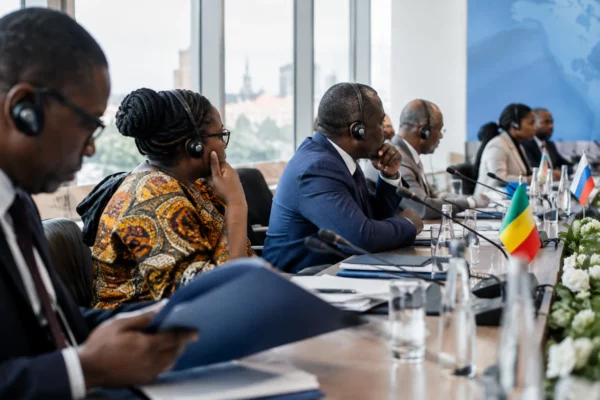
A few days earlier, the Burundian delegation had taken part in the “Water Forward Africa” African Water Forum in N’Djamena, Chad. According to the World Bank, the event was part of the Water Forward initiative, launched in April 2026 to improve water security for 400 million people by 2030. The forum brought African officials together around a shared assessment: without reliable water, it becomes harder to make progress in health, agriculture, industry and employment.
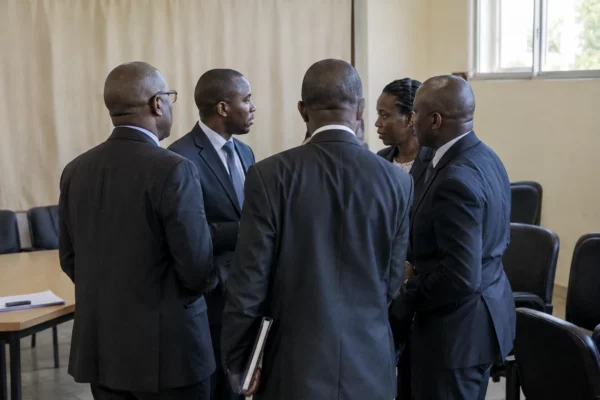
The Burundian delegation was led by Francine Inarukundo, permanent secretary at the Ministry of Finance, who presented the 2026-2031 Water Pact. The document focuses on three levers: strengthening the regulatory framework, developing water supply networks and mobilising public, private and climate finance. The government also wants to focus investment on schools and health centres, two places where water directly affects learning, hygiene and the continuity of care.
What Burundi is seeking to address
The announced target says much about the gaps that need to be closed. According to UNICEF/JMP data used to monitor the Sustainable Development Goals, Burundi still faced significant inequalities between urban and rural areas. A UNICEF Burundi budget report notes that in 2021, 61% of the population had access to an improved water source within 30 minutes, compared with 90% in urban areas and 57% in rural areas. The same document also states that only 6% of households benefited from a basic hygiene service.
These disparities have very tangible consequences. In towns, pressure falls on networks, billing and service quality. In the provinces, the problem is often one of proximity, seasonality and climate vulnerability. UNICEF Burundi also notes that 350,000 children under the age of 18 are at high risk of flooding and that 6.6 million live in an environment exposed to several water- and climate-related diseases. In other words, access to water is not just a matter of household comfort: it affects child protection, school attendance and disease prevention.
The Burundian government’s plan therefore rests on a clear sequence: improve regulation, improve financing, then improve deployment. The sector has already begun to take shape through the Burundi Drinking Water and Sanitation Access Project, funded by the International Development Association with $80 million. This type of programme shows that the issue is not simply a matter of building boreholes. It is also necessary to organise maintenance, connections, local governance and the capacity to monitor infrastructure over time.
The 2026-2031 Water Pact adds an important dimension: the pursuit of climate finance and public-private partnerships. This choice reflects a budgetary reality. Needs exceed the scope for action of any one ministry. The state, local authorities, donors, operators and local communities must therefore work together. In a country where the informal economy remains widely exposed to water cuts, this coordination matters as much as the pipes themselves.
A Burundian announcement with resonance across East Africa
Burundi is not speaking alone. Across the region, pressure on water resources is mounting with population growth, urbanisation and climate shocks. At continental level, development partners point out that billions of people still lack safe water or sanitation. Burundi’s challenge is therefore part of a wider debate: how can countries move from a logic of one-off projects to a sustainable public service policy?
For Burundi, the issue is also institutional. An 80% target for 2040 requires adherence to a timetable, publication of interim results and verification that investment is actually reaching communes, schools and health centres. That is the wider African perspective on the issue: success is measured not by the announcement, but by continuity of service. In the framework of the East African Community, of which Burundi is a member, water thus becomes a marker of practical sovereignty, climate resilience and the credibility of public policies.