Algeria
 Egypt
 Libya
 Morocco
 Sudan
 Tunisia
 Benin
 Burkina Faso
 Cabo Verde
 Côte d'Ivoire
 Ghana
 Guinea
 Guinea-Bissau
 Liberia
 Mali
 Mauritania
 Niger
 Nigeria
 Senegal
 Sierra Leone
 The Gambia
 Togo
 Cameroon
 Central African Republic
 Chad
 DR Congo
 Equatorial Guinea
 Gabon
 Republic of the Congo
 São Tomé and Príncipe
 Comoros
 Djibouti
 Eritrea
 Ethiopia
 Kenya
 Madagascar
 Malawi
 Mauritius
 Mozambique
 Rwanda
 Seychelles
 Somalia
 South Sudan
 Tanzania
 Uganda
 Angola
 Botswana
 Eswatini
 Lesotho
 Namibia
 South Africa
 Zambia
 Zimbabwe
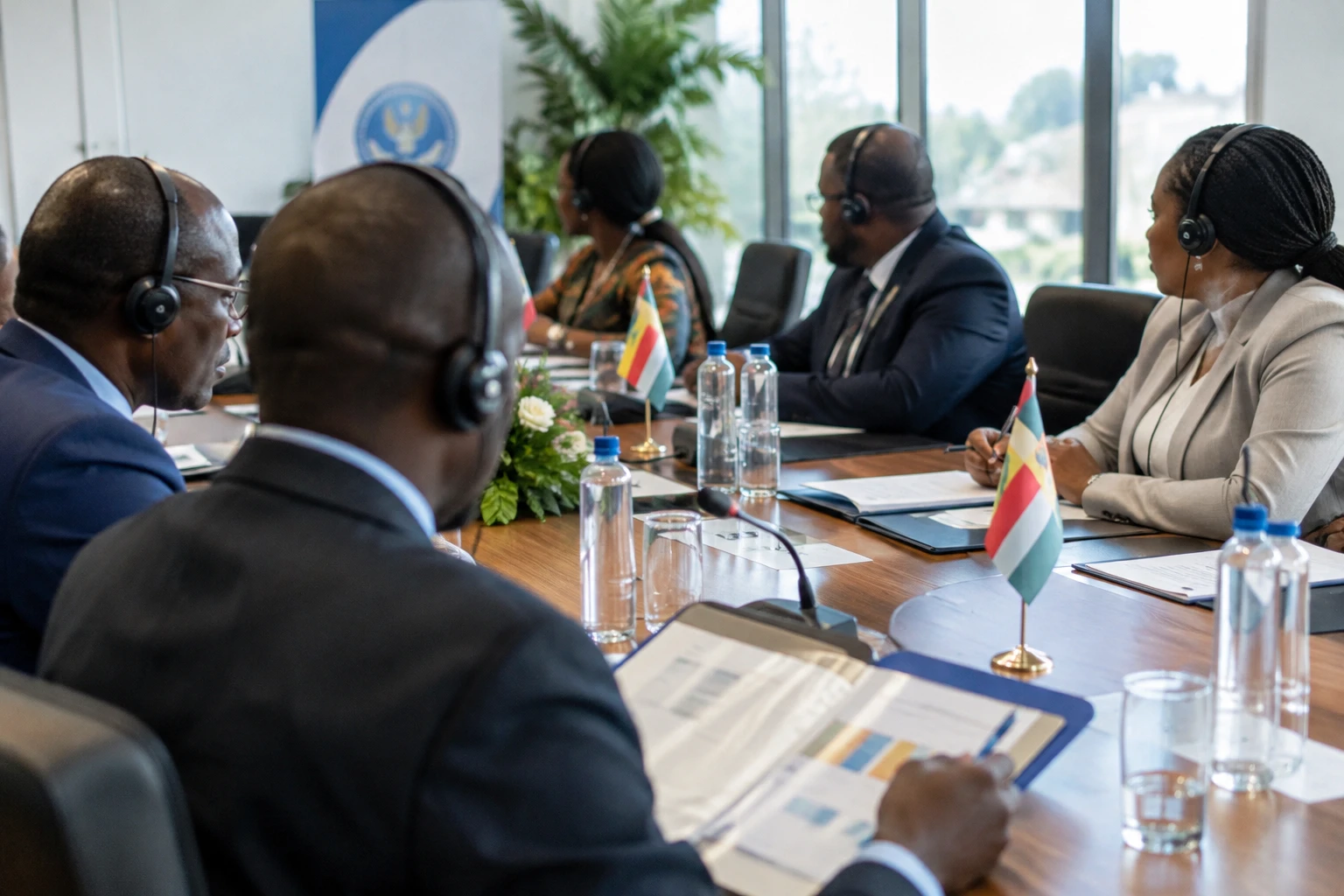
As a presidential election approaches, preventing violence also depends on the ability to document rights violations and bring them to light. In Burundi, the renewal of a United Nations investigative mandate has put this issue back at the centre of debate, just months before the 2027 vote.
Monitoring extended ahead of the election
On 6 October 2026, the UN Human Rights Council renewed the mandate of the Special Rapporteur on the human rights situation in Burundi for one year. According to Burundian media outlet RPA, the resolution received 22 votes in favour, 7 against and 17 abstentions, out of 46 members. The mandate allows an independent expert to gather information and submit reports, but the expert does not speak on behalf of the United Nations as a whole.
The Association of Christians Against Torture in Burundi (ACAT-Burundi) welcomed the decision. Its president, Armel Niyongere, sees it as a sign that the situation in Burundi “has not been forgotten on the international stage”. The organisation views the rapporteur as an independent monitoring mechanism, while the Burundian authorities regularly challenge findings that implicate them.
The renewal comes amid continuing disagreement over access to the country and the verification of allegations. According to information reported by RPA, the rapporteur is not authorised to visit Burundi. This restriction makes cross-checking more difficult: testimony can be gathered outside the country, but the expert cannot investigate directly on the ground as part of an official mission.
Figures attributed, debate contested
In his address to the Council on 18 September, Fortuné Gaëtan Zongo pointed to early signs of an “electoral crisis”. He said that, according to information gathered under his mandate, 402 people had lost their lives in 2025 and 182 during the first six months of 2026. He also reported that 80 people had been abducted or reported missing since 2025. These figures are data attributed to the rapporteur; they should not be presented as totals established by a court.
The rapporteur also denounced extrajudicial killings, enforced disappearances, arbitrary arrests and restrictions on political freedoms. The Burundian government rejects criticism of the country and emphasises its own security concerns. The extension of the mandate does not, by itself, settle disputes over each case. It keeps open a forum in which these allegations can be recorded, examined and discussed.
Burundian civil society presents this monitoring as a tool for preventing violence ahead of the vote. It highlights the risks of pressure against opponents, activists and the media. The authorities, by contrast, may regard the mechanism as an external challenge to their sovereignty. The task is therefore to compare accounts against verifiable evidence, without confusing the testimony of an independent expert with a court ruling.
Election timetable under scrutiny
The presidential election is scheduled for 3 May 2027. President Évariste Ndayishimiye, elected in 2020, is seen as the favourite for a new term, but the election has yet to take place. The Constitution promulgated in 2018 sets the presidential term at seven years. Political competition, the rules on candidacies and the ability of institutions to ensure a credible vote will be among the issues to watch as the campaign approaches.
The 2025 precedent also weighs on assessments. In his September statement, the rapporteur described a political landscape dominated by the CNDD-FDD and pointed to obstacles to genuine electoral competition. The opposition, civil society organisations and the authorities do not necessarily share the same assessment. The practical question will be whether parties can organise, campaign and challenge decisions in a safe and predictable environment.
For Burundians, the consequences extend beyond leaders and political figures in Gitega. Restrictions on civic life also affect local associations, journalists and residents who want to report abuses or take part in public life. When complaint mechanisms are seen as inadequate, confidence in electoral institutions can erode, in cities as well as rural areas.
Regional and continental significance
Burundi is a member of the East African Community (EAC), a regional organisation that brings several countries in the region together for political and economic cooperation. The institutional stability of a member state has implications for trust between partners and for the movement of people and cross-border activity. However, the renewal decided in Geneva falls under the UN Human Rights Council, not the EAC.
At the African level, the case illustrates a recurring tension: how to reconcile national sovereignty, cooperation with international mechanisms and the protection of fundamental rights. The renewed mandate guarantees neither access to Burundi nor the prevention of incidents during the campaign. It does, however, maintain a monitoring body at a time when warnings about the election have already been raised. The next steps to watch will be the publication of the mandate’s reports, cooperation by the authorities and the practical conditions for preparing the May 2027 vote.