Algeria
 Egypt
 Libya
 Morocco
 Sudan
 Tunisia
 Benin
 Cabo Verde
 Côte d'Ivoire
 Ghana
 Guinea
 Guinea-Bissau
 Liberia
 Mali
 Mauritania
 Niger
 Nigeria
 Senegal
 Sierra Leone
 The Gambia
 Togo
 Cameroon
 Central African Republic
 Chad
 DR Congo
 Equatorial Guinea
 Gabon
 Republic of the Congo
 São Tomé and Príncipe
 Burundi
 Comoros
 Djibouti
 Eritrea
 Ethiopia
 Kenya
 Madagascar
 Malawi
 Mauritius
 Mozambique
 Rwanda
 Seychelles
 Somalia
 South Sudan
 Tanzania
 Uganda
 Angola
 Botswana
 Eswatini
 Lesotho
 Namibia
 South Africa
 Zambia
 Zimbabwe
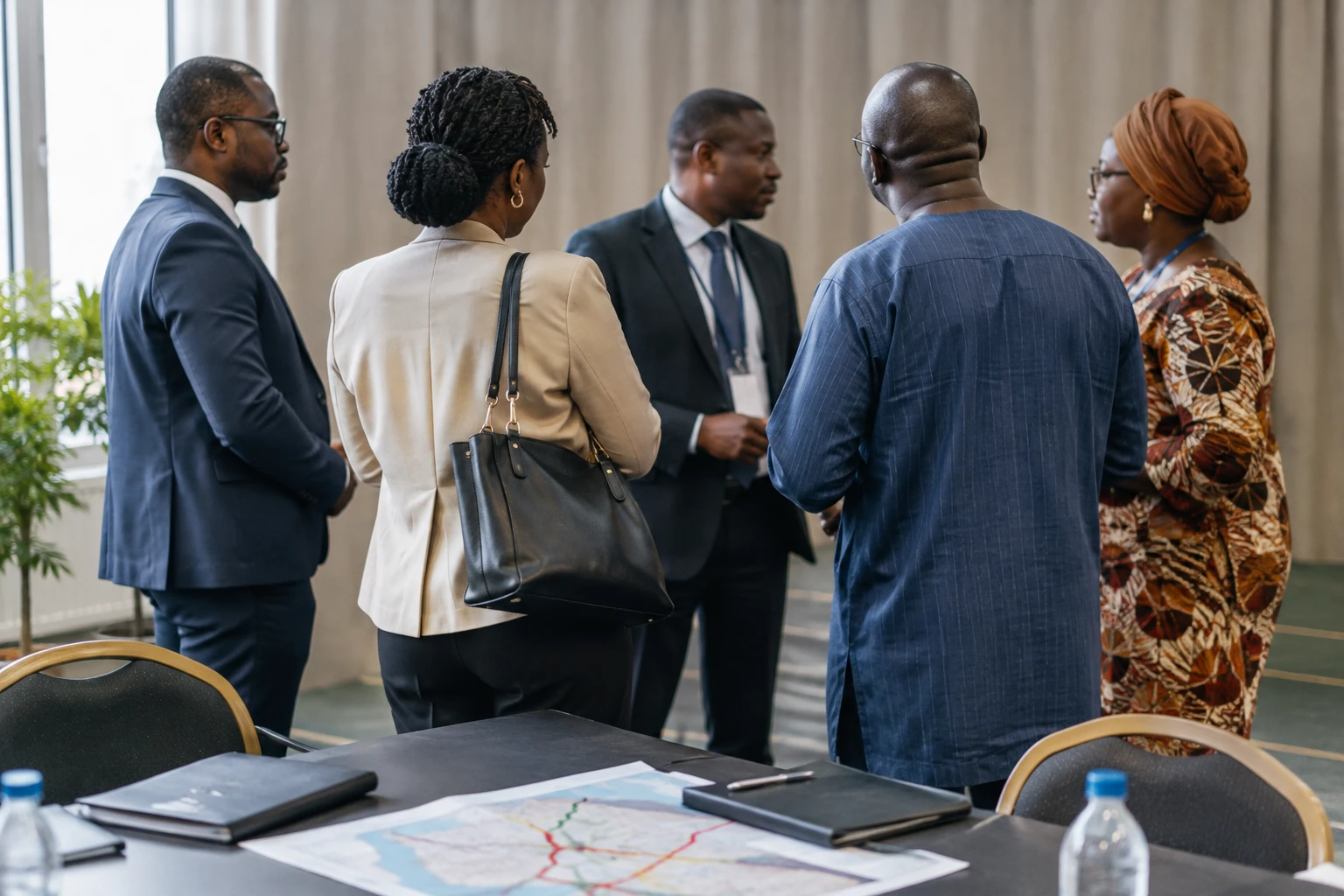
For a landlocked country, a corridor’s reliability is measured by much more than time spent at sea or on the rails. It also depends on delays at borders, transport costs and coordination between ports, rail operators and shippers. It is this entire chain that Burkina Faso is discussing in Ouagadougou.
A national issue at the heart of West African trade
From 20 to 22 October 2026, the Burkinabè capital is hosting the fifth edition of TRANSLOG Africa, the international symposium organised by the Burkina Shippers’ Council (CBC). The event brings together public- and private-sector transport and logistics stakeholders to discuss the resilience and security of supply chains. The programme includes discussions on transit corridors and regional integration.
The issue is a practical one for Burkina Faso, a country with no access to the sea. A large share of its trade depends on routes crossing neighbouring coastal states. The Abidjan–Ouagadougou rail corridor links the Ivorian port to Burkina Faso’s hinterland. Its performance depends as much on the condition of tracks and equipment as on formalities, costs and coordination between the different links in the chain.
This corridor is part of a regional space where the free movement of goods remains a major objective. ECOWAS, the Economic Community of West African States, works to integrate markets and facilitate trade. But operational realities — checks, waiting times, port charges and cargo transfers — continue to weigh on businesses and consumers.
Ports, rail and logistics: a chain to coordinate
Companies attending include SITARAIL, Abidjan Terminal, Côte d’Ivoire Terminal and AGL Burkina Faso. They are part of the Africa Global Logistics group and operate at different stages of transport between the port of Abidjan and Burkina Faso. Their participation highlights an integrated approach, but also raises a question of public interest: how can the corridor be made more predictable and accessible to shippers of different sizes?
At the symposium, SITARAIL commercial director Nadège Diarra is due to present the challenges involved in improving the performance of corridors serving landlocked countries, including costs, constraints and governance. The company advocates continuity of service across port handling, rail transport, transit and storage. This presentation describes the group’s offer; on its own, it is not enough to establish that costs are falling or delays are being reduced for all operators.
For importers, better coordination can limit delays and facilitate the delivery of goods. For Burkinabè exporters, it can make access to coastal and international markets smoother. However, the benefits also depend on tariffs, available capacity and the quality of road and rail connections. Large shippers and small businesses do not always have the same bargaining power or the same capacity to absorb delays.
Rail: a shared asset and work to monitor
SITARAIL has operated the rail link between Côte d’Ivoire and Burkina Faso since August 1995, under a concession agreed with the two states. This cross-border dimension matters: the network is both a commercial tool and shared infrastructure, whose continuity depends on public decisions on both sides of the border.
Burkinabè and Ivorian authorities have discussed rehabilitating the Abidjan–Ouagadougou–Kaya route. SOPAFER-B, the Burkinabè company responsible for railway assets, lists the project among its priorities. Côte d’Ivoire’s Ministry of Transport also describes the rehabilitation and operation of this route as a project intended for passenger and freight transport. These pages confirm that the project exists, but do not establish that all the work has been completed or allow a definitive timetable to be set here.
The reference to Kaya broadens the issue beyond the current link with Ouagadougou. Upgrading the network and the planned extension could change the possibilities for serving inland areas. But the impact will depend on funding, the timetable, maintenance and coordination between the two states. For local communities and economies, the question will also be whether rail services are genuinely accessible, not just how much freight passes through the corridor.
From discussions to measurable results
TRANSLOG Africa provides a forum for dialogue between shippers, government agencies and companies. Its regional significance reflects a reality shared by several landlocked countries in West Africa: their competitiveness depends in part on corridors that cross borders and ports located in neighbouring states. The AfCFTA, the African Continental Free Trade Area, aims to facilitate trade between African countries; efficient logistics chains are essential to turn that ambition into actual trade.
It remains to be seen what the discussions in Ouagadougou will deliver beyond announcements. Public indicators on costs, delays, freight regularity, service interruptions and progress on rail works would make it possible to assess developments. For Burkina Faso and its coastal partners alike, a corridor’s resilience cannot be decreed: it must be demonstrated through continuity of service and operators’ ability to move goods without unpredictable costs.