Algeria
 Egypt
 Libya
 Morocco
 Sudan
 Tunisia
 Benin
 Cabo Verde
 Côte d'Ivoire
 Ghana
 Guinea
 Guinea-Bissau
 Liberia
 Mali
 Mauritania
 Niger
 Nigeria
 Senegal
 Sierra Leone
 The Gambia
 Togo
 Cameroon
 Central African Republic
 Chad
 DR Congo
 Equatorial Guinea
 Gabon
 Republic of the Congo
 São Tomé and Príncipe
 Burundi
 Comoros
 Djibouti
 Eritrea
 Ethiopia
 Kenya
 Madagascar
 Malawi
 Mauritius
 Mozambique
 Rwanda
 Seychelles
 Somalia
 South Sudan
 Tanzania
 Uganda
 Angola
 Botswana
 Eswatini
 Lesotho
 Namibia
 South Africa
 Zambia
 Zimbabwe
When the post becomes a link in the digital economy
In Burkina Faso, the post is no longer just about letters. Parcels, online services and the rapid movement of goods are now taking up more space than mail. The authorities are seeking to regulate this shift in a country where the postal network can still connect Ouagadougou, secondary cities and areas less well served by other logistics services.
This revision of the postal framework comes amid a broader overhaul of digital regulations in Burkina Faso. Since 2010, the country had a general law governing postal activities. In 2026, the Transitional Legislative Assembly adopted a new law to modernise the sector, clarify operators’ responsibilities and better accommodate digital uses.
What Burkina Faso’s reform will change
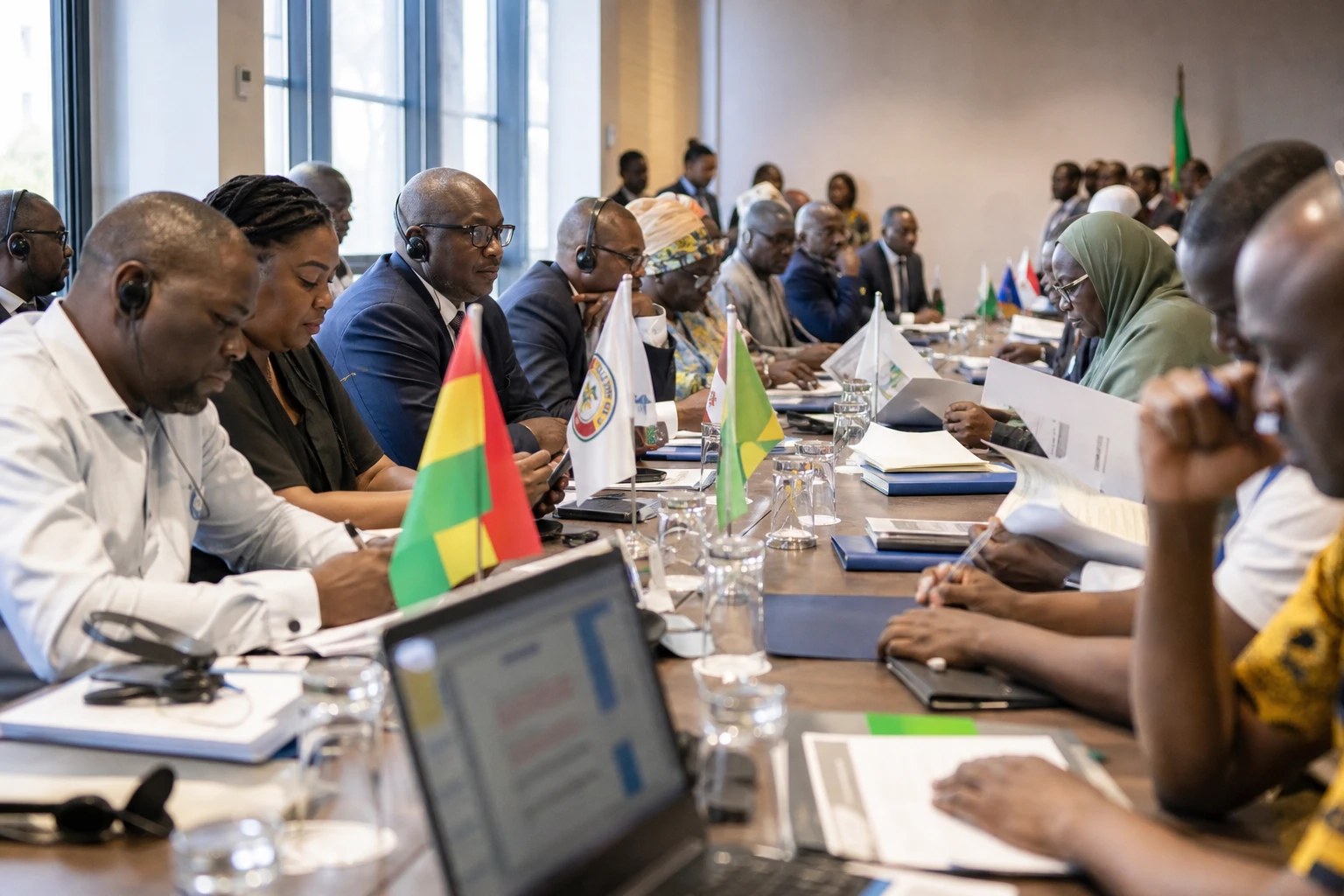
In Koudougou, on 10 August 2026, the ministry responsible for digital transition, posts and electronic communications opened a workshop on drafting implementing regulations. The aim is practical: to make the new law operational. Discussions cover access to postal activities, the quality of universal service, tariffs, operators’ responsibilities and the handling of undeliverable items—that is, consignments that have not been delivered or can no longer be handed to the recipient.
The message is clear. The law is not simply intended to update a legal definition. It seeks to bring order to a more complex sector in which traditional mail, parcel delivery, electronic services and logistics services linked to online commerce coexist. The ministry’s technical adviser, Saïdou Yanogo, presented the reform as a response to changes brought about by the digital transformation, e-commerce and the diversification of services.
This initiative is not taking place in isolation. During preparatory parliamentary proceedings, MPs heard from an expert at the Electronic Communications and Postal Regulatory Authority. He described a sector that generated more than 1,400 jobs in 2025, with an estimated payroll of 1.478 billion CFA francs, more than 2.583 million consignments and revenue exceeding 6.942 billion CFA francs. These figures give an idea of the sector’s economic weight, but also of its vulnerability if the framework remains unclear.
A rapidly changing African context
Burkina Faso’s case is part of a broader shift across the continent. In its Regional Development Plan for Africa 2026–2029, the Universal Postal Union notes that Africa is experiencing “postal decoupling”: GDP is growing, but postal revenues are falling by an average of 2.53% a year. The organisation cites several recurring obstacles, including underinvestment, low volumes of letters and parcels, regulatory gaps and the slow adoption of digital standards.
In this context, regulatory modernisation is not just another administrative exercise. It determines whether African postal services can play a role in e-commerce, financial inclusion and the delivery of public services. The UPU’s 2026–2029 strategy also emphasises modernising regulatory frameworks and repositioning the postal network as an integral part of the digital economy.
The continent is also moving forward through experimentation. In Côte d’Ivoire, the UPU has launched TradePost, a scheme linking the postal network, customs and cross-border trade to facilitate the movement of small parcels associated with online commerce. The example shows that a postal operator can become a logistics gateway, provided there are clear rules, reliable data and strong coordination between government agencies.
Burkina Faso is also working to connect postal services, digital technology and local services. In 2025, the ministry had already presented modernisation of the postal sector as a lever for digitalisation, postal cybersecurity and access to useful services across the country. It also referred to the launch of the Postal Bank and the opening of agencies and counters in several cities, including Ouagadougou, Bobo-Dioulasso and Koudougou.
For users, businesses and communities
For users, the stakes are simple: receive items faster, track them more effectively and know whom to contact in the event of a dispute. For operators, the reform could open up a more transparent market, but one with higher standards. Clearly defined responsibilities, penalties for illegal operators and clarification of universal service mechanisms could foster healthier competition.
For small businesses, artisans and online sellers, the issue is even more practical. A modernised postal framework could reduce delays, improve tracking and support parcel delivery, including outside major centres. In a country where the informal economy remains significant, the post can serve as a bridge between local businesses and wider markets, provided tariffs remain clear and territorial coverage is genuine.
For rural and remote areas, postal services retain a value that digital technology alone cannot replace. They can deliver documents and goods, and sometimes provide financial or administrative services. This is where universal service takes on its full meaning: the aim is not to protect an outdated administration, but to ensure modernisation does not leave less profitable areas behind.
The continental significance is clear. As the African Union promotes market integration and the African Continental Free Trade Area (AfCFTA) seeks to ease trade within Africa, the post is once again becoming a practical tool of sovereignty: one that transports, tracks, connects and secures. Through this reform, Burkina Faso is therefore testing a simple but strategic idea: without suitable rules, postal infrastructure falls behind; with a clear framework, it can once again become a public service that supports the real economy and the movement of goods across the continent.