
 Algeria
 Egypt
 Libya
 Morocco
 Sudan
 Tunisia
 Benin
 Cabo Verde
 Côte d'Ivoire
 Ghana
 Guinea
 Guinea-Bissau
 Liberia
 Mali
 Mauritania
 Niger
 Nigeria
 Senegal
 Sierra Leone
 The Gambia
 Togo
 Cameroon
 Central African Republic
 Chad
 DR Congo
 Equatorial Guinea
 Gabon
 Republic of the Congo
 São Tomé and Príncipe
 Burundi
 Comoros
 Djibouti
 Eritrea
 Ethiopia
 Kenya
 Madagascar
 Malawi
 Mauritius
 Mozambique
 Rwanda
 Seychelles
 Somalia
 South Sudan
 Tanzania
 Uganda
 Angola
 Botswana
 Eswatini
 Lesotho
 Namibia
 South Africa
 Zambia
 Zimbabwe
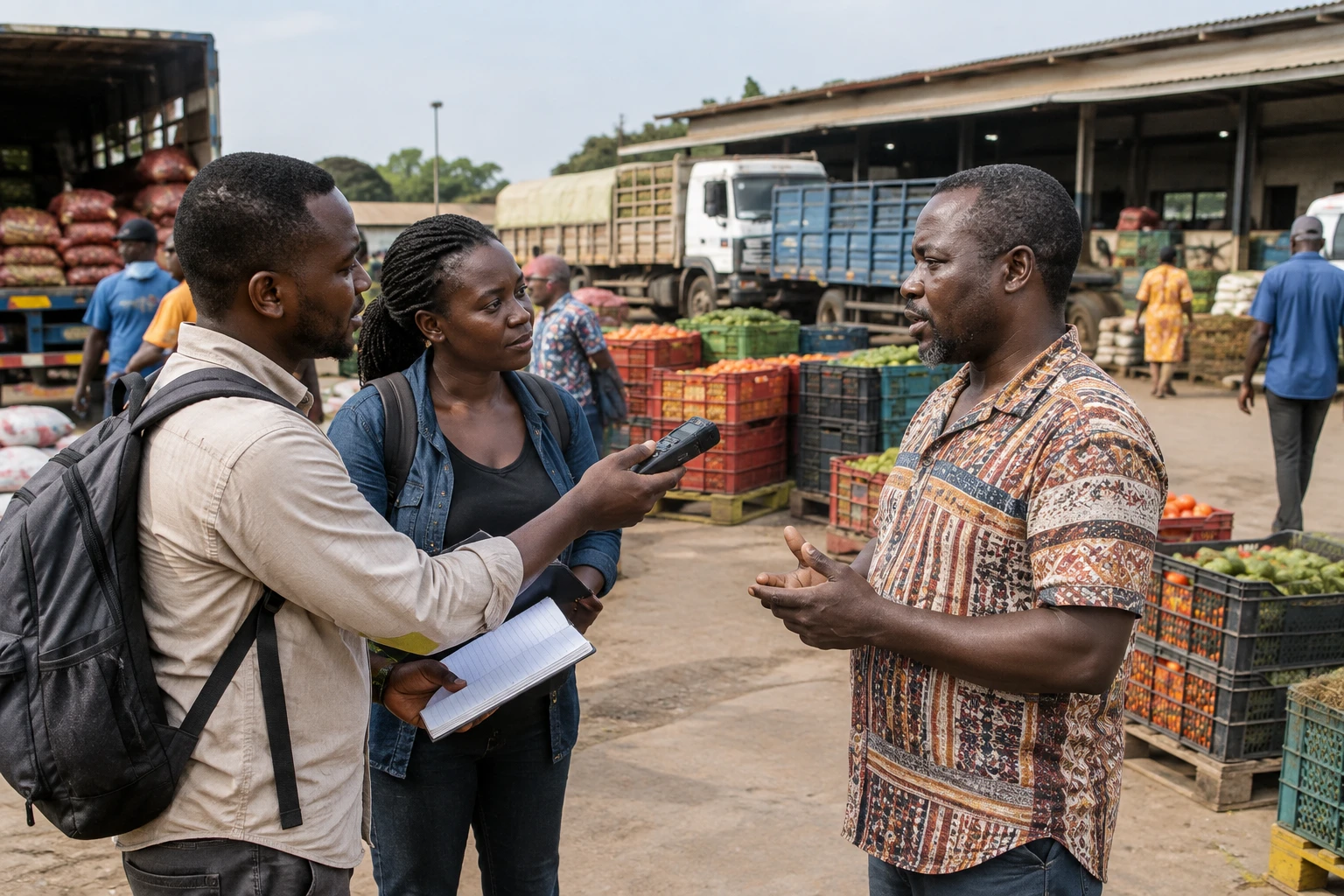
A voice assistant in Mooré, a public service accessible in Dioula or farming advice in Fulfulde: in Burkina Faso, artificial intelligence could bring digital tools closer to people who are not comfortable with French. But this ambition depends on work less visible than the applications themselves: building reliable data in the country’s languages, then having it checked by their speakers.
A national strategy, with goals to be monitored over time
Burkina Faso has set out this direction in a national artificial intelligence roadmap for 2026-2030. The document was approved in June 2026, according to local reports, but its official publication was still awaited when it was presented in the autumn. On 23 October, Yaya Traoré, permanent secretary responsible for innovation and monitoring emerging digital technologies, outlined its main points at the second edition of Faso Digital.
The announced goals are ambitious: mobilise 30 billion CFA francs, create 5,000 specialised jobs, train 500 experts and 140 community leaders, and trial 23 AI solutions in priority sectors. These figures are targets, not results already achieved. Meeting them will depend in particular on funding actually secured, skills developed and public monitoring of the projects.
The roadmap is part of the RELANCE Plan, the national development framework for 2026-2030. In June, when the document was approved, Burkinabè officials presented AI as a potential tool for education, health, agriculture and administrative services. The challenge now is to turn these plans into useful services that are accessible beyond the major urban centres.
Linguistic data: the groundwork
To understand a language, translate a sentence or recognise a voice command, an AI system needs large quantities of correctly transcribed and validated texts and recordings. Natural language processing, the branch of computing devoted to these tasks, also requires writing conventions and evaluation methods tailored to each language.
Available resources, however, remain highly uneven. A study published in Proceedings of Machine Learning Research in 2026 compared several models and identified 41 African languages supported, as well as 23 public datasets within its scope. It estimates that more than 98% of the roughly 2,000 African languages considered low-resource are not covered by the systems examined. This continent-wide finding does not precisely measure the situation of each Burkinabè language, but it shows the scale of the resource gap.
In Burkina Faso, a 2025 study by researchers Dahani Nadinga and Awa Sawadogo highlights the lack of research and tools devoted to national languages in natural language processing. The task is therefore not simply to adapt an existing model. It requires documenting usage, taking account of variants, producing corpora and testing results with speakers.
A workshop held in Koudougou from 24 to 28 March 2026 by the ministry responsible for digital affairs, together with Radiodiffusion-Télévision du Burkina and the Centre for Innovation, Technology and Development Support, focused on compiling corpora in Mooré, Dioula, Fulfulde and Gulmancema. These resources are intended to support speech recognition, machine translation and speech synthesis tools. Their quality, accessibility and continued updating will be crucial.
Potential benefits, but choices to be made
If the systems work properly, they could make it easier to access farming information, administrative procedures or educational content. Needs nevertheless vary between users. A voice service may help someone who reads little French, while a farmer in a rural area will also need a compatible phone, an available connection and up-to-date local information. An application is therefore no substitute for network access or an operational public service.
Data collection also raises questions of consent, payment and control. Communities contributing recordings and translations must know how their voices and texts will be used. Burkinabè institutions will need to clarify who can reuse the corpora, how errors will be corrected and what safeguards protect personal data. Without such rules, local production risks supplying resources to systems whose benefits do not reach contributors.
Job and training announcements will also need to translate into practical pathways. Training 500 experts requires teachers, equipment and career opportunities. The 140 community leaders targeted could help identify needs and explain the tools, provided they are involved from the design stage, rather than only when the tools are rolled out.
A shared issue across West Africa
Burkina Faso is operating in a regional environment where languages, exchanges and digital practices extend beyond national borders. Mooré, Dioula and Fulfulde are spoken in several countries or cross-border communities. Pooling methods, standards and resources could therefore cut costs and improve tools, without erasing local variants.
Across Africa, researchers stress the need to build corpora with communities, document languages and measure performance language by language. Pan-African research initiatives also show that controlled data collection and human validation can improve models. For Ouagadougou, the challenge is to connect these research networks with the country’s universities, media, linguistic institutions and digital-sector players.
The next step will be less about announcing an ambition than implementing it in a verifiable way: publishing the document, detailing the funding, setting a timetable for the 23 trials and defining evaluation criteria. These are the measures by which Burkinabè people will be able to judge whether AI in national languages becomes a reliable, shared service rather than a technological promise.
Approval of the roadmap and public priorities were reported by the Burkinabè media outlet leFaso.net. The figures on coverage of African languages come from the study published in Proceedings of Machine Learning Research. The national plan’s context is documented by the Information Service of the Government of Burkina Faso.



