Algeria
 Egypt
 Libya
 Morocco
 Sudan
 Tunisia
 Benin
 Cabo Verde
 Côte d'Ivoire
 Ghana
 Guinea
 Guinea-Bissau
 Liberia
 Mali
 Mauritania
 Niger
 Nigeria
 Senegal
 Sierra Leone
 The Gambia
 Togo
 Cameroon
 Central African Republic
 Chad
 DR Congo
 Equatorial Guinea
 Gabon
 Republic of the Congo
 São Tomé and Príncipe
 Burundi
 Comoros
 Djibouti
 Eritrea
 Ethiopia
 Kenya
 Madagascar
 Malawi
 Mauritius
 Mozambique
 Rwanda
 Seychelles
 Somalia
 South Sudan
 Tanzania
 Uganda
 Angola
 Botswana
 Eswatini
 Lesotho
 Namibia
 South Africa
 Zambia
 Zimbabwe
Food sovereignty takes shape in fields, ponds and workshops
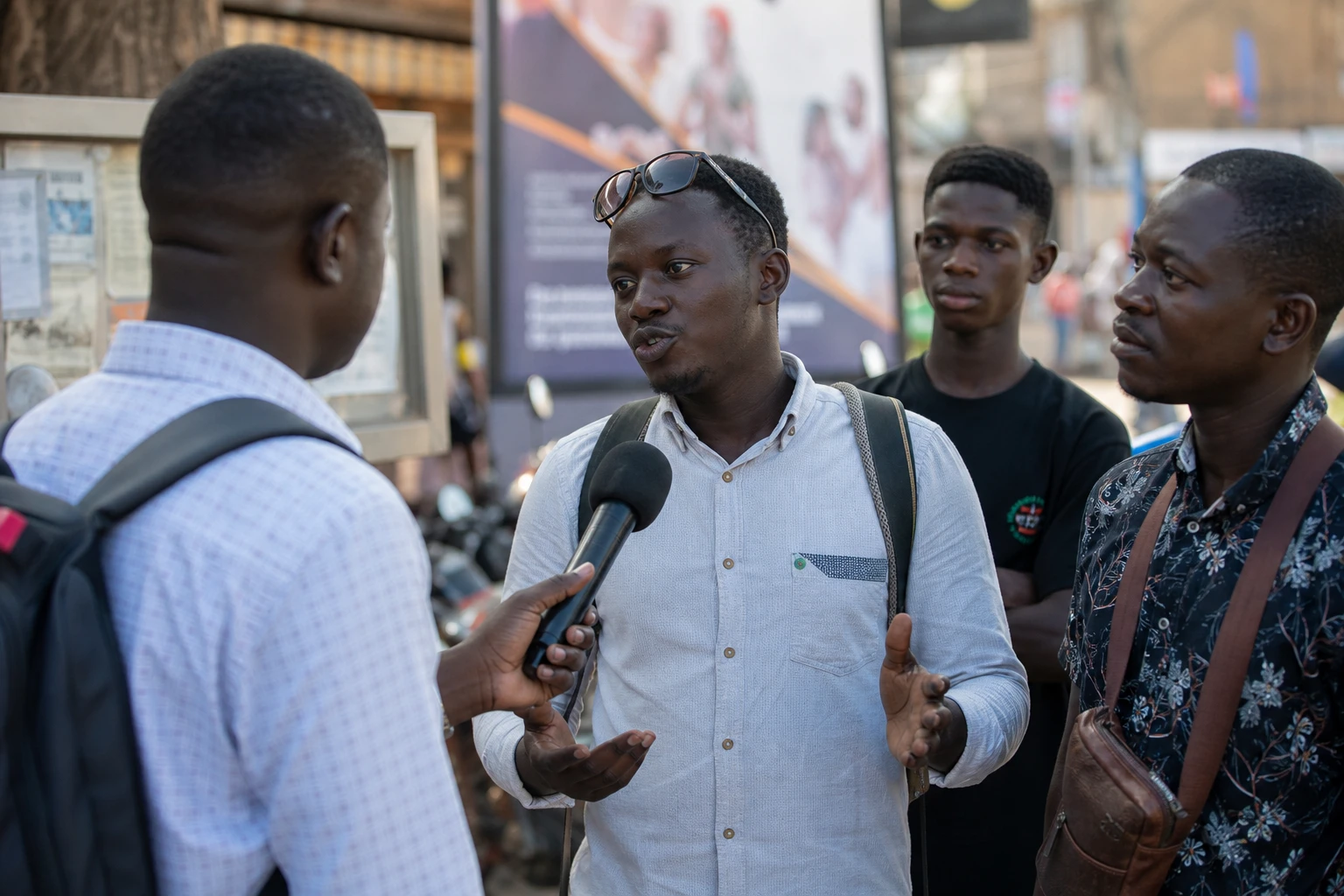
In Burkina Faso, the battle over the cost of the food basket is not being fought only in the markets of Ouagadougou or Bobo-Dioulasso. It is also won in rice-growing lowlands, fish ponds, processing units and distribution networks able to absorb the national harvest without crushing it under imports. This approach is at the heart of the new phase launched by the Burkinabè authorities, who are extending the Agro-pastoral and Fisheries Offensive while tightening the market around local production.
The context is clear. Since 2024, Ouagadougou has made food sovereignty a pillar of its economic policy. The Burkinabè executive has also reorganised agricultural governance, establishing growth poles and a new holding company tasked with overseeing agro-industrial hubs, in order to link production, processing and marketing. At the same time, the country is now part of the Alliance of Sahel States, established by the treaty signed in Niamey on 6 July 2024, while trade relations with the wider West African region remain shaped by market and product-movement tensions.
A second phase aimed at consolidating gains
The figures cited by the authorities give a sense of the ambition. For the 2025-2026 agropastoral season, national cereal production is estimated at more than 7 million tonnes, with a cereal-needs coverage rate of 126.6%. Rice production exceeds 1 million tonnes, up 49.34% year on year. These official figures build on a trajectory already highlighted last year, when the government said it had passed the 5.15 million-tonne mark for cereals in 2023-2024.
On the fisheries front, the state is promoting fish farming as an alternative to imports. Burkina Faso is targeting 111 million fingerlings in 2026, with the aim of meeting 50% of fish consumption needs in due course. The country has also announced plans to reach domestic fish production of 100,000 tonnes, backed by industrial fish-feed production units in Bobo-Dioulasso and Bagré. This expansion is not merely theoretical: it is underpinned by public and private investment already visible in several regions.
The government is therefore presenting the new 2026-2028 phase not as a mere administrative extension. It is built around eight priority sectors: rice, milk, soya, sesame, groundnuts, wheat, cassava and shea. Six other sectors are to be strengthened, including potatoes, livestock, fish and poultry. Six more are described as emerging, including rabbit farming, sunflower and plantain. In the background is the aim of diversifying rural incomes and reducing the country’s dependence on imported processed food.
The trade barrier: protecting local processors
The most sensitive decision concerns imports of several processed cereal products. Imports of infant flour, couscous and semolina are suspended until further notice, according to the inter-ministerial statement relayed by the authorities. The stated aim is to support the sale of domestic production. Operators already engaged in import procedures have two months. The measure extends an approach the Burkinabè state has already used for other products, such as rice, weaving yarn and raw cashew nuts, to give local sectors room to grow.
This approach could help Burkinabè processors clear their stocks, protect their margins and plan orders of locally grown cereals. It could also strengthen small and medium-sized businesses already producing pasta, couscous, infant flour or products made from maize, sorghum, millet and cassava. But the policy has a downside. If local production cannot keep pace, the restriction could weigh on available supply, particularly in cities where households make daily trade-offs over price, quality and affordability. The government is therefore trying to strike a delicate balance between industrial protection and pressure on purchasing power.
The debate is not new in Burkina Faso. The authorities have already invoked the defence of the domestic market to combat fraud, limit uncontrolled outflows of cereals and curb what they regard as unfair competition with local products. In June 2026, the ministry responsible for trade also noted that the Burkinabè economy remained exposed both to domestic factors and to external price pressures. In this context, the measure on flour and related products appears less like a shutdown than a regulatory tool in support of domestic production.
What this means for producers, cities and the region
For producers, the signal is positive. The authorities say the price of a sack of maize has fallen to 20,000 CFA francs, from 35,000 to 40,000 previously. If this trend continues, it could improve rural households’ cash flow and facilitate purchases of inputs for the next season. But a sustained fall in producer prices is not enough. Roads, water, storage, processing and routes to market are also needed. That is precisely why work on dams, the mobilisation of surface water and processing units matters as much as announcements about fields.
For urban consumers, the issue is immediate. If local processors increase output, Burkinabè products could become more widely available and visible in shops. But the transition will take time. An industrial facility inaugurated in Dédougou, for example, has an annual processing capacity of 12,000 to 15,000 tonnes of maize, producing grits, semolina, flour and bran. That is useful, but still far from enough to cover the entire domestic market. The strategy’s success will therefore depend on the country’s ability to link agricultural production, storage, processing and distribution without creating an artificial shortage.
Across West Africa, Burkina Faso’s choice resonates beyond its borders. The country remains part of a region where foodstuffs move, sometimes formally and sometimes under constraint, between the Sahel, the Gulf of Guinea and regional trade corridors. The current approach underscores that food has become an issue of economic sovereignty as well as public security. For the Alliance of Sahel States, it also tests member states’ ability to produce more, process more and reduce their exposure to external shocks. The credibility of this second phase will be judged on that basis in the coming months.
The next test will therefore be practical: how the restrictions are implemented, how quickly local products gain wider reach and whether prices hold steady in markets. In Ouagadougou and across the regions, success will not be measured by the number of statements issued, but by whether Burkinabè people can find food produced, processed and sold in the country at a sustainable price.