Algeria
 Egypt
 Libya
 Morocco
 Sudan
 Tunisia
 Benin
 Cabo Verde
 Côte d'Ivoire
 Ghana
 Guinea
 Guinea-Bissau
 Liberia
 Mali
 Mauritania
 Niger
 Nigeria
 Senegal
 Sierra Leone
 The Gambia
 Togo
 Cameroon
 Central African Republic
 Chad
 DR Congo
 Equatorial Guinea
 Gabon
 Republic of the Congo
 São Tomé and Príncipe
 Burundi
 Comoros
 Djibouti
 Eritrea
 Ethiopia
 Kenya
 Madagascar
 Malawi
 Mauritius
 Mozambique
 Rwanda
 Seychelles
 Somalia
 South Sudan
 Tanzania
 Uganda
 Angola
 Botswana
 Eswatini
 Lesotho
 Namibia
 South Africa
 Zambia
 Zimbabwe
As power extends its reach, debate moves online too
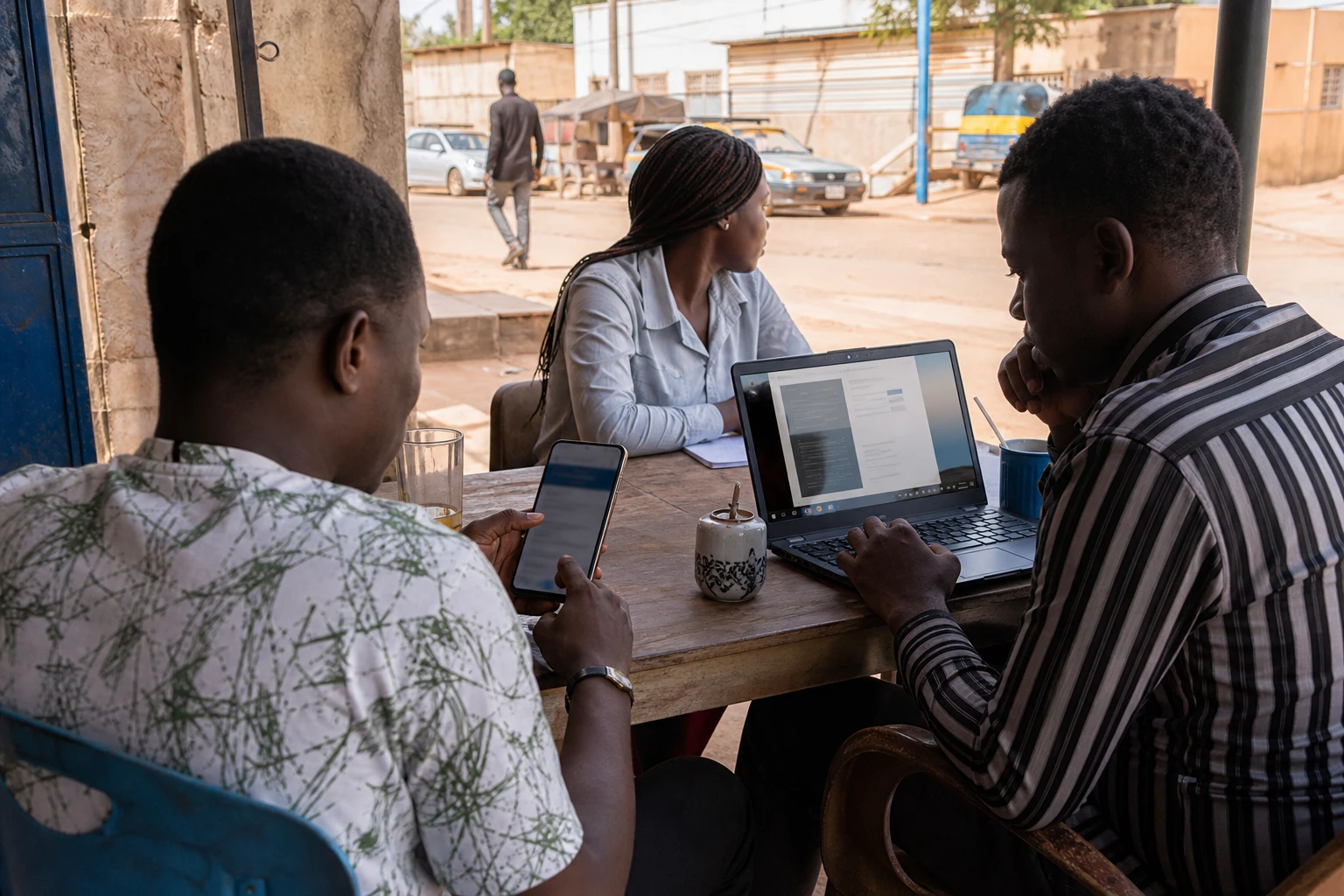
In Burkina Faso, the battle over information is no longer fought only in newsrooms. It now runs through Facebook feeds, WhatsApp groups and anonymous accounts that can make or break reputations within hours. In a country where security remains the official priority, the digital space has become a second front, with its mouthpieces, intimidation and red lines.
This development cannot be understood outside the Burkinabè context. Since the September 2022 coup, Captain Ibrahim Traoré has led the transition that began after Paul-Henri Sandaogo Damiba was ousted. The authorities explain their actions by pointing to the security crisis that has gripped the country for years. But this period has also brought a tightening of the media environment, in a country that left ECOWAS on 29 January 2025 alongside Mali and Niger.
What the investigation says about the BIR-C
The investigation published by Reporters Without Borders describes a group called the Rapid Response Communications Battalion, or BIR-C, as a highly organised structure active in Burkina Faso’s cyberspace and targeting voices critical of the government. The organisation says the network brings together activists, anonymous accounts, government allies and even, according to its findings, a serving minister whose name has not been made public. RSF also maintains that journalists are its primary targets.
According to the investigation, the methods are familiar but formidable: coordinated attacks, insults, doctored images, smear campaigns and repeated harassment. RSF describes a “swarm” that mobilises against anyone who criticises Captain Traoré. The NGO presents this not as a spontaneous initiative by citizens, but as a structured network in which authorities and their supporters are directly involved. This remains the organisation’s claim and should be read as such.
The case of British-Sudanese reporter Yousra Elbagir, who was targeted after a documentary on Burkina Faso aired in April 2026, is a central example in the report. RSF says it recorded hundreds of hostile messages, posted mainly on Facebook after the programme was broadcast, which portrayed the security situation as worse than the official account suggests. The investigation attributes the online raid to the BIR-C. Here too, this is an allegation documented by the NGO, not a judicial finding.
Why the climate has hardened in Ouagadougou
The capital, Ouagadougou, is at the centre of much of this tension. The authorities have tightened their grip on the media since 2022. RSF says the media landscape has narrowed, with foreign and local outlets suspended, journalists arrested and, in several cases, requisitioned to join the army. The Committee to Protect Journalists and Human Rights Watch have also reported measures in 2024 and 2025 involving the closure or suspension of media outlets, or the detention of media professionals.
The Higher Council for Communication, the national regulator, confirmed restrictions on some foreign media in 2024, while Burkina Faso’s official news agency reported the suspension of content syndication deemed “malicious”. These decisions show that controls target not only critical investigations, but also rebroadcast formats and international distribution. In this context, the boundary between state communication, propaganda and surveillance of public debate is becoming more blurred.
The report also raises a broader question: the place of investigative journalism in a military transition. Burkina Faso ranks 105th out of 180 in Reporters Without Borders’ 2025 index. This is not a mere statistical detail. It reflects an environment in which information professionals work under pressure, while citizens are increasingly exposed to content on social media that is slanted, filtered or aggressive.
What this means for Burkinabè people and the region
For the authorities, the battle over image has an obvious advantage: it allows them to retain control of the national narrative. It rallies supporters, discourages criticism and creates the impression of a united camp around the government. But for journalists, researchers, opponents and ordinary internet users, the cost is more tangible. Fear of being exposed, reported or harassed restricts the circulation of verified information. It also pushes some professionals towards self-censorship.
This dynamic also has economic and social effects. In a society where radio, television and social media remain key sources of information, the muddling of public debate penalises urban and peri-urban populations first; they are highly connected, but rural areas are also affected, where access to reliable content is already more precarious. When information becomes a battleground, rumours spread faster than corrections.
Regionally, the case of Burkina Faso resonates far beyond the country. Burkina Faso is not alone: it shares with Mali and Niger a period of military transitions, withdrawal from ECOWAS and growing tension over civil liberties. The issue is therefore not only press freedom in one state. It is also West Africa’s ability to maintain spaces for debate in which security, sovereignty and accountability can be discussed without intimidation.
The next months will be decisive in Ouagadougou, but also in neighbouring capitals and in regional and continental institutions. As long as transitions in the Sahel remain marked by the concentration of power, digital intimidation campaigns are likely to continue to thrive. The BIR-C report is a reminder of a simple point: the fight against terrorism and the battle for control of the public narrative often go hand in hand, but they do not have the same effects on democracy.