
 Algeria
 Egypt
 Libya
 Morocco
 Sudan
 Tunisia
 Benin
 Cabo Verde
 Côte d'Ivoire
 Ghana
 Guinea
 Guinea-Bissau
 Liberia
 Mali
 Mauritania
 Niger
 Nigeria
 Senegal
 Sierra Leone
 The Gambia
 Togo
 Cameroon
 Central African Republic
 Chad
 DR Congo
 Equatorial Guinea
 Gabon
 Republic of the Congo
 São Tomé and Príncipe
 Burundi
 Comoros
 Djibouti
 Eritrea
 Ethiopia
 Kenya
 Madagascar
 Malawi
 Mauritius
 Mozambique
 Rwanda
 Seychelles
 Somalia
 South Sudan
 Tanzania
 Uganda
 Angola
 Botswana
 Eswatini
 Lesotho
 Namibia
 South Africa
 Zambia
 Zimbabwe
When the digital space becomes political territory
In Burkina Faso, social media is no longer used merely to comment on current affairs. It has also become a battleground where the image of the state, the credibility of the media and public trust are at stake. In this context, the official tribute paid to a group presented as active online has revived a simple question: how far can a government organise its digital presence without undermining press freedom?
The issue extends beyond Burkina Faso alone. Since Burkina Faso’s official withdrawal from ECOWAS on 29 January 2025, Ouagadougou has been operating in a changing regional framework, alongside Mali and Niger within the Alliance of Sahel States. At the same time, security, the flow of information and the place of the media remain central issues across the Sahel.
An openly defended government response
On Monday 3 August 2026, Burkina Faso’s communications minister, Pingdwendé Gilbert Ouédraogo, publicly defended the work of BIR-C, presented as a communications operation mobilised on social media in support of the executive. His remarks came as Reporters Without Borders describes, in its work on the country, a more tense media environment since the coups of 2022 and increased pressure on public debate.
The government, for its part, embraces a strategy of mobilisation. As early as March 2026, the ministry responsible for communications, the Superior Council for Communication and the Central Brigade for the Fight against Cybercrime had brought together content creators, influencers and figures presented as “wayignan” and members of BIR-C in Ouagadougou, around the theme of “citizen communication”. The message was clear: the state wants to organise the digital front amid disinformation and fake accounts.
What the controversy says about press freedom
RSF goes beyond criticising the approach. The organisation speaks of a system of digital pressure targeting journalists and critical voices. It places this development within a broader deterioration of Burkina Faso’s media environment, already marked by security-related violence, restrictions and media suspensions in recent years.
RSF’s ranking illustrates this trend. Burkina Faso ranks 110th in 2026, after placing 105th in 2025 and 86th in 2024. The decline is clear. It reflects less a sudden collapse than a sustained erosion of the safeguards afforded to journalistic work, in a country where public discourse has hardened since 2022.
For journalists, the issue is not abstract. When those in power encourage their digital networks to “defend” their position, the line becomes more blurred between institutional communication, political counter-messaging and online harassment. Yet the media cannot fulfil its mission in a climate of threats or intimidation. It informs, verifies and asks questions. It is precisely this role that is weakened when the digital space becomes a permanent tribunal.
A country under security and communications pressure
Burkina Faso remains gripped by a severe security crisis. This reality weighs on the flow of information, newsroom work and access to areas in the field. RSF notes that violence and political instability stemming from the coups of 2022 have severely degraded the conditions for journalism and the diversity of information available.
The government, for its part, often justifies its strategy by citing the fight against “fake news”, fake accounts and what it describes as an information war. Recent initiatives by the ministry, the CSC and other institutions show that Burkina Faso’s executive wants to organise an offensive response in the digital sphere. But this response raises another question: when the state wants to protect its narrative, who still protects the right to challenge it?
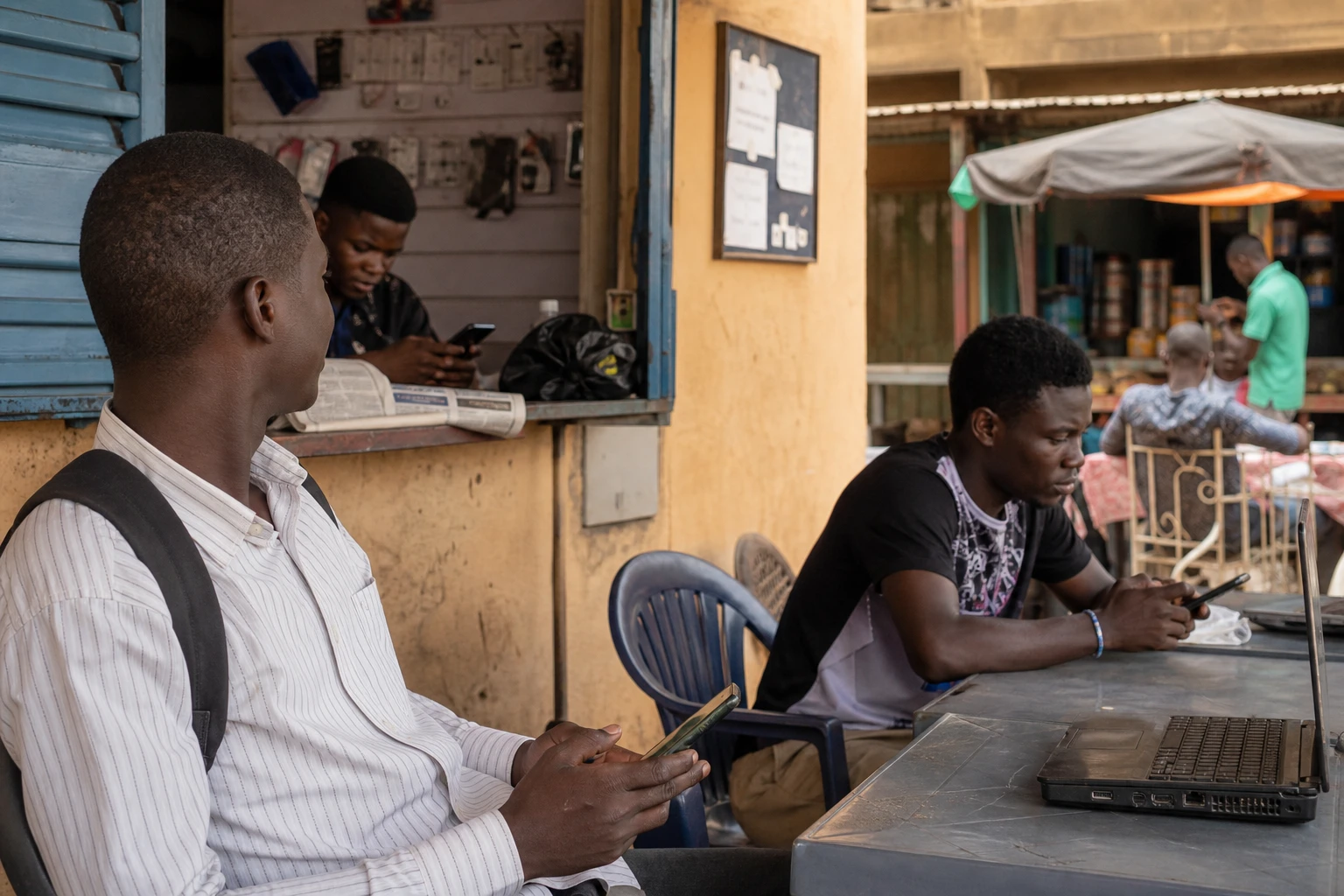
This tension also affects society. In cities, political debates increasingly take place on Facebook, TikTok, X or WhatsApp. In the regions, where access to information depends more on radio and community networks, the spread of rumours can have very tangible effects. The democratic cost, meanwhile, is measured in the same way everywhere: less room for dissent and more scope for self-censorship.
A story to follow beyond Burkina Faso
This affair goes beyond the national context. Across the Sahel, several governments have tightened their control over the public narrative in the name of sovereignty and the fight against information warfare. Burkina Faso is part of this regional trend, but with one distinctive feature: state communications there are now taking a more offensive, more explicit and more political form.
Across the continent, the case of Burkina Faso raises a question relevant to all of West Africa: how can strong public communication be built without imposing limits on debate? The answer concerns the media, regulators, digital platforms and regional institutions. It also affects the credibility of a country that wants to speak of sovereignty while being closely watched over its democratic safeguards.
What happens next will unfold on two fronts. On one side, the Burkina Faso government’s ability to manage its communications without fuelling confusion between propaganda and public service. On the other, the ability of journalists and professional organisations to continue their work in a harsher digital space. This is where the state of freedom to inform in Burkina Faso is measured in very concrete terms.



