Algeria
 Egypt
 Libya
 Morocco
 Sudan
 Tunisia
 Benin
 Burkina Faso
 Cabo Verde
 Côte d'Ivoire
 Ghana
 Guinea
 Guinea-Bissau
 Liberia
 Mali
 Mauritania
 Niger
 Nigeria
 Senegal
 Sierra Leone
 The Gambia
 Togo
 Cameroon
 Central African Republic
 Chad
 DR Congo
 Equatorial Guinea
 Gabon
 Republic of the Congo
 São Tomé and Príncipe
 Burundi
 Comoros
 Djibouti
 Eritrea
 Ethiopia
 Kenya
 Madagascar
 Malawi
 Mauritius
 Mozambique
 Rwanda
 Seychelles
 Somalia
 South Sudan
 Tanzania
 Uganda
 Botswana
 Eswatini
 Lesotho
 Namibia
 South Africa
 Zambia
 Zimbabwe
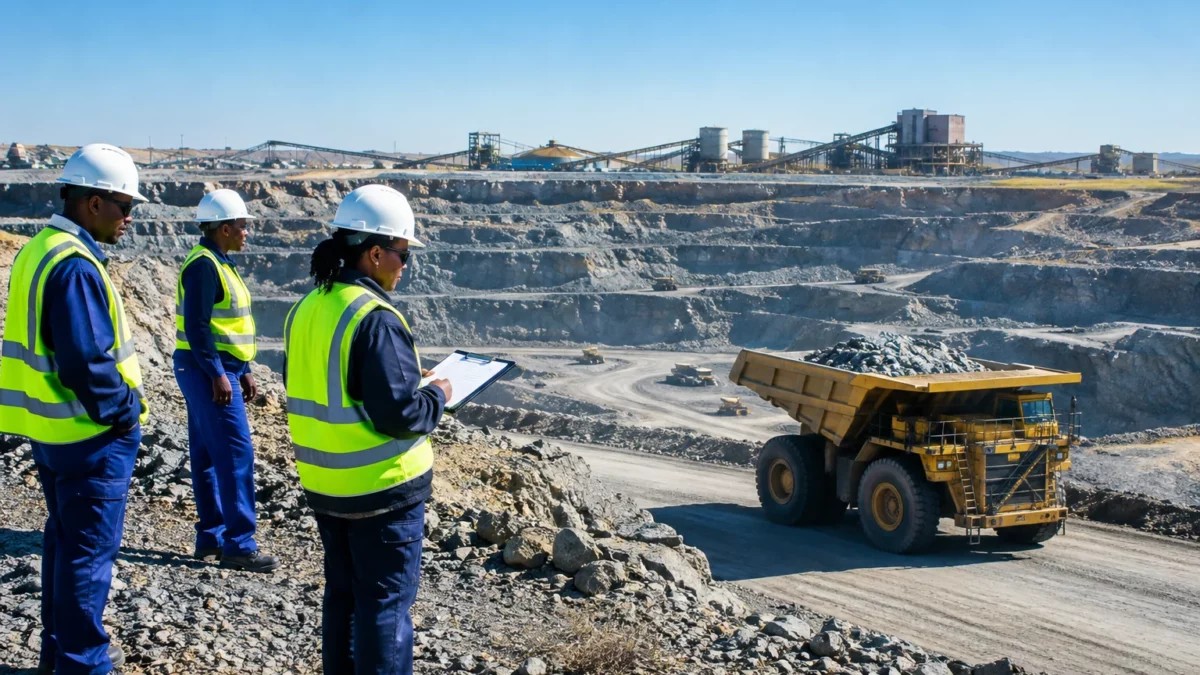
For Botswana, the sale of De Beers is about far more than a change of shareholder. It could determine the country’s place in the commercial and strategic decisions of a group that buys, mines and markets diamonds worldwide. But a larger stake alone does not guarantee higher revenues for Botswana’s people.
A sale decision with major implications for Gaborone
Anglo American, which owns 85% of De Beers, put its stake up for sale in 2024. The Botswana government already owns 15% of the group and operates the country’s main mines with it through Debswana, a 50-50 joint venture. Botswana is therefore a shareholder, mining partner and key supplier of diamonds to De Beers.
On 9 November 2026, President Duma Boko announced that his government backed the Global Diamond Consortium, or GDC, as its preferred buyer for Anglo American’s 85% stake. He also said Botswana wanted to increase its stake to 30%. The deal has not yet been finalised: the parties still need to agree on binding documents. The account of the presidential address in Botswana also says that Namibia and Angola would take part in the transaction.
Luanda confirmed its participation in the project on 12 November through state-owned company Endiama. The Angolan statement also names Botswana, Namibia and Oman among the participants. The precise terms of the proposed stakes and financing remain to be clarified publicly. It is therefore important to distinguish an announced intention to participate from the actual completion of the sale.
Bargaining power beyond the mines
For Gaborone, the issue is not simply about owning more shares. De Beers plays a role in the sale of rough stones, their marketing and its relationship with international buyers. A larger stake could give Botswana greater influence over decisions. In practice, however, that influence will depend on the rights attached to the shares, governance and the consortium’s ability to finance and run the company.
The country has already negotiated new terms with De Beers. In 2025, the two partners signed a ten-year sales agreement, extendable by five years, as well as a 25-year extension of Debswana’s mining licences, until 2054. The share of production that state-owned Okavango Diamond Company can market is also due to increase gradually. These agreements point to a long-term strategy: gaining greater control over marketing while preserving the partnership that supports mining operations. The terms of the partnership between De Beers and Botswana describe this shift.
The strategy carries risks. The global market is under strain from slowing demand, particularly in China, and competition from cheaper lab-grown diamonds. Botswana’s central bank still reported a contraction in Debswana’s diamond production in the third quarter of 2026. In September, falling diamond exports accounted for most of the decline in the country’s total exports, according to Statistics Botswana. The Bank of Botswana’s October monetary policy report and the September trade statistics document this pressure.
For the state, diamond sales affect public revenues and the availability of foreign currency. For businesses and workers linked to the mines, sales and services, a prolonged downturn could slow activity. In Gaborone, where some of the trade in stones takes place, the effects can spread to suppliers and shops. Mining regions, meanwhile, depend directly on the continued operation of sites and investment. The crisis therefore does not affect all stakeholders in the same way.
Regional ambition, results still to prove
The announced participation of Angola and Namibia raises the prospect of greater ownership of De Beers by southern African diamond-producing countries. This is a notable shift: these states are seeking influence not only over extraction, but also over marketing and governance. Regional cooperation could strengthen their collective bargaining position. It does not, however, guarantee that their interests will align or that there will be no disputes over financing, stakes and management priorities.
Botswana must also work within its existing commitments, particularly the agreement concluded with De Beers in 2025. The sale of Anglo American’s shares does not replace those contracts or resolve the economy’s vulnerability to fluctuations in the diamond market. A larger stake will not automatically diversify exports, create jobs in processing or stabilise public revenues.
The central question is therefore how much value will be retained locally. Can a stronger presence on the board lead to more skills, cutting and polishing on the continent, as well as a greater share of revenues for producing countries? The answer will depend as much on the group’s commercial decisions as on national industrial policies.
For Botswana, a member of the Southern African Development Community (SADC), the transaction will be a test of regional cooperation as well as a national economic choice. The next step is clear: finalise the sale agreements and set out how the stakes will be allocated. Until then, the announcement signals political ambition, not a completed transfer of ownership.