Algeria
 Egypt
 Libya
 Morocco
 Sudan
 Tunisia
 Benin
 Burkina Faso
 Cabo Verde
 Côte d'Ivoire
 Ghana
 Guinea
 Guinea-Bissau
 Liberia
 Mali
 Mauritania
 Niger
 Nigeria
 Senegal
 Sierra Leone
 The Gambia
 Togo
 Cameroon
 Central African Republic
 Chad
 DR Congo
 Equatorial Guinea
 Gabon
 Republic of the Congo
 São Tomé and Príncipe
 Burundi
 Comoros
 Djibouti
 Eritrea
 Ethiopia
 Kenya
 Madagascar
 Malawi
 Mauritius
 Mozambique
 Rwanda
 Seychelles
 Somalia
 South Sudan
 Tanzania
 Uganda
 Botswana
 Eswatini
 Lesotho
 Namibia
 South Africa
 Zambia
 Zimbabwe
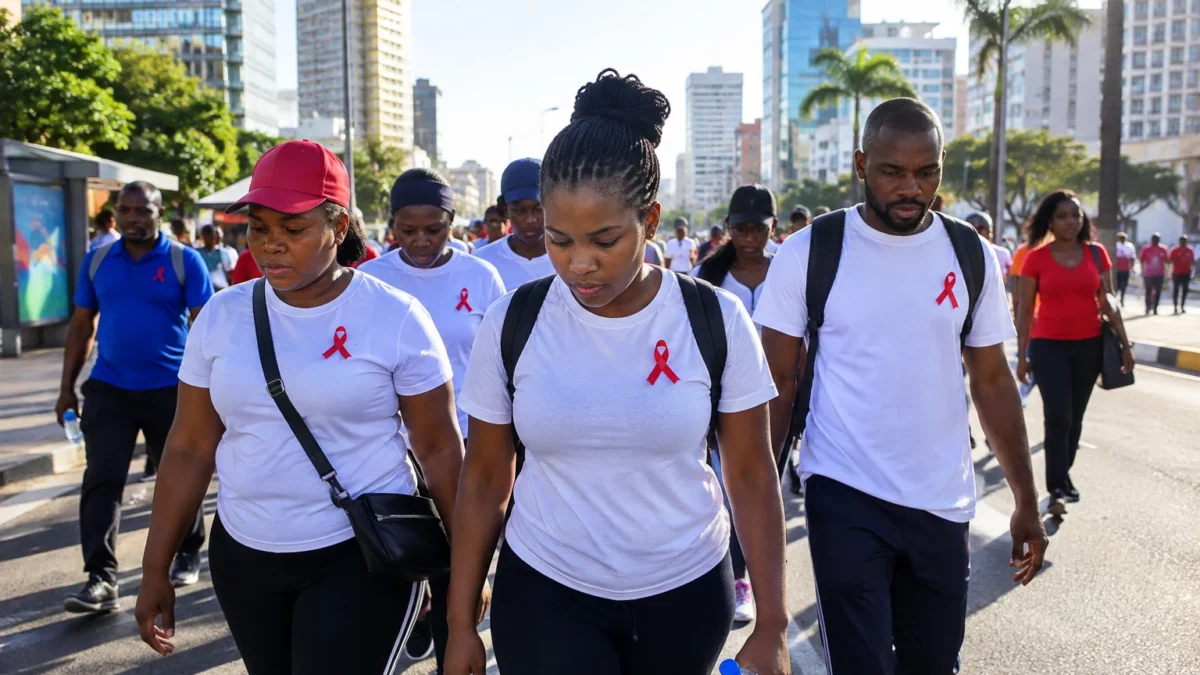
In Angola, legal protection does not always guarantee access to healthcare, work or safety on the streets. On 28 November, members of the LGBT community took part in an AIDS awareness march in Luanda organised by the Angolan Network of AIDS Service Organisations (Anaso), linking public health with equal rights.
A legal framework that does not solve everything
Angola’s Penal Code, which came into force on 12 February 2021, decriminalised consensual same-sex relations and provides protection against certain forms of discrimination based on sexual orientation. The reform ended a provision inherited from the 1886 Portuguese Penal Code. It also gave associations legal backing to challenge refusals of employment or services, and denial of access to public places. The text of Angola’s Penal Code nevertheless distinguishes sexual orientation from gender identity, which does not have an equivalent legal framework.
This distinction matters for transgender people, who face specific obstacles in administrative procedures, employment and dealings with public services. More broadly, human rights organisations report that legal protections coexist with stigma and discrimination in education, housing and healthcare. The law sets out principles; their application also depends on access to justice and the ability to report abuse without fear.
The march followed Deolinda Rodrigues Avenue, one of Luanda’s main thoroughfares, before heading towards Independence Square. Participants said they wanted to make visible issues often treated separately in public debate: HIV prevention, respect for privacy and equal access to health services. “Our bodies are not defined by HIV,” said Emeka, a member of the Íris association, according to remarks recorded during the march.
Public health and trust in healthcare
AIDS remains a major health issue in Angola. Estimates published by the World Health Organization and based on UNAIDS data put the number of AIDS-related deaths in 2024 at about 13,458. This nationwide estimate cannot, by itself, describe differences between provinces or the specific challenges faced by groups exposed to stigma. WHO health indicators for the African region also place HIV among the country’s leading causes of death.
For associations, the fight against HIV cannot be reduced to distributing treatment or running testing campaigns. If someone fears being insulted, identified or treated badly at a health centre, they may delay seeking medical advice or decide not to ask for it at all. Testimonies collected during the march therefore highlighted a practical concern: ensuring respectful, confidential and accessible care, without discrimination based on sexual orientation or gender identity.
The summary of health data does not confirm the figure of “36 deaths a day” given in the original text. WHO’s annual estimate corresponds to an average of about 37 deaths a day, but this is a calculated average, not a daily observed count. This distinction matters: estimates have a margin of uncertainty and should be presented as such.
Rights are also at stake on the streets and at work
The difficulties raised during the march went beyond healthcare. Participants described barriers to employment and precarity, which they said were compounded by prejudice. The cost of living weighs on many Angolan households; for someone already excluded from the formal labour market, the lack of a stable income can limit access to housing, healthcare and social protection.
Marley, 32, spoke of the fear of going out on the streets and recalled Carlos Fernandes, founder of the Íris association, who was found dead at his home in Luanda in February 2024. Police announced an investigation at the time and said they had identified suspects. Human rights organisations voiced concern, but no homophobic motive has been established in the information available. The information released at the start of the investigation therefore does not support presenting the murder as an attack linked to his activism.
Activists have also reported legal victories. Roquiana, a lawyer and member of Íris, referred to the suspended sentences handed to three police officers after they assaulted a transgender woman, as well as compensation of 1.2 million kwanzas. The case, as reported by the lawyer, illustrates the importance of seeking redress through the courts; it is not, however, enough to measure the scale of violence or the rate at which it is reported across the country.
Regional significance, with progress to monitor
Angola is a member of the Southern African Development Community (SADC), a regional grouping of 16 states. Laws and living conditions for LGBT people vary widely across its member countries. Angola’s experience shows that decriminalisation can create room for associations to act, without automatically eliminating discrimination or ensuring equality in everyday life. SADC lists Angola as one of its founding members.
What happens next will depend on how existing protections are applied: the handling of complaints, access to healthcare, the safety of transgender people and the ability of organisations to operate publicly. For public authorities and health professionals alike, the challenge is twofold: to curb HIV and ensure that fear of rejection does not deter anyone from testing or seeking care. In Luanda, the march brought this demand into public view, without suggesting that the legal and social journey is complete.