Algeria
 Egypt
 Libya
 Morocco
 Sudan
 Tunisia
 Benin
 Burkina Faso
 Cabo Verde
 Côte d'Ivoire
 Ghana
 Guinea
 Guinea-Bissau
 Liberia
 Mali
 Mauritania
 Niger
 Nigeria
 Senegal
 Sierra Leone
 The Gambia
 Togo
 Cameroon
 Central African Republic
 Chad
 DR Congo
 Equatorial Guinea
 Gabon
 Republic of the Congo
 São Tomé and Príncipe
 Burundi
 Comoros
 Djibouti
 Eritrea
 Ethiopia
 Kenya
 Madagascar
 Malawi
 Mauritius
 Mozambique
 Rwanda
 Seychelles
 Somalia
 South Sudan
 Tanzania
 Uganda
 Angola
 Eswatini
 Lesotho
 Namibia
 South Africa
 Zambia
 Zimbabwe
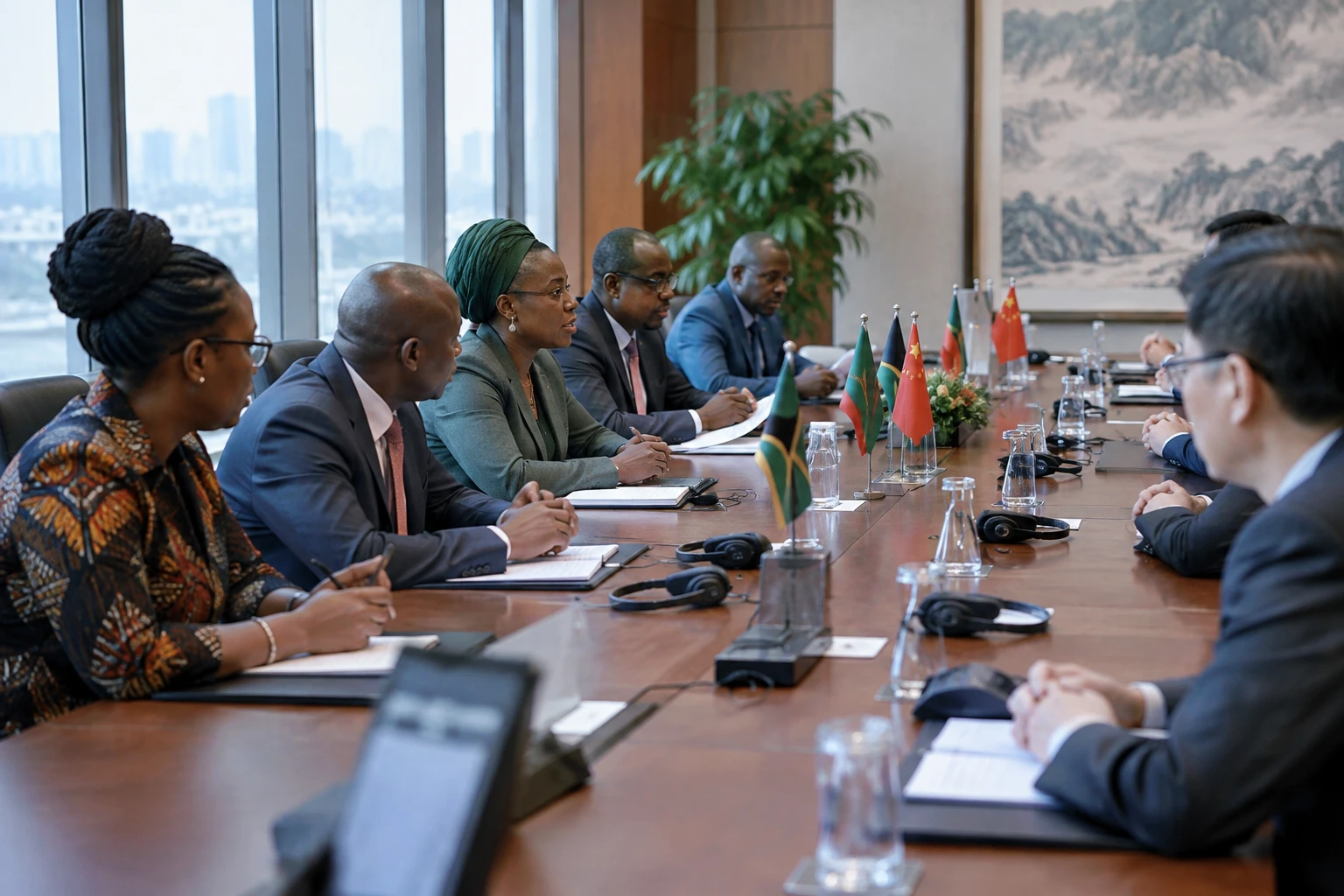
Two leaders from West and Southern Africa are in Beijing this week with different priorities, but the same question in the background: how can relations with China be turned into concrete benefits for their countries? For Botswana, the stakes include minerals and economic diversification. For Togo, they lie in a partnership already described as strategic.
Two African paths, one meeting in Beijing
The timing of the visits does not mean that Gaborone and Lomé are pursuing a joint course. Botswana, a Southern African country and member of the Southern African Development Community (SADC), is seeking to broaden its markets and attract investment. Togo, in West Africa and a member of ECOWAS, is drawing on its diplomatic and trade ties with Beijing amid a reorganisation of its institutions.
The schedule also reflects two distinct formats. Botswana’s President Duma Gideon Boko is on a state visit from 12 to 17 October 2026, at the invitation of Xi Jinping. Faure Essozimna Gnassingbé, Togo’s President of the Council of Ministers, is making an official visit from 9 to 16 October, at the invitation of Chinese Premier Li Qiang.
The presence of two African leaders in the Chinese capital illustrates the depth of bilateral exchanges. It is not, however, a continental summit or a common African position towards Beijing. Each negotiates according to its own interests, resources and domestic constraints.
Botswana puts minerals and diversification at the centre
On 13 October, at the Great Hall of the People in Beijing, Duma Boko and Xi Jinping announced that their relationship would be elevated to a comprehensive strategic cooperative partnership. The two leaders attended the signing of several documents covering, among other areas, “green” mining, health, human resources and China’s Belt and Road Initiative.
Botswana’s authorities had referred to eleven memorandums of understanding, but the Chinese account consulted confirms several documents without specifying their number. The figure should therefore remain attributed, rather than being presented as independently verified. The announced cooperation also covers agriculture, livestock, the digital economy and education.
For Gaborone, the interest goes beyond signing documents. Botswana remains heavily reliant on diamonds, a sector that weighs on its revenue and economic activity. Its stated aim is to attract capital, broaden exports and develop more activity locally, rather than relying solely on the sale of raw materials.
A Botswana-China business forum is due to bring together around 30 Botswana companies and more than 100 Chinese companies in Beijing, according to Botswana’s state news agency BOPA. The government is also highlighting access to the Chinese market and a zero-tariff regime announced for African countries that maintain diplomatic relations with Beijing. It remains to be seen which products will qualify and whether local businesses will have the logistical and productive capacity to benefit.
Mining is a particularly sensitive issue. More environmentally responsible mining requires enforceable rules, credible assessments and tangible benefits for workers and communities near mining sites. The announcement of cooperation on green technologies is not, in itself, enough to assess future effects on water, land or employment.
Togo consolidates a separate partnership
Faure Gnassingbé also met Xi Jinping in Beijing on 13 October. His trip follows on from the comprehensive strategic partnership between China and Togo announced in 2024. Togo’s authorities have presented the visit as an opportunity to deepen economic ties and attract investment, particularly in connection with their development roadmap.
The Togolese leader is also due to meet Li Qiang and Zhao Leji, chairman of the Standing Committee of China’s National People’s Congress. These talks add to his meeting with Xi and give the visit a political as well as economic dimension. The port of Lomé, infrastructure and potential public-private partnerships are among the interests regularly highlighted in relations between Lomé and Beijing.
Gnassingbé’s institutional title requires some clarification. Since Togo’s 2024 constitutional reform, the country has operated under a parliamentary system, with the office of President of the Council of Ministers holding executive power. The change remains contested by opposition figures. This domestic context does not, by itself, determine China’s agenda, but it helps explain who currently leads Togo’s government policy.
The benefits of international agreements are not automatically shared. Government agencies and companies able to compete for contracts may be the first to benefit. Small businesses, workers and people in regions far from investment centres will feel the effects only if projects create local jobs, improve services or open up lasting opportunities.
From announcements to results: the next test
For Botswana, scrutiny will focus on the detailed content of the agreements, the funding secured and the share of mineral processing carried out in the country. The business forum and projects in agriculture, education and digital technology will show whether the partnership extends beyond extractive industries. Boko’s announced return to Gaborone on 18 October will mark the end of his trip, not the end of negotiations.
For Togo, the next indicators will be the projects actually funded, the jobs associated with them and the terms of announced investments. In both cases, transparency over contracts and assessments of local effects will be crucial in gauging the extent of the commitments.
At continental level, the visits are part of the momentum of the Forum on China-Africa Cooperation (FOCAC), a framework for dialogue between China and African states. But negotiating capacity also depends on national and regional institutions: SADC for Botswana, ECOWAS for Togo. The meeting in Beijing sets a political direction. The results, however, will be measured in budgets, value chains, jobs and services accessible to the public.