Algeria
 Egypt
 Libya
 Morocco
 Sudan
 Tunisia
 Benin
 Burkina Faso
 Cabo Verde
 Côte d'Ivoire
 Ghana
 Guinea
 Guinea-Bissau
 Liberia
 Mali
 Mauritania
 Niger
 Senegal
 Sierra Leone
 The Gambia
 Togo
 Cameroon
 Central African Republic
 Chad
 DR Congo
 Equatorial Guinea
 Gabon
 Republic of the Congo
 São Tomé and Príncipe
 Burundi
 Comoros
 Djibouti
 Eritrea
 Ethiopia
 Kenya
 Madagascar
 Malawi
 Mauritius
 Mozambique
 Rwanda
 Seychelles
 Somalia
 South Sudan
 Tanzania
 Uganda
 Angola
 Botswana
 Eswatini
 Lesotho
 Namibia
 South Africa
 Zambia
 Zimbabwe
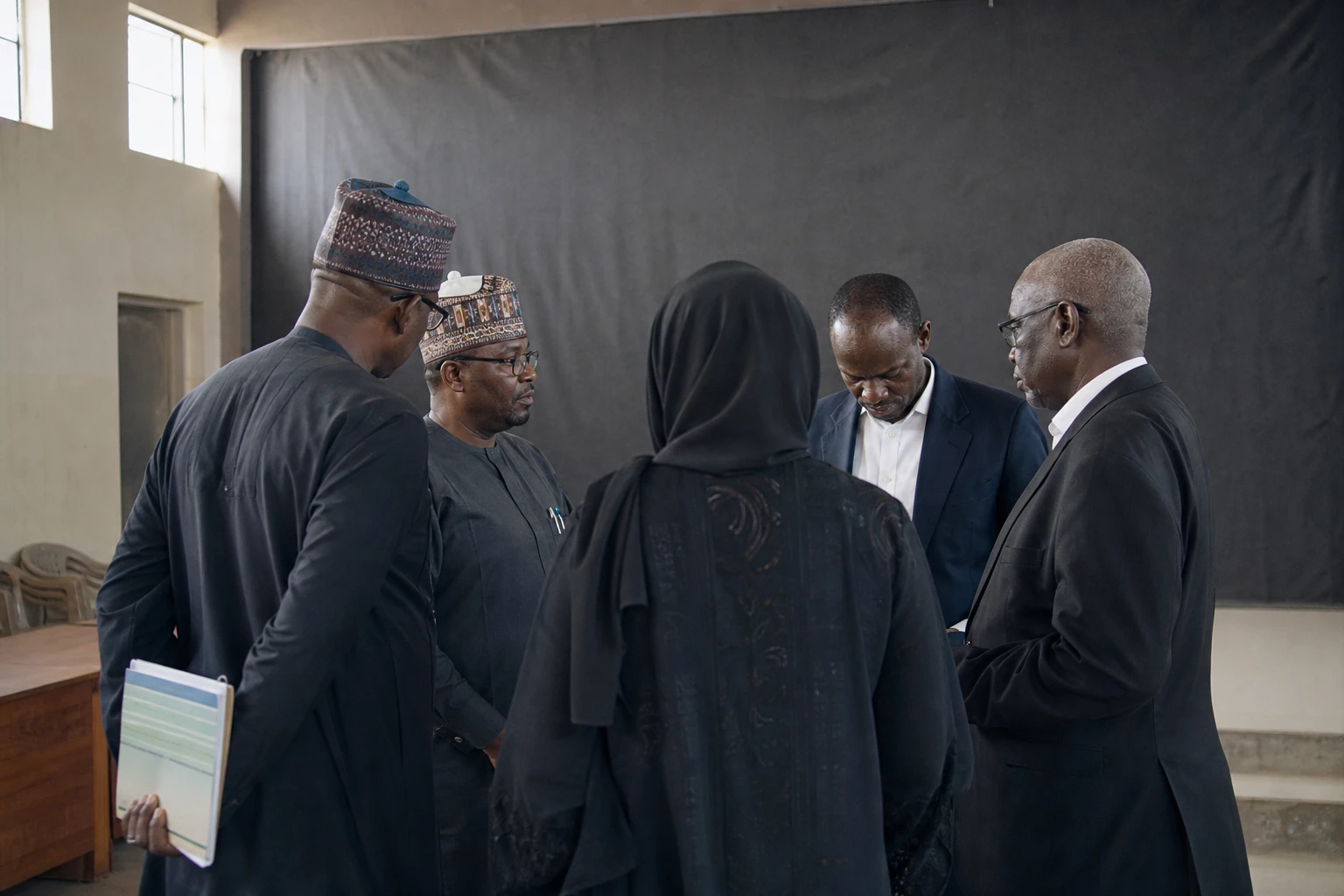
In Marte, Borno State, farming a field or gathering firewood remains a high-risk activity. The attack that took place between Wednesday evening and Thursday morning is a reminder that civilians in north-east Nigeria continue to pay the price of insecurity, even in rural areas.
An attack amid everyday activities
At least 15 residents were killed near Ala, Gummna and Musune, three communities in Marte Local Government Area. The victims were in their fields or gathering firewood when attackers targeted them.
Borno State police spokesperson Nahum Daso confirmed the death toll of 15. He also said that three other people remained missing as of Friday 2 October 2026. Security forces were continuing their search in surrounding areas.
The bodies that were recovered were buried on Thursday 1 October, in accordance with Muslim rites. Residents quoted by the Nigerian press say the victims included young men, fathers and elderly people.
Community sources describe an ambush followed by executions. They also report that some residents were allegedly accused of passing information to security forces. The police have not confirmed these details, however. For now, the attack is considered likely to have been carried out by Boko Haram, but no public claim of responsibility has been made.
Marte, a rural area under pressure
Marte is in north-east Nigeria, about 130 kilometres north-east of Maiduguri, the capital of Borno State. The area borders the Lake Chad region, where armed groups have moved for several years between Nigeria, Cameroon, Chad and Niger.
Boko Haram, which emerged in Nigeria in 2009, is no longer a unified organisation. The movement has fragmented, notably with the emergence of Islamic State West Africa Province, often known by its English acronym, ISWAP. Both groups have nevertheless retained the capacity to cause harm in the Lake Chad basin.
In this region, the threat affects not only cities and military positions. Farmers, fishermen, herders and people gathering firewood regularly have to travel away from protected centres. These journeys expose them to ambushes, abductions, improvised mines and accusations of collaborating with the state.
This pressure directly affects food production. When residents abandon their fields, families lose a source of income and food. Local markets are also affected. In rural areas, the informal economy depends heavily on these seasonal activities.
Protection remains difficult to provide
The case of Marte highlights a longstanding problem: the state has a stronger presence in regional capitals than in some outlying areas. The Nigerian armed forces conduct operations against armed groups, but cannot permanently secure every field, track or gathering area.
Local communities therefore play an essential role in alerting and surveillance. Their involvement can help security forces. It also exposes residents to reprisals when fighters suspect them of co-operating with the army or self-defence militias.
For families, the issue goes beyond the death toll. Relatives must now establish who is missing, identify the bodies and arrange funerals. The three people being sought remain a source of deep concern. Their whereabouts are unknown: they may have fled, be in hiding or have been abducted. None of these possibilities has been confirmed so far.
Amnesty International has condemned the attack and called on the Nigerian authorities to strengthen protection for rural populations. The organisation considers the targeting of civilians a serious violation of international humanitarian law. Its statement comes as the authorities continue to present the fight against armed groups as a national priority.
An issue that extends beyond Nigeria’s borders
Violence in north-east Nigeria is part of a regional crisis. The Lake Chad basin has a multinational force bringing together Nigeria, Cameroon, Chad, Niger and Benin. The co-operation aims to restrict the movements of armed groups and co-ordinate cross-border operations.
The African Union has previously highlighted the force’s role in fighting Boko Haram and related organisations. However, military operations alone are not enough to restore lasting security in rural areas. Border surveillance, access to public services and the resumption of economic activity are also crucial.
The issue also concerns the Economic Community of West African States, or ECOWAS, which co-ordinates regional responses on peace and security. In September 2026, the organisation further strengthened its co-operation with Nigeria on weapons management and ammunition stocks. This action is not a direct response to the attack in Marte, but it shows that Nigerian security remains linked to regional mechanisms.
The next step will be to clarify what happened to the three missing people and establish exactly how the attack unfolded. For the people of Marte, the immediate need is clear: to be able to return to their fields, gather firewood and travel without turning every journey into a gamble for survival.