Algeria
 Egypt
 Libya
 Morocco
 Sudan
 Tunisia
 Benin
 Burkina Faso
 Cabo Verde
 Côte d'Ivoire
 Ghana
 Guinea
 Guinea-Bissau
 Liberia
 Mali
 Mauritania
 Niger
 Senegal
 Sierra Leone
 The Gambia
 Togo
 Cameroon
 Central African Republic
 Chad
 DR Congo
 Equatorial Guinea
 Gabon
 Republic of the Congo
 São Tomé and Príncipe
 Burundi
 Comoros
 Djibouti
 Eritrea
 Ethiopia
 Kenya
 Madagascar
 Malawi
 Mauritius
 Mozambique
 Rwanda
 Seychelles
 Somalia
 South Sudan
 Tanzania
 Uganda
 Angola
 Botswana
 Eswatini
 Lesotho
 Namibia
 South Africa
 Zambia
 Zimbabwe
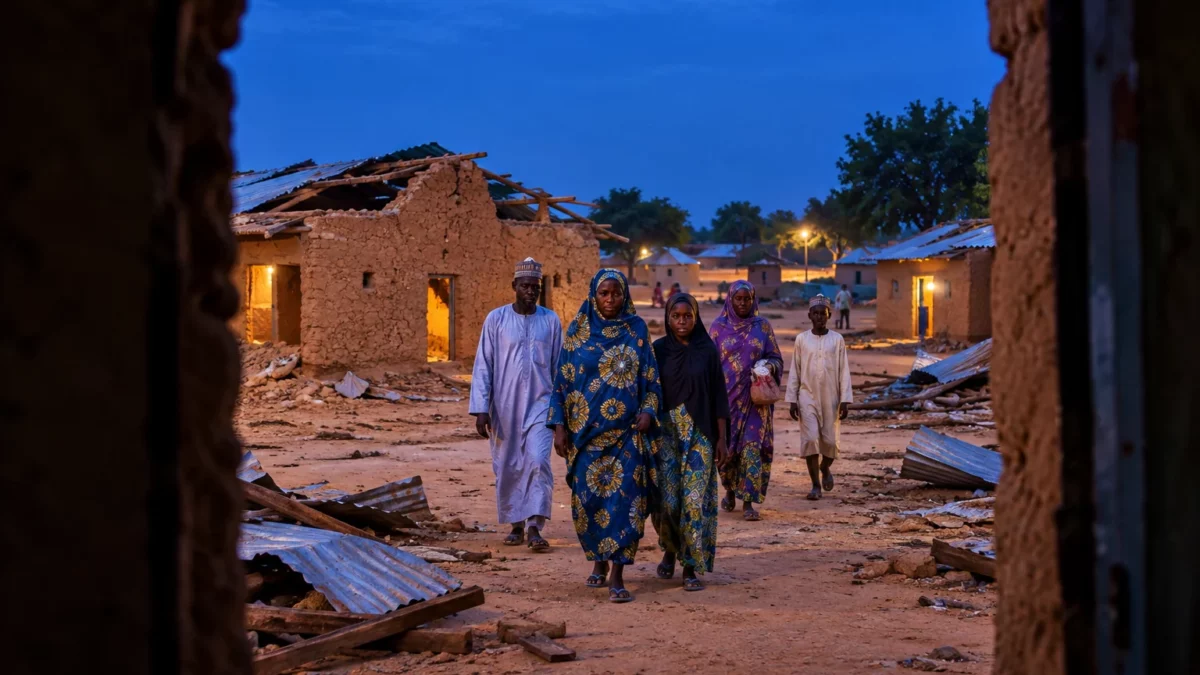
In Borgu, in Nigeria’s Niger State, residents were struck twice within a few hours: first by an armed attack on Luman Ba’are, then by reprisals targeting Fulani settlements. In this spiral of violence, community identity appears to have replaced the identification of those responsible. Death tolls remain disputed, but several sources have reported attacks on civilians.
A border region under pressure
Borgu lies in western Niger State, near the border with Benin. This rural area, far from major administrative centres, faces incursions by armed groups, kidnappings and cattle theft. Insecurity is disrupting travel, farming and pastoral activities, as well as residents’ access to public services.
Nigeria, whose capital is Abuja, is grappling with several forms of violence that do not all stem from the same conflict. In the north-west and north-central regions, armed criminal groups, often locally referred to as “bandits”, kidnap people for ransom and loot communities. Jihadist groups also operate in some regions. Describing them all in the same way blurs responsibility and complicates efforts to devise appropriate responses.
Tensions between farmers and herders, particularly over land, grazing and water points, form an important backdrop in several states. But they are not enough to explain every attack. In Borgu, the identity of the attackers and any possible links between them remain to be established through an independent investigation.
Death tolls remain difficult to establish
On Saturday 21 November 2026, gunmen attacked Luman Ba’are, a village inhabited mainly by Kambari people, during morning prayers. A security investigator cited by AFP reported 11 deaths, including the village head and children. Niger State police confirmed the attack but gave a lower death toll of five.
Residents attributed the assault to Fulani men. This accusation does not establish the attackers’ identity and does not justify blaming the Fulani community as a whole. According to the security report cited by AFP, the attackers also allegedly set fire to houses, took cattle and abducted several people.
After the raid, local self-defence groups attacked Fulani settlements, including in Wawa and Gadi Oli. The death toll from the reprisals varies by source. A security report seen by AFP put the number of deaths in Wawa at at least 35, while a community leader gave a figure of 38. Herders’ representatives and Nigerian media have reported more than 60 deaths in several localities, a toll that has not been independently confirmed.
The figure of 64 deaths, cited by representatives of the Fulani community, must therefore remain attributed to them. Bodies were still being searched for in the surrounding area, and people were reported missing. At this stage, the available information does not make it possible to verify a consolidated death toll for Wawa, Gadi Oli and the other settlements mentioned.
Reprisals put civilians at risk
Collective reprisals make families pay for acts attributed to armed individuals. Herders, women, children and older people may thus be targeted without any evidence of their involvement. Residents of Luman Ba’are, too, were killed, displaced or deprived of their property in the initial attack.
For Fulani families, the loss of cattle directly threatens their income and food supply. For settled communities, burned homes and kidnappings undermine security and livelihoods. In these areas, the formal economy is limited: local markets, livestock and farming support much of daily life. Prolonged insecurity can disrupt these exchanges far beyond the villages attacked.
Salim Musa Umar, a representative of the Fulbe Global Development and Rights Initiatives organisation, called for armed groups to be distinguished from the Fulani population. He called for those responsible to be identified to prevent further reprisals. This demand does not settle the question of responsibility; it underscores the importance of credible investigations and impartial protection for all communities.
Investigation and protection, regional priorities
State authorities said they had deployed security teams to the area after the attack on Luman Ba’are. Police also urged residents to provide investigators with information. It remains to be established whether the forces deployed were able to protect the targeted settlements, find those abducted and prevent a resumption of violence.
Borgu’s proximity to Benin gives its security a cross-border dimension. The movements of armed groups and local exchanges do not stop at administrative boundaries. ECOWAS, the West African regional organisation, is concerned with cooperation between states in the face of cross-border threats; but the immediate response rests first with Nigerian authorities and their security services.
The priority now is to verify the death tolls, find the missing, protect civilians and identify those responsible without assigning collective guilt. Further information on the investigation and on residents’ return to their communities will show whether the announced deployment is genuinely reducing the risk of another attack in Borgu.