Algeria
 Egypt
 Libya
 Morocco
 Sudan
 Tunisia
 Benin
 Burkina Faso
 Cabo Verde
 Côte d'Ivoire
 Ghana
 Guinea
 Guinea-Bissau
 Liberia
 Mauritania
 Niger
 Nigeria
 Senegal
 Sierra Leone
 The Gambia
 Togo
 Cameroon
 Central African Republic
 Chad
 DR Congo
 Equatorial Guinea
 Gabon
 Republic of the Congo
 São Tomé and Príncipe
 Burundi
 Comoros
 Djibouti
 Eritrea
 Ethiopia
 Kenya
 Madagascar
 Malawi
 Mauritius
 Mozambique
 Rwanda
 Seychelles
 Somalia
 South Sudan
 Tanzania
 Uganda
 Angola
 Botswana
 Eswatini
 Lesotho
 Namibia
 South Africa
 Zambia
 Zimbabwe
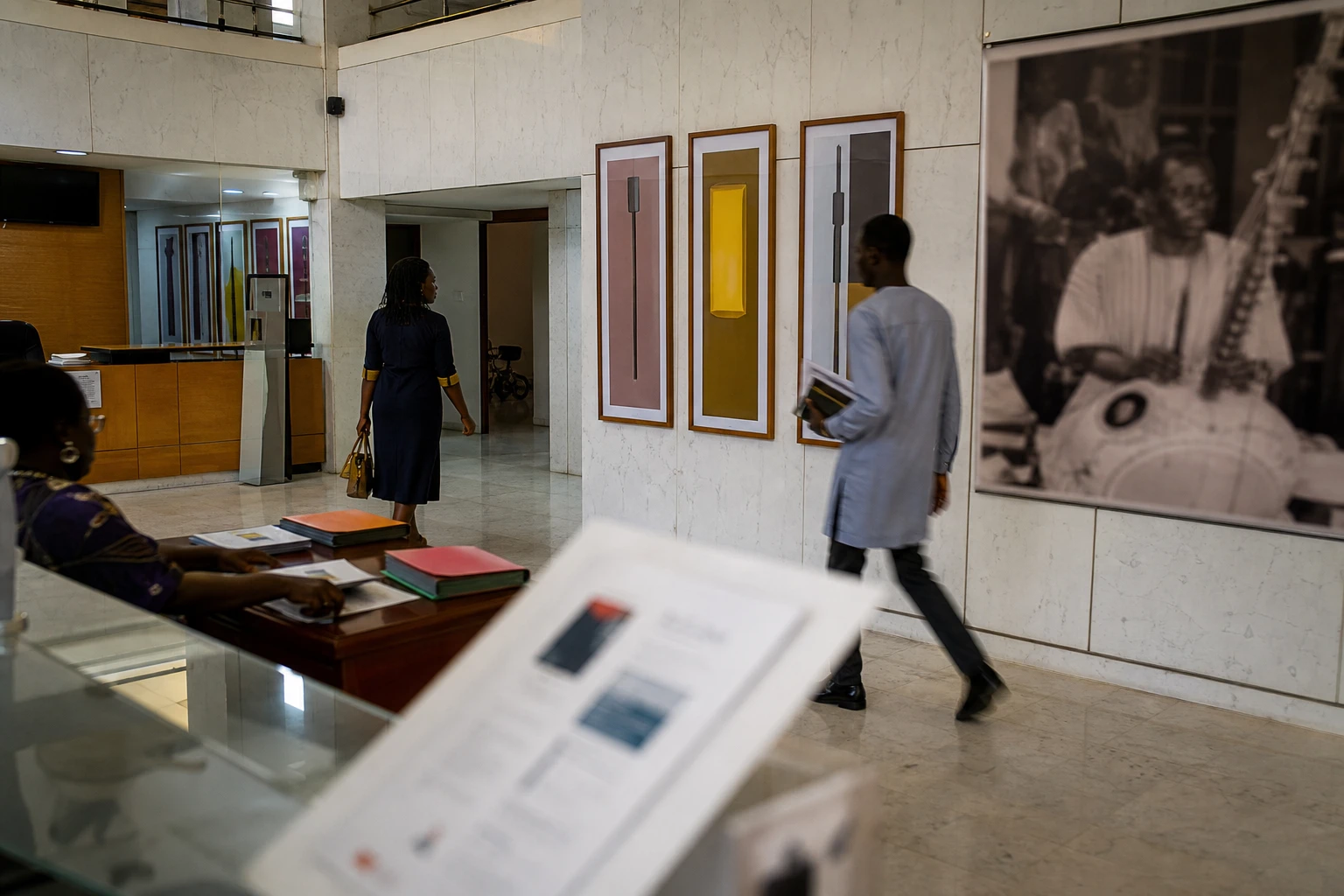
A Bamako musician who took Mali to the world
In many countries, music accompanies current events. In Mali, it also sheds light on them. It tells of departures, returns, cultural alliances and legacies that outlast regimes, borders and fashions.
Boncana Maïga belonged to that generation. Born in Gao in 1949, he grew up in northern Mali before becoming one of the great ambassadors of Afro-Cuban music. His death, announced in Bamako on 28 February 2026, was a reminder that an artist can leave more than a repertoire: he can leave a method, a sound, a school and a shared memory spanning both sides of the Atlantic.
His career carries particular resonance in Mali today. The country left ECOWAS, the Economic Community of West African States, on 29 January 2025, while aligning more closely with the Alliance of Sahel States, the AES, alongside Burkina Faso and Niger. In this context, cultural exchange retains strong symbolic value: it is a reminder that Mali remains a West African artistic crossroads, even as diplomatic frameworks are reshaped.
From Gao to Havana: creating a shared language
The defining feature of Boncana Maïga’s career was not just his virtuosity. It was his training. In the early 1960s, independent Mali was seeking to establish itself through culture as well. The government of the time sent young musicians to study in Cuba. This was no incidental choice. It formed part of a cultural diplomacy that sought to bring together sovereignty, modernity and prestige.
In Havana, Boncana Maïga trained in clave, son montuno, bolero and cha-cha-chá. In 1965, he took part in recording Las Maravillas de Mali, an album that became a landmark in the history of Afro-Cuban exchange. The project brought together instruments, languages and repertoires from both sides of the Atlantic. It showed that a Malian orchestra could speak Havana’s musical language without losing its identity.
The venture was political too. When President Modibo Keïta was overthrown in 1968, the group lost its state backing. On their return to Mali in 1973, the musicians found a changed country, less receptive to this costly and ambitious cultural experiment. The orchestra’s fate illustrates a recurring feature of post-independence African history: the most innovative artistic projects are often fragile when they depend on a single political decision.
Abidjan, Paris, then Africando: the arranger at the heart of it
After Mali, Boncana Maïga found a more stable outlet for his work in Abidjan. Côte d’Ivoire under Houphouët-Boigny was investing heavily in its cultural institutions. He taught, led ensembles, worked in studios and became a sought-after arranger across West Africa. His name was associated with leading artists such as Aïcha Koné, Nahawa Doumbia, Amy Koïta, Kandia Kouyaté, Oumou Sangaré and Alpha Blondy.
His importance went beyond simply providing accompaniment. He knew how to structure a song, balance the brass, give a voice room to breathe and bring different musical traditions together. This skill also took him into cinema and major regional productions. His role was not just to arrange notes. He helped shape careers, opened studios and brought greater professionalism to a sector still taking shape.
In Paris, and later in New York for some recordings, he reunited with Ibrahima Sylla and took part in the creation of Africando. Launched in the early 1990s, the project set out to bring West African voices and Latin musicians together around salsa. Its success endured. Africando travelled between Dakar, Abidjan, Paris and New York, demonstrating that African music could conquer international dance floors without abandoning its own musical grammar.
What his death means for Mali and Africa
Boncana Maïga’s death in Bamako on 28 February 2026 did not merely close a personal chapter. It brought a historical cycle to an end. His passing marks the loss of one of the last direct witnesses to a moment when Mali believed it could tell its story to the world through orchestras, conservatoires and South-South exchanges. Mali’s culture ministry described his death as a loss for Mali, but also for African culture as a whole.
That assessment is right. Boncana Maïga did more than connect Gao to Havana. He gave Malian and Ivorian artists a disciplined approach to their work, high standards in arranging and a sense of collective purpose. In an African music industry long hampered by a lack of infrastructure, he embodied a rare model: a musician who understood the stage, the studio, teaching and production.
His legacy also speaks to young people. By joining studios and then setting up his own production companies in Bamako, he showed that an artist could return home without being confined to nostalgia. The return matters as much as the departure. That is a useful lesson in a Mali undergoing political and regional realignments. Frameworks change, but the movement of works, skills and ideas continues to connect the country with West Africa and the rest of the continent.
In this respect, Boncana Maïga remains a continental figure. His work is a reminder that music born in Gao can engage with Cuba, captivate Abidjan, pass through Paris and still speak to Bamako. This is more than a compelling career story. It is a fragment of modern African history, written in notes, arrangements and human exchange. That is perhaps why his name continues to matter far beyond the stages on which he performed.