Algeria
 Egypt
 Libya
 Morocco
 Sudan
 Tunisia
 Benin
 Burkina Faso
 Cabo Verde
 Ghana
 Guinea
 Guinea-Bissau
 Liberia
 Mali
 Mauritania
 Niger
 Nigeria
 Senegal
 Sierra Leone
 The Gambia
 Togo
 Cameroon
 Central African Republic
 Chad
 DR Congo
 Equatorial Guinea
 Gabon
 Republic of the Congo
 São Tomé and Príncipe
 Burundi
 Comoros
 Djibouti
 Eritrea
 Ethiopia
 Kenya
 Madagascar
 Malawi
 Mauritius
 Mozambique
 Rwanda
 Seychelles
 Somalia
 South Sudan
 Tanzania
 Uganda
 Angola
 Botswana
 Eswatini
 Lesotho
 Namibia
 South Africa
 Zambia
 Zimbabwe
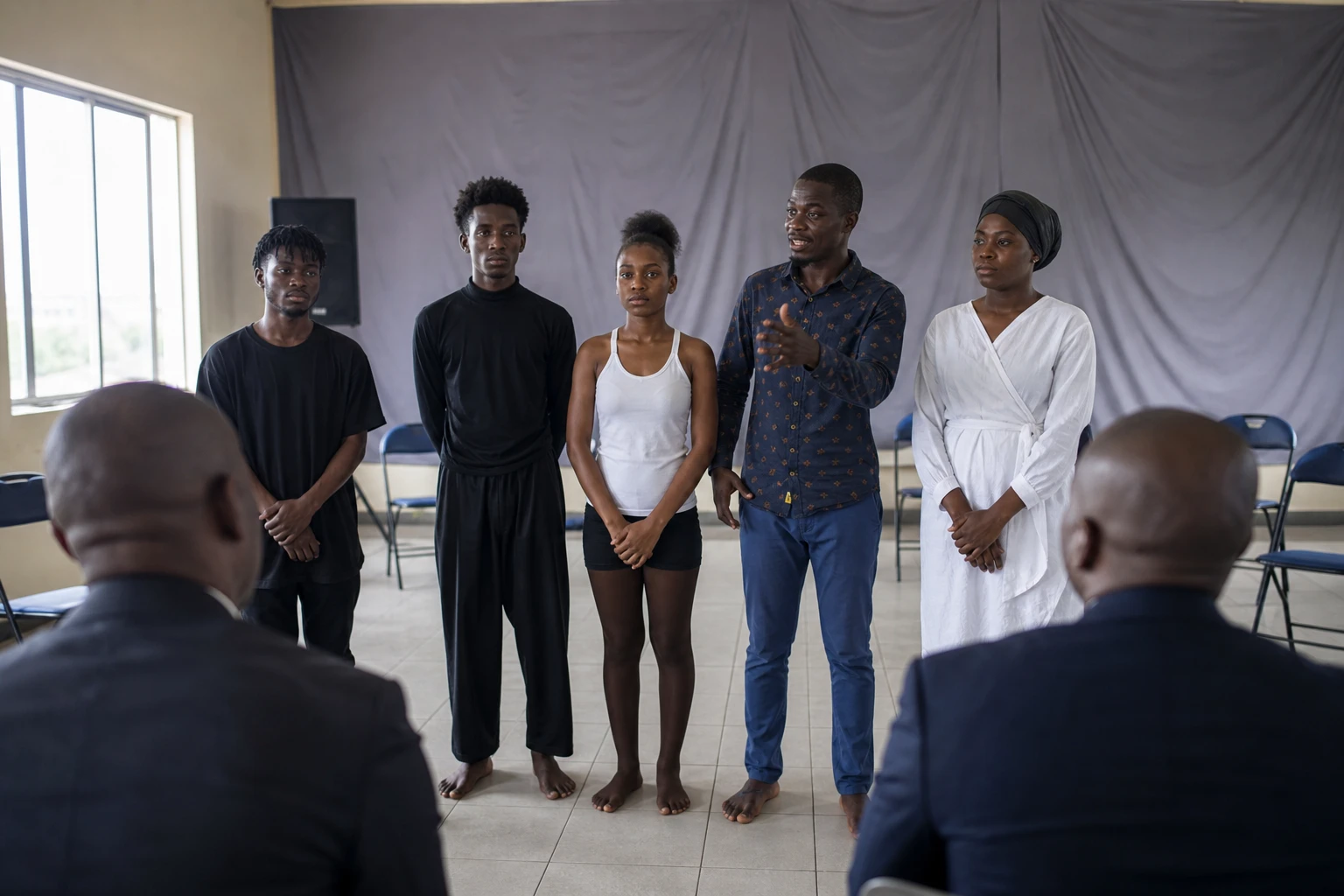
When the street becomes a stage
In Yopougon, in western Abidjan, some young Ivorians have found more than a dance in biama. They see it as a neighbourhood language, a way to laugh together, challenge one another and show themselves off. In Côte d’Ivoire, where Yamoussoukro is the political and administrative capital while Abidjan remains the country’s main economic and cultural centre, the spread of popular practices is a reminder of a simple truth: the trends that matter often emerge far from institutions, then gain ground through the energy of everyday life.
Biama is also part of a very young country. Official census data show that Côte d’Ivoire’s population is largely made up of people under 25, with 11,179,362 young people aged 12 to 24 recorded in 2021 and the national total now exceeding 32 million, according to public projections. This demographic reality helps explain how quickly a dance born in one neighbourhood can become a national phenomenon.
From coupé-décalé to a new grammar
Biama did not emerge in a vacuum. It extends the legacy of coupé-décalé, an urban genre that originated in the Ivorian diaspora in the early 2000s before being reinvented in Abidjan and beyond. Several reference sources date the emergence of biama to around 2021, with very fast performances, pronounced facial expressions and ample room for improvisation. The novelty lies less in a complete break than in a change of tempo and attitude.
Yopougon plays the role of a laboratory in this movement. The neighbourhood, one of Abidjan’s ten communes, serves as an open stage for battles, outdoor parties and videos that then circulate on social media. The phenomenon has taken shape around recognisable figures, including Dydy Yeman, often described as one of biama’s leading faces, and Karl Guei, known as Kalomaman, whose visibility on TikTok has accelerated the style’s spread. Audience figures cited for these artists should be read as indicators of popularity, not scientific measurements, but they do convey the scale of the digital boost.
What biama says about Côte d’Ivoire
Biama’s success lies in its social simplicity. Where other urban aesthetics have emphasised ostentation, it starts with the street, humour and movement. Arrangers are drawing inspiration from it to make faster tracks, often driven by rhythms exceeding 160 beats per minute, according to available descriptions. This speed is more than a passing fashion. It reflects a culture of the moment, challenge and collective response, which is highly visible in Côte d’Ivoire’s working-class neighbourhoods.
The phenomenon primarily reaches an urban youth population that now has powerful tools for sharing content. Local studios record the music, social networks propel it, and platforms such as TikTok turn a movement from a neighbourhood courtyard into a nationally recognised sign. This circulation benefits dancers, DJs, producers and local studios. It also creates a small attention economy built around repetition, video recording, improvised performances and indirect monetisation through images.
But biama also says something deeper about Ivorian society: its capacity to produce independent cultural forms without waiting for outside approval. In a country where most young people live outside institutional decision-making circles, these practices serve as an outlet, a means of mutual recognition and sometimes a symbolic route to upward mobility. They do not resolve economic or social tensions, but they reveal a collective energy that is neither reduced to complaint nor confined to spectacle.
An Ivorian phenomenon with a West African resonance
Biama’s reach extends beyond Abidjan’s scene. Côte d’Ivoire occupies a central place in the ECOWAS region, the Economic Community of West African States, and in the region’s cultural imagination. When a style born in Yopougon crosses borders through music videos, parties and collaborations, it is a reminder that African integration is not achieved solely through treaties or roads. It is also built through sounds, dances and shared codes.
This matters because cultural industries have become a strategic arena for African economies. They bring together artists, technicians, studios, media and digital platforms. They also give major cities such as Abidjan a role as regional engines. In this landscape, biama is more than a neighbourhood curiosity. It is part of the ongoing reshaping of West African urban music, between coupé-décalé’s legacy, digital circulation and the assertion of a distinctly Ivorian aesthetic.
The question of longevity remains. Movements born on social media can quickly lose momentum. But biama has a decisive advantage: it does not rest on choreography alone. It is underpinned by a mood, a way of speaking, a way of coming together and acting as one. That combination is often what turns a passing trend into a lasting marker of a generation.