Algeria
 Egypt
 Libya
 Morocco
 Sudan
 Tunisia
 Benin
 Burkina Faso
 Cabo Verde
 Côte d'Ivoire
 Ghana
 Guinea
 Guinea-Bissau
 Liberia
 Mali
 Mauritania
 Niger
 Nigeria
 Senegal
 Sierra Leone
 The Gambia
 Togo
 Cameroon
 Central African Republic
 Chad
 DR Congo
 Equatorial Guinea
 Gabon
 Republic of the Congo
 São Tomé and Príncipe
 Burundi
 Comoros
 Djibouti
 Eritrea
 Ethiopia
 Kenya
 Madagascar
 Malawi
 Mauritius
 Mozambique
 Rwanda
 Seychelles
 Somalia
 South Sudan
 Tanzania
 Angola
 Botswana
 Eswatini
 Lesotho
 Namibia
 South Africa
 Zambia
 Zimbabwe
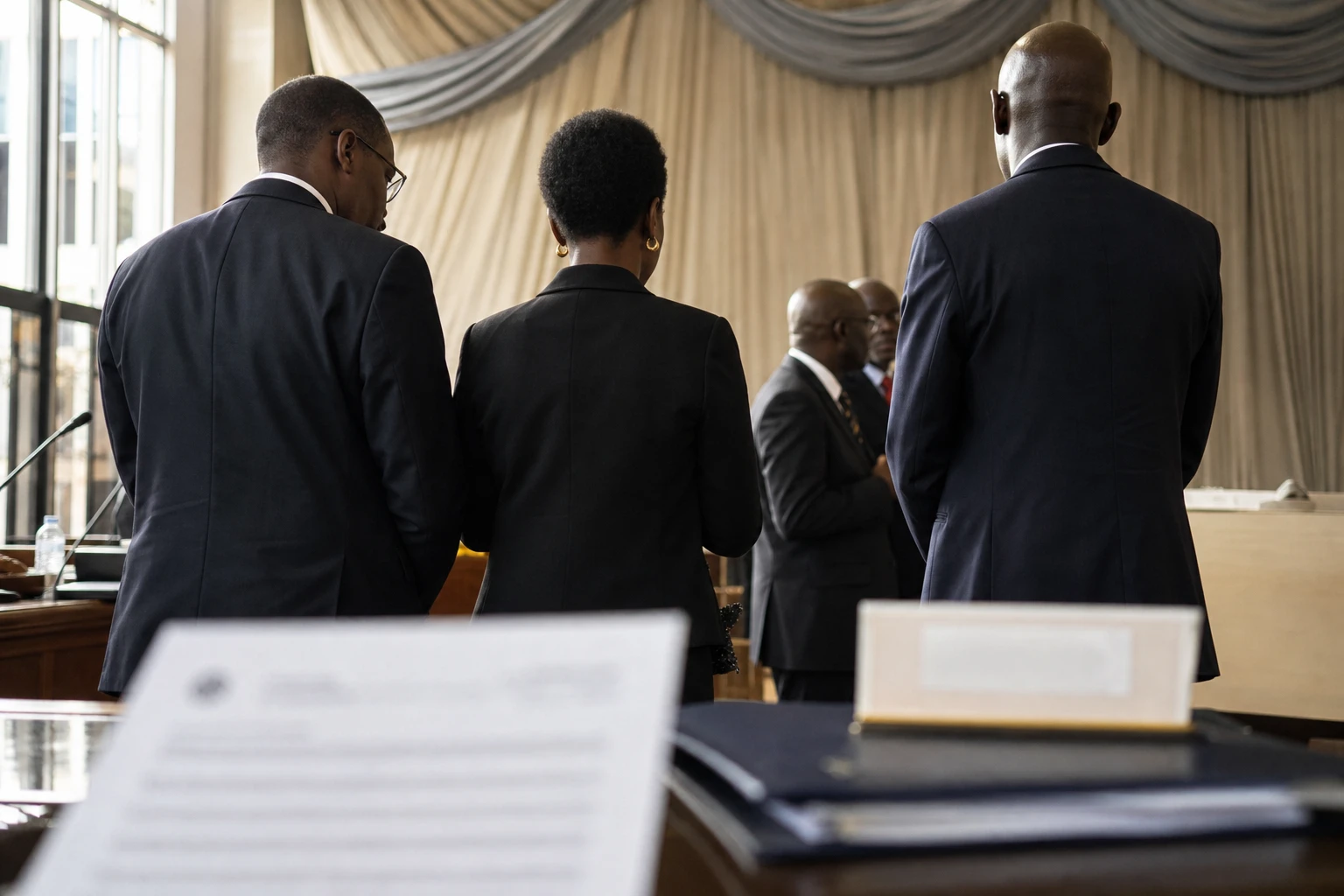
In Kampala, the health of an opposition figure is never just a matter of a medical file. It also speaks to the state of a political life in which the courts, security forces and fundamental rights remain under close scrutiny, in Uganda as elsewhere in East Africa.
A trial that goes beyond Besigye’s case alone
Kizza Besigye, 70, has been a central figure in Uganda’s opposition for more than two decades. A former personal physician to Yoweri Museveni, he became one of his most persistent political opponents. His name regularly features in debates on justice, the repression of the opposition and civic space in Uganda.
The current episode is part of a long-running tension between the government and its critics. In recent years, UN bodies have reported restrictions in Uganda targeting opposition figures, journalists and human rights defenders, as well as obstacles to freedom of assembly and expression.
In this context, the Besigye case is not just an individual matter. It raises the question of how political opponents are treated when they are in state custody. It also shines a light on Uganda’s judicial system, which the opposition often accuses of being used as a tool of pressure, an accusation the authorities reject.
What happened in the Kampala court
According to the Associated Press, Besigye collapsed during a hearing related to his treason trial before a civilian court in Kampala. The same source said he was subsequently admitted to hospital and placed in intensive care at a public facility in the Ugandan capital.
His wife, Winnie Byanyima, executive director of UNAIDS, called on the authorities to respect her husband’s constitutional rights. She said she found him very weak and unable to speak when he regained consciousness. Her appeal was not for special treatment, but for the guarantees set out in Uganda’s Constitution to be upheld.
Available information also indicates that Besigye had refused court-appointed lawyers during the hearing. His refusal to co-operate with an imposed defence, in an already highly politicised treason case, has heightened tensions over his health and conditions of detention.
At this stage, the essential fact is simple: an elderly defendant, already in a fragile condition, lost consciousness during proceedings carrying a heavy political charge. The rest is part of a broader debate over the proportionality of prosecutions, defence guarantees and the medical treatment of detainees.
A test for the rule of law in Uganda
The Besigye case first concerns the authorities in Kampala. For them, the challenge is to conduct a sensitive proceeding without giving the impression of a political settlement. For the opposition, every medical incident reinforces the perception of judicial persecution. For citizens, especially in urban areas, the case points to a broader question: can a visible opposition still be defended without risking arrests, legal restrictions or intimidation?
The stakes go beyond the relationship between Museveni and Besigye. The African Union and the East African Community are closely monitoring crises that undermine institutional stability, as they have repercussions for political, economic and security movement across the region. Uganda occupies a strategic position in the Great Lakes region and within the EAC; any prolonged clampdown on civil liberties therefore has regional implications.
Public healthcare is also part of this case. The fact that a major opposition figure has been transferred to an intensive care unit in Kampala highlights the pressure on referral hospitals and on medical decisions made in a tense political climate. In the capital, such cases quickly become a matter of public concern, while access to specialist care remains more unequal outside Kampala.
What East Africa is watching now
The next stage will be both judicial and medical. An important part of the political interpretation of the case will be shaped there. If Besigye’s condition confirms that he is unable to appear in court for an extended period, pressure for a solution that respects fundamental rights will grow. If, on the other hand, proceedings resume quickly, criticism of the harsh treatment of the opposition will remain strong.
The Besigye case resonates beyond Uganda, too. In several East African countries, electoral and post-election periods have often been accompanied by restrictions targeting the media, gatherings and dissenting figures. Recent UN observations on Uganda are a reminder that this kind of backsliding is not isolated and can quickly erode confidence in institutions.
Finally, there is a simple political fact in the background: Yoweri Museveni has been in power since 1986. Any case involving a historic opposition figure therefore takes on strong symbolic significance, as it crystallises questions of political transition, the safety of opposition figures and the credibility of checks and balances in contemporary Uganda.