Algeria
 Egypt
 Libya
 Morocco
 Sudan
 Tunisia
 Burkina Faso
 Cabo Verde
 Côte d'Ivoire
 Ghana
 Guinea
 Guinea-Bissau
 Liberia
 Mali
 Mauritania
 Niger
 Nigeria
 Senegal
 Sierra Leone
 The Gambia
 Togo
 Cameroon
 Central African Republic
 Chad
 DR Congo
 Equatorial Guinea
 Gabon
 Republic of the Congo
 São Tomé and Príncipe
 Burundi
 Comoros
 Djibouti
 Eritrea
 Ethiopia
 Kenya
 Madagascar
 Malawi
 Mauritius
 Mozambique
 Rwanda
 Seychelles
 Somalia
 South Sudan
 Tanzania
 Uganda
 Angola
 Botswana
 Eswatini
 Lesotho
 Namibia
 South Africa
 Zambia
 Zimbabwe
A first World Cup that goes beyond sport
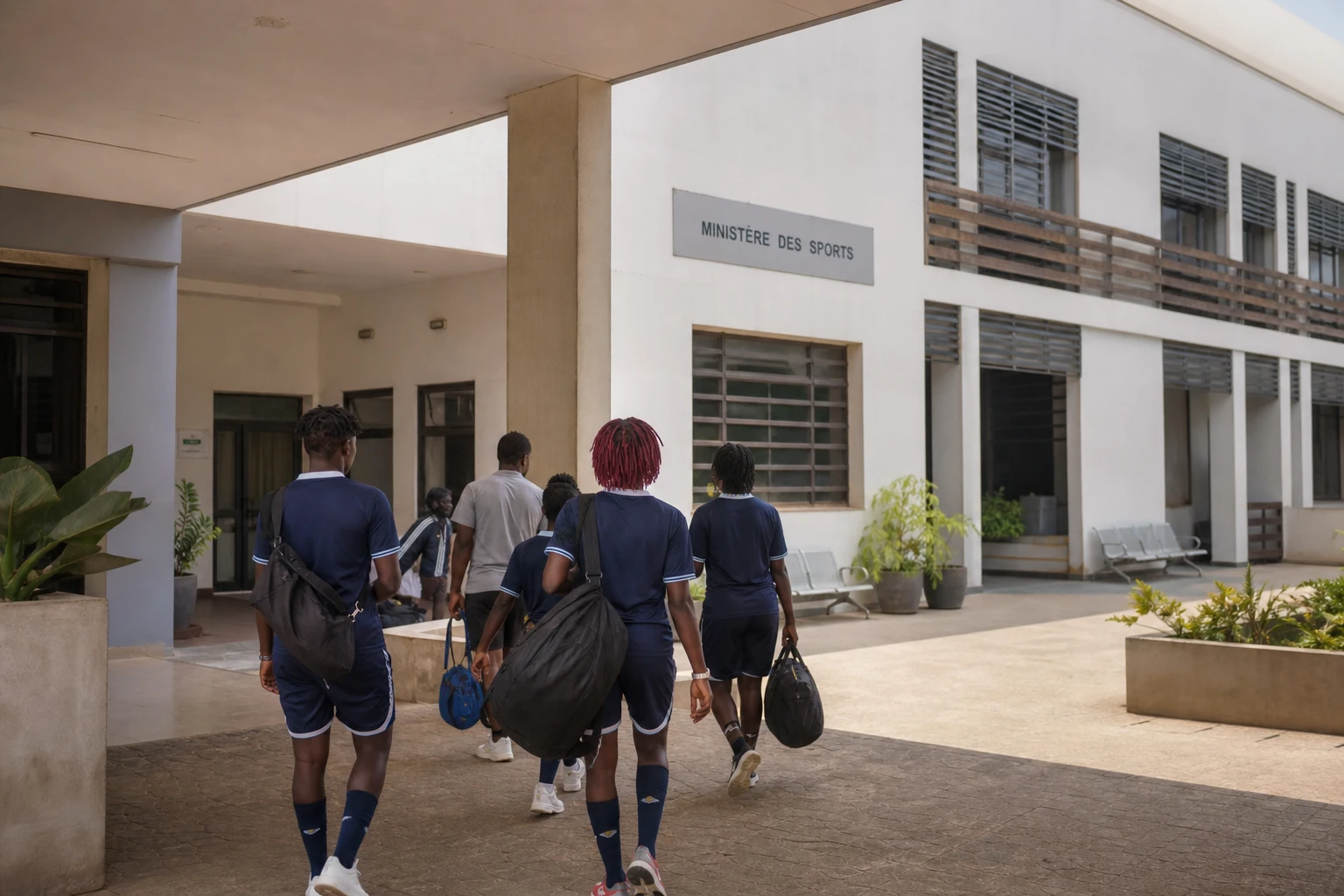
As a generation of Beninese players prepares to take to the world stage, the challenge is not simply to play well. It is also to show that a country often viewed through the lens of its constraints can produce competitive, well-organised and ambitious teams. For the Beninese players, this U20 World Cup in Poland opens a rare door. For women’s football in Benin, it could become a lasting foothold.
The context matters. Benin, a West African country, has its political capital in Porto-Novo, while Cotonou remains its main economic centre. In a regional environment shaped by ECOWAS, the rise of women’s youth football is an important signal. It says something about sporting organisation, but also about a state’s ability to prepare, support and develop its women’s teams over the long term.
The 2026 FIFA U-20 Women’s World Cup will be held from 5 to 27 September in Poland, with matches hosted in Bielsko-Biała, Katowice, Łódź and Sosnowiec. The draw placed Benin in Group A alongside Mexico, Argentina and hosts Poland. FIFA confirmed that all 24 teams had submitted their official squads before the tournament.
For Benin, the event has clear historic significance: it is the country’s first appearance at a U20 Women’s World Cup. FIFA has also described Benin and Tanzania as the two latest African nations to make their debut in the competition in 2026. In the CAF region, this qualification is part of a broader trend, with Nigeria, Ghana and Tanzania also set to compete in Poland.
Benin’s preparations intensified over several weeks. Beninese sports media reported that the team first held a training camp in Cotonou, before continuing in France for a final phase of work, including test matches against clubs and a match against France U20 at Clairefontaine. The final warm-up ended in a narrow 3-2 defeat, with Romaine Gandonou scoring twice. This kind of fixture reflects the level of challenge set by the coaching staff: taking on stronger opposition to raise standards.
A team still learning, but no longer just discovering
Head coach Abdoulaye Ouzerou summed up the challenge frankly: finding the right balance between performance and learning. That is no small decision. An U20 women’s team making its World Cup debut arrives with more than tactical plans to fine-tune. It also has a shortfall in international experience, competitive match rhythm and familiarity with opponents more accustomed to major tournaments. The sessions in France were specifically intended to narrow that gap.
The situation reflects a broader reality in Beninese women’s football. The country has made rapid progress, but starts from a low base in investment, the frequency of international matches and the professionalisation of young players’ careers. Qualification in May 2026 against Côte d’Ivoire marked a turning point. Beninese sources described it as historic because it opened the door to a competition that had previously been out of reach for the U20 Amazons.
This World Cup is therefore a sporting test, but also an institutional barometer. The coaching set-up, logistics, medical support, mental preparation and the behind-the-scenes work highlighted by the staff will matter as much as individual quality. The involvement of technical officials and figures from Beninese football in the preparations signals a determination to provide more rigorous support. That is a positive sign in a sector where results are too often judged without looking at the structures that make them possible.
On the pitch, Benin’s group is a tough one. Mexico has a more established tradition in youth football. Argentina brings a technical style that is often difficult to contain. Poland will play at home, backed by its fans and in familiar surroundings. For the Beninese players, that means every match will count. A strong start could build momentum. A poor one will make what follows more demanding.
What Benin is playing for in West Africa
Beyond Benin itself, this qualification offers a useful regional perspective. In West Africa, women’s youth football remains an area where differences in resources quickly become apparent. When Benin joins Ghana and Nigeria in a global tournament, this is more than a symbolic presence. It confirms that a new field of competition is opening up, with more countries able to produce competitive players if preparation keeps pace.
The continental significance is also real for CAF. Youth world competitions often serve as a testing ground. They reveal which countries are investing in scouting, training and a sustained programme of international matches. They also show which are turning a one-off peak into a lasting sports policy. For Benin, then, the question is not simply whether it will reach the knockout stage. It is whether this first appearance will become a benchmark for what follows.
The schedule now provides a clear framework. Benin will open against Mexico, before facing Argentina and then Poland. In a short tournament, every detail counts. The results will say a great deal. But the true measure of this journey may lie elsewhere: in the country’s ability to turn a first appearance on the world stage into a lasting path for its Amazons, from Porto-Novo to European pitches and on to the next generations.