Algeria
 Egypt
 Libya
 Morocco
 Sudan
 Tunisia
 Burkina Faso
 Cabo Verde
 Côte d'Ivoire
 Ghana
 Guinea
 Guinea-Bissau
 Liberia
 Mali
 Mauritania
 Niger
 Nigeria
 Senegal
 Sierra Leone
 The Gambia
 Togo
 Cameroon
 Central African Republic
 Chad
 DR Congo
 Equatorial Guinea
 Gabon
 Republic of the Congo
 São Tomé and Príncipe
 Burundi
 Comoros
 Djibouti
 Eritrea
 Ethiopia
 Kenya
 Madagascar
 Malawi
 Mauritius
 Mozambique
 Rwanda
 Seychelles
 Somalia
 South Sudan
 Tanzania
 Uganda
 Angola
 Botswana
 Eswatini
 Lesotho
 Namibia
 South Africa
 Zambia
 Zimbabwe
A road, but above all a test of continuity for the Cotonou-Niamey corridor
In Dassa-Zoumè, in central Benin, the road is more than a line on a map. It connects domestic markets with the port of Cotonou and, beyond that, with trade with the hinterland. In a country where Porto-Novo is the political capital but Cotonou handles a large share of commercial traffic, every kilometre that eases the flow of goods affects the cost of living, transport times and the competitiveness of Beninese businesses.
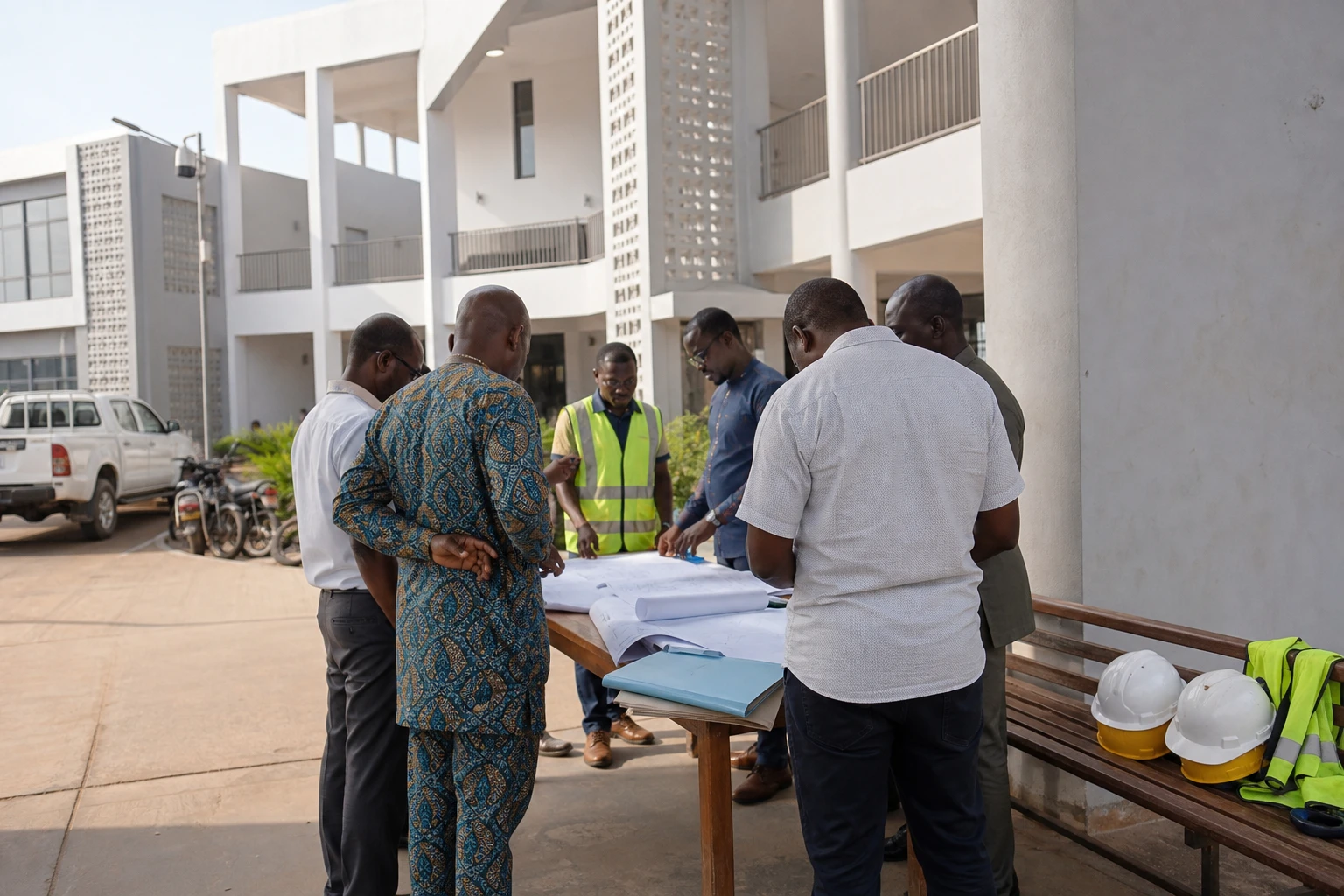
It was against this backdrop that work began on Wednesday 9 September 2026 to rebuild the Sètto-Dassa-Zoumè road. The project covers 39.45 km of road, which will be upgraded to a dual carriageway, with a second bridge over the Zou River and a modern toll and weighing station. The investment is estimated at $291 million, of which $202 million is provided by the Millennium Challenge Corporation, the US government’s development agency, and $89 million by Benin.
The project is part of the Benin-Niger regional compact, signed in December 2022 and designed to modernise the corridor between the port of Cotonou and Niamey. The aim is straightforward: to reduce transport costs, improve road safety and make trade more predictable for carriers, traders and exporters. The MCC notes that this corridor was long among the busiest in West Africa, with up to 1,000 vehicles a day.
What the project will change, and what it cannot fix on its own
Technically, the transformation of the Sètto-Dassa-Zoumè road is significant. The existing single-carriageway road carries local traffic, heavy goods vehicles and transit convoys. When an accident occurs, traffic grinds to a halt, sometimes for a long time. By widening the road to a dual carriageway, the Beninese government aims to prevent such disruptions, improve safety for road users and reduce vehicle wear and tear. For carriers, that means less time lost and, ultimately, lower operating costs. For the towns and villages along the route, it could also change activity at shops, bus stations and local service businesses.
But infrastructure alone is not enough. The Cotonou-Niamey corridor remains dependent on political relations between Benin and Niger. Since the coup in Niamey in July 2023, the border has been closed, disrupting trade flows and supply chains. In June 2026, expert committees from the two countries were established and submitted their reports to their respective heads of state, signalling a resumption of dialogue. Yet trade has not fully returned to normal, and the conditions for a lasting reopening are still under discussion.
In other words, Benin is investing in the road, but the main obstacle is as institutional as it is diplomatic. Customs procedures, multiple checks, coordination between security services and stable relations between the two states matter as much as the condition of the road surface. That is what determines a corridor’s performance: not just the width of the road, but the ability to keep trucks moving without administrative or political interruption.
For Benin, the stakes are strategic. The autonomous port of Cotonou derives part of its business from transit to inland countries, including Niger. When that traffic contracts, logistics revenue, transport-related jobs and port value added all suffer. Conversely, a better-equipped corridor could strengthen the country’s role as the sub-region’s maritime gateway. It would also send a signal to rural areas along the route: shorter journey times could bring producers closer to collection centres, provided public services keep pace.
A Beninese project with West African reach
Beyond Benin, the issue says something about West Africa today. ECOWAS has long promoted integration through infrastructure, but corridors remain vulnerable whenever a border becomes tense or political change reshuffles the deck. Benin and Niger illustrate this reality: a road can be financed, designed and launched, yet still depend on a decision to reopen a border, a security agreement or an administrative compromise.
The MCC regional compact is a telling example. Its Beninese component includes work on the Bohicon-Dassa section, while the Nigerien component was to cover about 127 km between Niamey and Dosso. The programme was conceived as a whole, not as an isolated road. After the coup in Niger, the Nigerien component slowed, showing that regional cooperation depends as much on states’ sovereign decisions as on external financing.
The Sètto-Dassa-Zoumè project is a reminder of an often underestimated fact: in West Africa, trade does not take place only in ports or capitals. It also takes place in mid-sized towns, at bridges, checkpoints and roadside markets, and through decisions made between neighbours. If Benin modernises its inland road, the project’s real impact will depend on what happens next on the other side of the border, in Niamey and along the entire corridor. That is where, in the coming months, the difference between efficient infrastructure and a genuinely continuous supply chain will become clear.