Algeria
 Egypt
 Libya
 Morocco
 Sudan
 Tunisia
 Burkina Faso
 Cabo Verde
 Côte d'Ivoire
 Ghana
 Guinea
 Guinea-Bissau
 Liberia
 Mali
 Mauritania
 Niger
 Nigeria
 Senegal
 Sierra Leone
 The Gambia
 Togo
 Cameroon
 Central African Republic
 Chad
 DR Congo
 Equatorial Guinea
 Gabon
 Republic of the Congo
 São Tomé and Príncipe
 Burundi
 Comoros
 Djibouti
 Eritrea
 Ethiopia
 Kenya
 Madagascar
 Malawi
 Mauritius
 Mozambique
 Rwanda
 Seychelles
 Somalia
 South Sudan
 Tanzania
 Uganda
 Angola
 Botswana
 Eswatini
 Lesotho
 Namibia
 South Africa
 Zambia
 Zimbabwe
A completed hospital that has yet to open, a water network built without a schedule for commissioning: for residents, work does not end when the final stone is laid. In Benin, a new body will monitor several priority social projects and help resolve the obstacles delaying their opening.
Stronger coordination, with deadlines to meet
At its meeting on Wednesday 4 November 2026, the Council of Ministers decided to establish a Support Unit for the Presidential Programme for Priority Social Infrastructure. Its mission is to coordinate and monitor selected projects in liaison with the ministries concerned, and ensure deadlines are met. The decision was reported by Beninese media. The corresponding official account could not be corroborated in the documents consulted.
The list of projects will be drawn up according to defined criteria and then approved by the President of the Republic. The unit will also help mobilise funding, take part in identifying the companies responsible for the works and monitor public procurement procedures. These responsibilities place it at the intersection of planning, financing and implementation.
The arrangement provides for a monthly report to the head of state. According to the Council account cited in reports on the decision, this should make progress visible and allow difficulties to be addressed more quickly. The unit is planned to operate for an initial period of 24 months. A first review is scheduled after 12 months, while preparations for the gradual transfer of files must be made by the 18th month at the latest.
Facilities are useful only if they work
This deadline comes as the government prepares its investments for 2027. The draft finance bill submitted to the National Assembly provides for continued priority to be given to spending with a significant economic and social impact. Announced projects include the construction of five district hospitals, the rehabilitation and equipping of departmental hospitals and university hospitals, as well as works on university infrastructure.
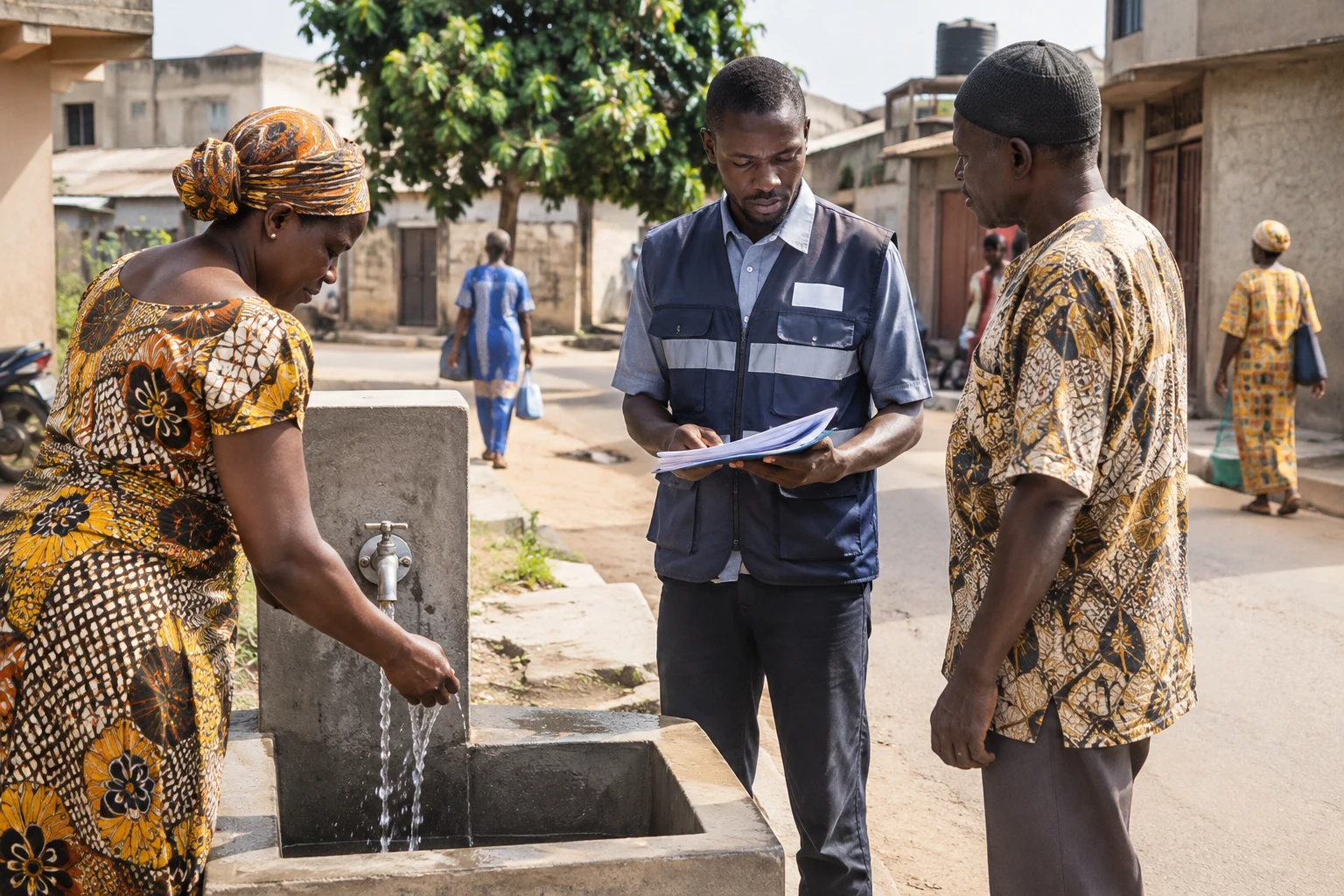
The same draft budget mentions the continuation of the programme to provide access to drinking water in rural areas, with new supply systems and the refurbishment of existing facilities. These commitments set a direction, but do not in themselves guarantee that the works will be completed or that the service will be of good quality once the facilities open. Monitoring will also need to cover costs, deadlines, available staff and maintenance.
The issue is particularly tangible outside major urban centres. A facility that is remote, difficult to reach or lacks the resources to operate only partly meets people’s needs. For rural families, opening a health centre or ensuring a regular water supply can reduce travel and expenses. In cities, the challenge is also to keep pace with growing needs and prevent existing services from becoming overstretched.
Available development indicators highlight the scale of the work still to be done, though they do not on their own sum up the country’s situation. Benin’s 2025 Sustainable Development Report estimates that in 2022, 67.4% of the population used at least basic drinking water services, compared with 19.5% for basic sanitation. These figures, which relate to years different from the establishment of the unit, underline why infrastructure delivery must be accompanied by monitoring of access and functionality.
The challenge: coordinating ministries and reporting
A coordination unit can help when several administrations are involved in the same project. It can also give officials an overview of delays and funding needs. But its effectiveness will depend on its ability to obtain reliable information, bring ministries together and resolve bottlenecks without blurring each party’s responsibilities.
Monitoring public procurement will be important. The selection of companies, progress on construction sites and use of funds must remain transparent. A monthly report to the presidency can facilitate executive oversight; however, on its own, it does not replace the publication of information accessible to citizens on projects, their costs and delivery dates. Municipalities and users also have a practical role to play: reporting local needs and checking that facilities meet their intended uses.
The 2027 budget announcements provide a framework for this approach. The draft finance bill provides for a budget of CFAF 4,757.029bn, up 14.7% from the 2026 amended finance law. It remains subject to examination and approval by MPs. It is therefore important to distinguish between announced priorities, the appropriations ultimately authorised and expenditure actually carried out.
A public services challenge that crosses borders
Benin is a member of the West African Economic and Monetary Union, which coordinates economic and budgetary rules among eight states, and of ECOWAS, the regional cooperation organisation for West Africa. For its neighbours and other countries in the region, the question is a familiar one: how can budgets and projects be turned into available services, particularly in less well-served areas?
It is not yet possible to judge the results of Benin’s initiative. The next milestones will be publication of the list of selected projects, the appropriations allocated to them, and then the review announced after 12 months of operation. These will show whether the new coordination really speeds up the opening of infrastructure, and whether the benefits also reach residents living far from the main urban centres.
Consult the official guidelines for Benin’s 2027 draft budget. Read the Budget Directorate’s 2027-2029 budget guidelines.