Algeria
 Egypt
 Libya
 Morocco
 Sudan
 Tunisia
 Burkina Faso
 Cabo Verde
 Côte d'Ivoire
 Ghana
 Guinea
 Guinea-Bissau
 Liberia
 Mali
 Mauritania
 Niger
 Nigeria
 Senegal
 Sierra Leone
 The Gambia
 Togo
 Cameroon
 Central African Republic
 Chad
 DR Congo
 Equatorial Guinea
 Gabon
 Republic of the Congo
 São Tomé and Príncipe
 Burundi
 Comoros
 Djibouti
 Eritrea
 Ethiopia
 Kenya
 Madagascar
 Malawi
 Mauritius
 Mozambique
 Rwanda
 Seychelles
 Somalia
 South Sudan
 Tanzania
 Uganda
 Angola
 Botswana
 Eswatini
 Lesotho
 Namibia
 South Africa
 Zambia
 Zimbabwe
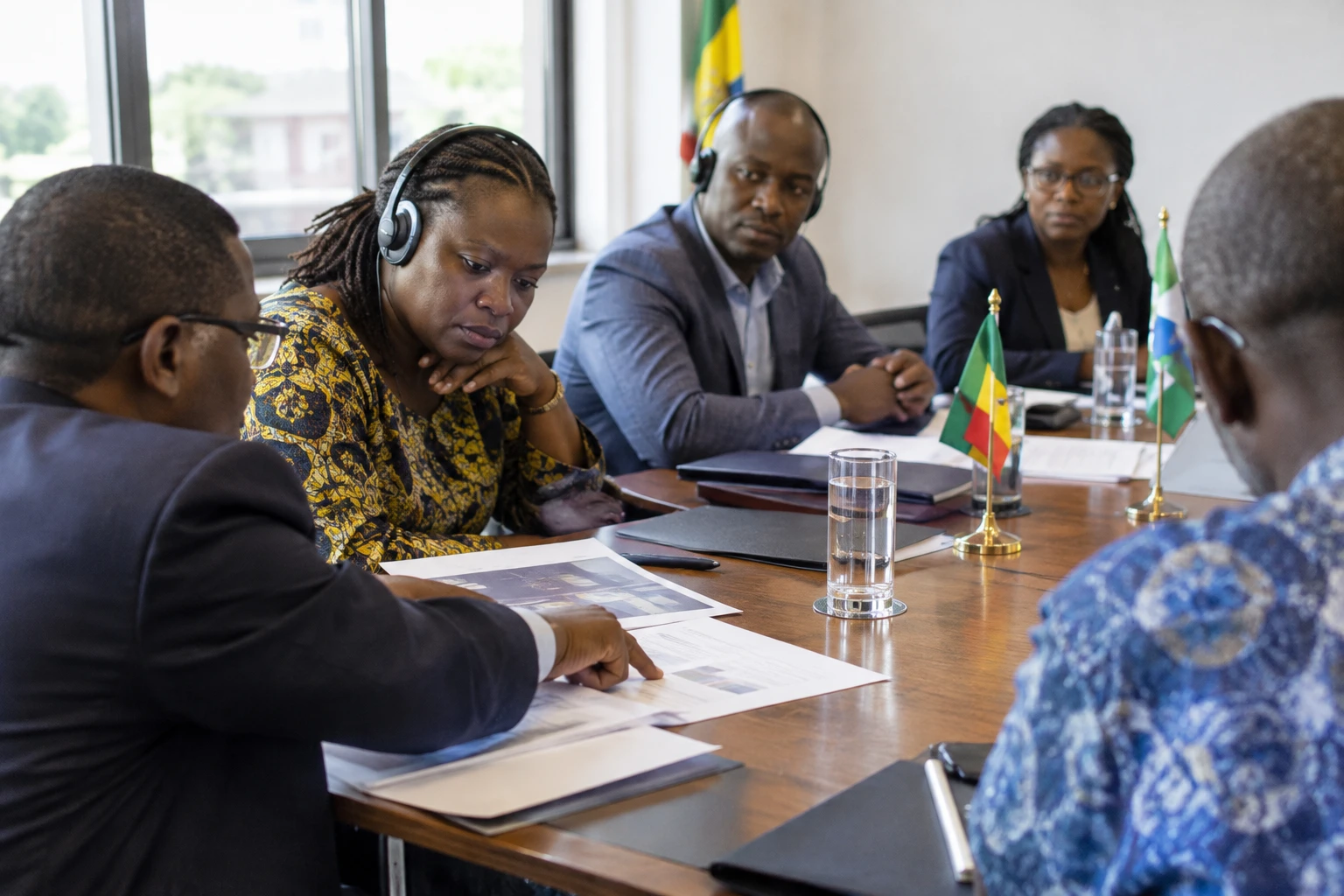
In Benin, producing more solar electricity is not enough: the plants must also be connected to the grid and the energy delivered to homes and businesses. The financing announced for IPP50 advances the first part of this effort. Its impact will also depend on grid works and the plants becoming operational.
A project launched several years ago
On 29 October 2026, financing agreements worth €30 million were signed for IPP50, a project comprising four photovoltaic plants planned for Natitingou, Djougou, Parakou and Bohicon. AXIAN Energy is developing the project with financial partners, including the International Finance Corporation (IFC) and Proparco. Benin’s Caisse des Dépôts et Consignations is also involved in its structuring.
IFC documents describe a project initially designed around 50 megawatts of alternating current. Recent announcements refer to a combined capacity of 62 megawatt-peak, a measure of the panels’ maximum output under standard conditions. The two figures refer to different units and measurements and should not be confused. The developers expect annual production of about 110 gigawatt-hours.
The project has gone through several stages since concessions were awarded to GreenYellow and Egnon Consulting in 2022. AXIAN Energy took it over in 2024, according to information released about its development. The financial signing marks an important milestone, but does not mean the plants are already generating electricity. They are due to become operational in 2028. IFC documents on the solar IPP project in Benin detail its structure, sites and the role of the project companies.
Generating power locally and reducing dependence on imports
IPP stands for “independent power producer”: a private company builds and operates a power plant, then sells the electricity to a public buyer under a contract. In this case, the electricity is to be sold to the Société béninoise de production d’électricité. This arrangement brings private capital into the sector, while placing electricity purchases and contractual commitments at the heart of the project’s economic viability.
For Benin, the challenge is to diversify an electricity supply that also depends on imports. Demand is expected to grow alongside activity in households, services and industry. A World Bank study forecasts sustained growth in electricity consumption by 2030. Adding domestic solar generation could therefore strengthen security of supply, provided the electricity is available when the grid needs it and the lines can accommodate it.
The four sites spread the project across several cities from the north to the south of the country. This distribution could help bring some generation closer to the areas concerned. However, installed capacity alone does not guarantee connections for residents or automatically lower bills. Those outcomes also depend on distribution infrastructure, grid management and tariff conditions.
Grid connection, the other crucial undertaking
The plants form part of a broader energy strategy. Benin’s National Energy Compact sets targets for access and renewable energy development by 2030. The government aims for renewables to account for 30% of electricity generation, according to announcements linked to the compact. Meeting these targets requires building generation capacity and expanding the grid in parallel.
This distinction is particularly important for rural areas and communities far from major routes. A plant connected to the national grid can increase available supply without directly connecting every village or neighbourhood. Conversely, investment in distribution determines whether households and small businesses can actually benefit from better service. The World Bank estimated that 59% of Benin’s population had access to electricity in 2024; the national rate masks disparities between areas. World Bank data on access to electricity in Benin help illustrate the scale of the challenge.
The €30 million financing package does not necessarily represent the operation’s total cost. Published project information puts the overall cost at about €45 million. Funding from development partners is therefore one element of the financing structure, not a guarantee that all risks have been eliminated. Keeping to the schedule, building the connection lines and ensuring the public buyer can honour its contracts will remain crucial.
An issue that extends beyond Benin’s borders
Benin is a member of ECOWAS, the Economic Community of West African States. Its electricity system is part of a regional space in which countries trade power and seek to secure their supplies. Additional solar generation could reduce some imports, but it will not replace regional co-operation: cross-border exchanges remain useful for balancing supply and demand.
IPP50 joins other projects announced in the country, including a solar plant with storage mentioned in a separate agreement. Storage can help supply electricity when the sun is no longer shining, but the details and schedules of each project need to be tracked separately. Across the continent, the challenge is the same: turning announced financing into connected plants, and then into electricity that is actually distributed.
The next concrete milestone will therefore be the start of construction, ahead of the planned commissioning in 2028. Progress on the four plants, their connection to the grid, recorded output and delivery of electricity to the network will need to be monitored. These are the stages that will show how much IPP50 contributes to Benin’s energy targets, beyond the financial signing.