Algeria
 Egypt
 Libya
 Morocco
 Sudan
 Tunisia
 Burkina Faso
 Cabo Verde
 Côte d'Ivoire
 Ghana
 Guinea
 Guinea-Bissau
 Liberia
 Mali
 Mauritania
 Niger
 Nigeria
 Senegal
 Sierra Leone
 The Gambia
 Togo
 Cameroon
 Central African Republic
 Chad
 DR Congo
 Equatorial Guinea
 Gabon
 Republic of the Congo
 São Tomé and Príncipe
 Burundi
 Comoros
 Djibouti
 Eritrea
 Ethiopia
 Kenya
 Madagascar
 Malawi
 Mauritius
 Mozambique
 Rwanda
 Seychelles
 Somalia
 South Sudan
 Tanzania
 Uganda
 Angola
 Botswana
 Eswatini
 Lesotho
 Namibia
 South Africa
 Zambia
 Zimbabwe
When a country visits an industrial zone, it is not just a protocol visit
At Glo-Djigbé, north of Cotonou’s economic belt, the Glo-Djigbé Industrial Zone (GDIZ) is attracting more than investors. It is also drawing African delegations seeking methods, contracts, figures and practical answers on industrialisation.
It was in this context that a mission from the Central African Republic recently toured the GDIZ ecosystem. The move is revealing. In several countries across the continent, the question is no longer just how to export more. It is how to process goods locally, create jobs and retain a greater share of added value. Benin, whose capital is Porto-Novo, is seeking to position itself precisely in this area.
Benin promotes industrialisation through value chains
The GDIZ is presented by the Beninese authorities as an integrated industrial zone developed in partnership between the State of Benin and ARISE IIP. The site is designed to attract factories, organise logistics services and accelerate the local processing of agricultural and forestry products. The zone’s presentation documents cite an area of 1,640 hectares, while the African Development Bank says the project was launched as an industrial policy lever and special economic zone.
The Beninese government also highlights its target sectors: cotton, cashew nuts, soya, pineapple, shea and textiles. On its website, the GDIZ says its model aims to cover the process from sourcing raw materials to producing finished goods. The African Development Bank, for its part, has estimated that ARISE IIP’s portfolio, including the GDIZ in Benin, has already brought on board more than 400 companies across 47 sectors and created more than 50,000 jobs across its projects.
This expansion is part of a broader strategy. The African Development Bank says it is supporting the development of agricultural value chains, improvements to the business climate and the promotion of special economic zones in Benin. At the same time, the country is seeking to build an industrial base capable of retaining more wealth on its territory rather than allowing raw materials to leave the country unprocessed.
What the Central African delegation came to Glo-Djigbé to learn
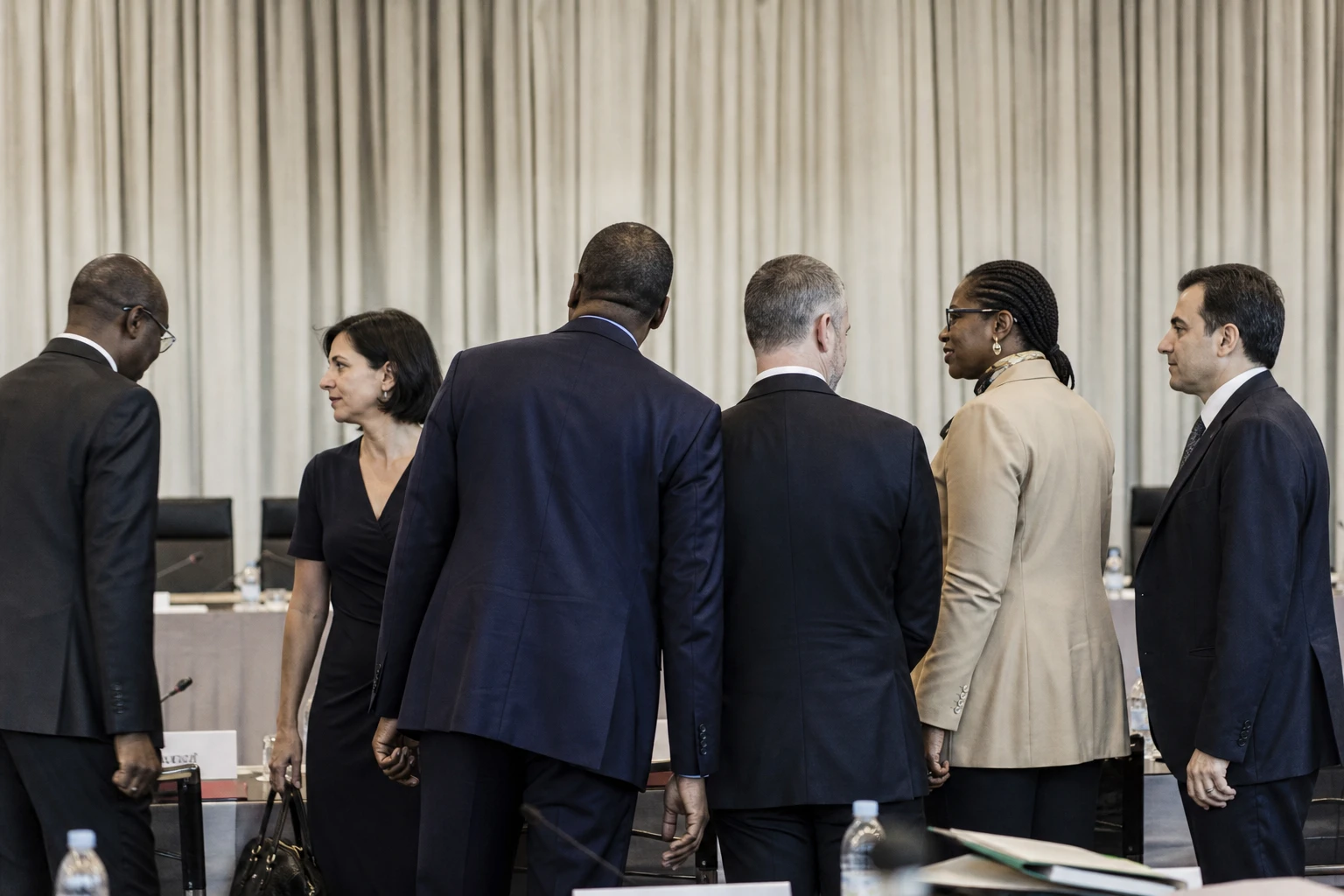
According to information published by the GDIZ and reported by news outlets, the Central African delegation undertook an immersion visit to observe how the zone operates. The group included public officials, private-sector players, entrepreneurs, representatives of chambers of commerce and women entrepreneurs. The stated aim was not to copy the Beninese model exactly, but to identify practices that could be adapted to the Central African Republic.
Discussions focused on the organisation of the zone, investor support, infrastructure, incentives for businesses and the creation of local value chains. The choice of topics is significant. It shows that industrial development depends as much on governance as on machinery. A clear one-stop shop, stable procedures, internal roads, power, water and clear rules can sometimes matter as much as political rhetoric about economic sovereignty.
For Bangui, the issue is strategic. The Central African economy still relies largely on minimally processed resources, despite its strengths in timber, agriculture, cotton, livestock and minerals. The obstacles are familiar: inadequate infrastructure, limited private investment and a fragile security environment in several areas. In this context, the GDIZ offers a case study for thinking about industrialisation through specialised hubs rather than scattered efforts.
A growing African trend
The visit also says something about the current moment in Africa. More and more governments and public-sector operators are looking for solutions on the continent itself. The trend can be seen in exchanges between industrial zones, investment promotion agencies, development banks and regional organisations. The AfCFTA, the African Continental Free Trade Area, gives this approach an added dimension: producing locally to trade more effectively among Africans.
Benin, a member of ECOWAS, intends to capitalise on this regional momentum. Its port, its position in West Africa and its industrial strategy make the GDIZ a showcase that extends beyond the national framework. But the model’s real impact will be measured by more precise indicators: the number of sustainable jobs, the share of production processed locally, the skills development of Beninese small and medium-sized enterprises, and the ability to integrate agricultural producers into the formal economy.
For Beninese people, the stakes are tangible. If the industrial zone succeeds, it can absorb some of the demand for jobs, particularly among young people. If it remains concentrated among a few major operators, its knock-on effect will be more limited. This is where the debate becomes important: industrialisation is not just about building factories. Production must also be connected to local communities, suppliers, transport operators and technical training.
The Central African mission ultimately confirms a shift in perception. The GDIZ is no longer presented solely as a Beninese project. It is becoming an African benchmark. For Cotonou and Porto-Novo, that is a form of recognition. For Bangui, it is a possible way forward. And for the West African region, it is a reminder: economic competition is no longer just about raw materials, but about the ability to process them, organise their production and sell them further afield in a different form.