Algeria
 Egypt
 Libya
 Morocco
 Sudan
 Tunisia
 Burkina Faso
 Cabo Verde
 Côte d'Ivoire
 Ghana
 Guinea
 Guinea-Bissau
 Liberia
 Mali
 Mauritania
 Niger
 Nigeria
 Senegal
 Sierra Leone
 The Gambia
 Togo
 Cameroon
 Central African Republic
 Chad
 DR Congo
 Equatorial Guinea
 Gabon
 Republic of the Congo
 São Tomé and Príncipe
 Burundi
 Comoros
 Djibouti
 Eritrea
 Ethiopia
 Kenya
 Madagascar
 Malawi
 Mauritius
 Mozambique
 Rwanda
 Seychelles
 Somalia
 South Sudan
 Tanzania
 Uganda
 Angola
 Botswana
 Eswatini
 Lesotho
 Namibia
 South Africa
 Zambia
 Zimbabwe
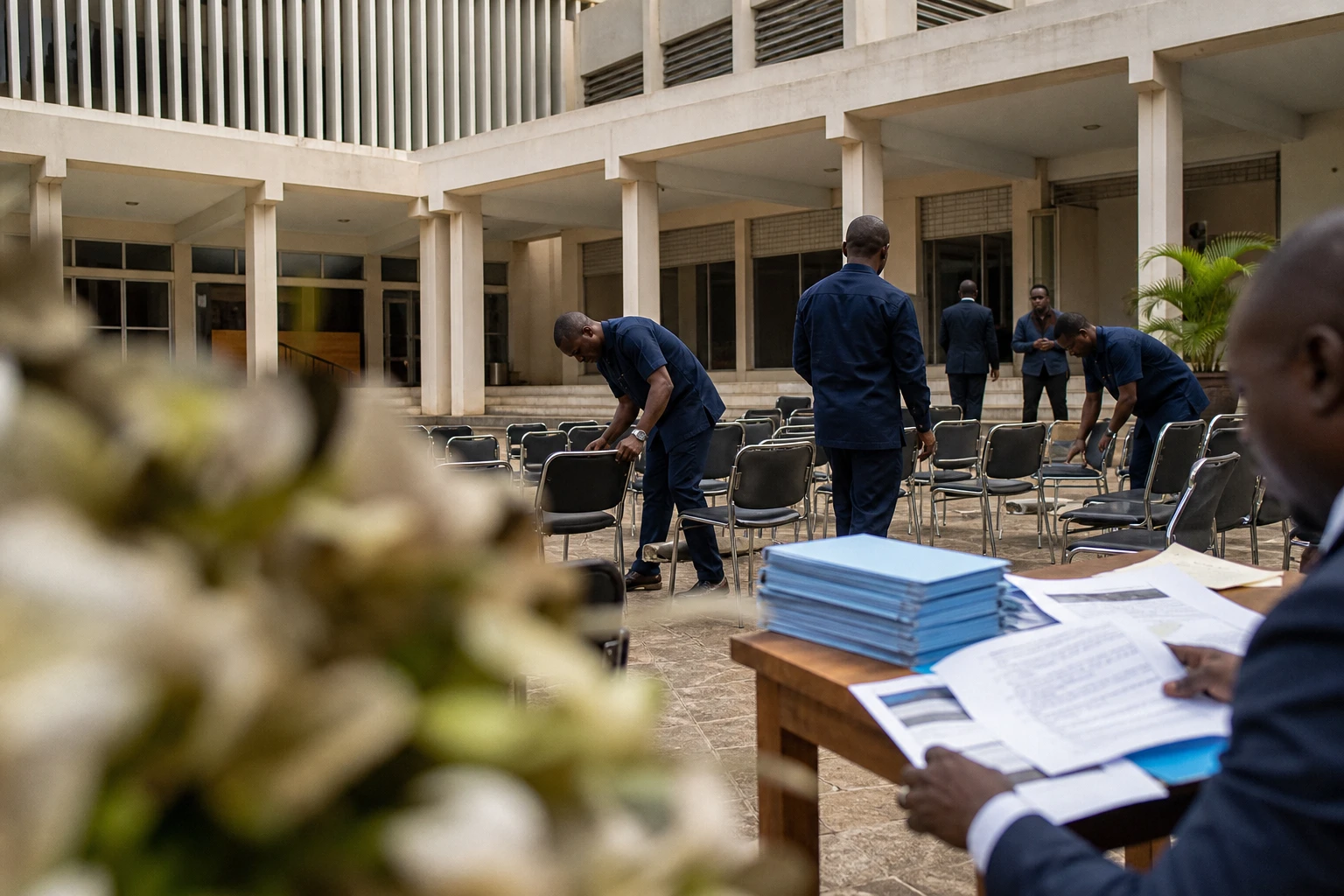
In Cotonou, the new upper house raises a very practical question
In everyday conversations, the same question keeps coming up: what will Benin’s future Senate actually do? As households in Cotonou grapple with the high cost of living, the arrival of a new institution is arousing as much curiosity as caution. The question is not merely a legal one. It is also a budgetary, political and highly practical matter for citizens who want to see tangible effects, not just another set of initials.
The debate is unfolding in a Benin that has already substantially reshaped its institutional architecture in recent years. The National Assembly adopted the constitutional revision establishing the Senate on 14 November 2025, after which the Constitutional Court ruled the law compliant with the constitution; it was promulgated on 17 December 2025, according to official government reports. Under the revised constitution, laws passed by the National Assembly are now sent to the president of the Republic and the president of the Senate, confirming the country’s shift to a bicameral parliamentary system.
The Senate is due to be inaugurated on 30 July 2026 in the National Assembly’s premises in Porto-Novo, pending the construction of its own headquarters, according to an announcement made in plenary by the institution’s president. Official texts and statements also indicate that Nicéphore Soglo, a former president of the Republic, is among the ex officio members of the new chamber and is to preside over its inaugural session as its oldest member. The new arrangement therefore marks a clear break with the unicameral system in place since 1990.
What the reform changes for the state, parliament and municipalities
On paper, supporters of the reform describe the Senate as a body for reflection, moderation and advice. In recent parliamentary communications, the National Assembly has spoken of complementarity between the two chambers, rather than competition. The idea is straightforward: the lower house retains the core legislative role, while the upper house would provide a second perspective on institutional stability, major reforms and certain long-term policy directions.
But this institutional rationale is not enough to convince some members of the public. In Cotonou, several people interviewed say they cannot yet see what the Senate will add to everyday life. Their reservations are understandable. Benin has just adopted a 2026 state budget of more than 4,148 billion CFA francs, and many families are looking first for results on purchasing power, employment and public services. In this context, any new institutional expense will be judged by its real usefulness.
The issue is therefore not simply the creation of an additional chamber. It is whether that chamber will provide a useful counterweight or merely add another layer of administration. Supporters say a Senate can provide space for reflection, particularly when parliamentary debates speed up under pressure from current political events. Critics, meanwhile, fear an increase in public spending without any immediate benefit for municipalities in the country’s interior, young graduates, market traders or civil servants already facing tight budgetary trade-offs.
Public information will therefore be crucial. Several citizens say they cannot clearly distinguish the Senate’s role from that of other consultative or electoral institutions. Yet in a democracy, a reform of this scale only makes sense if its remit is understood. Without clear explanations, the upper house risks appearing to be a technical body reserved for political circles, even as it will profoundly change the process of making laws and the balance of power.
A political signal for Benin and West Africa
The creation of Benin’s Senate comes against a regional backdrop in which the strength of institutions remains a central issue. In West Africa, ECOWAS faces fraught political transitions, persistent security concerns and growing demand for transparent governance. In this context, the choice of Porto-Novo is not insignificant: it reflects a desire to anchor stability in more robust institutional mechanisms, while other countries in the sub-region are still debating the concentration of power or the fragility of checks and balances.
For Benin, the stakes go beyond symbolism. If the Senate can fulfil its role without slowing public decision-making or increasing spending, it could be presented as a tool for democratic development. If it is established without visibility or clearly perceived value, by contrast, it will fuel the scepticism already expressed on the streets of Cotonou. Between these two scenarios, the reform’s credibility will be tested in its first months of operation, when Beninese people judge not its intentions but its results.
The significance extends across the continent. Several African parliaments are now balancing the pursuit of efficiency, the need for representativeness and public pressure for less costly institutions. Benin’s case will be watched as a test: can an upper house strengthen governance without creating further distance between the state and the public? The answer will matter far beyond Porto-Novo, because it touches on a question shared by many African countries: how to consolidate the state without making institutions still more remote from citizens’ everyday lives.