Algeria
 Egypt
 Libya
 Morocco
 Sudan
 Tunisia
 Burkina Faso
 Cabo Verde
 Côte d'Ivoire
 Ghana
 Guinea
 Guinea-Bissau
 Liberia
 Mali
 Mauritania
 Niger
 Nigeria
 Senegal
 Sierra Leone
 The Gambia
 Togo
 Cameroon
 Central African Republic
 Chad
 DR Congo
 Equatorial Guinea
 Gabon
 Republic of the Congo
 São Tomé and Príncipe
 Burundi
 Comoros
 Djibouti
 Eritrea
 Ethiopia
 Kenya
 Madagascar
 Malawi
 Mauritius
 Mozambique
 Rwanda
 Seychelles
 Somalia
 South Sudan
 Tanzania
 Uganda
 Angola
 Botswana
 Eswatini
 Lesotho
 Namibia
 South Africa
 Zambia
 Zimbabwe
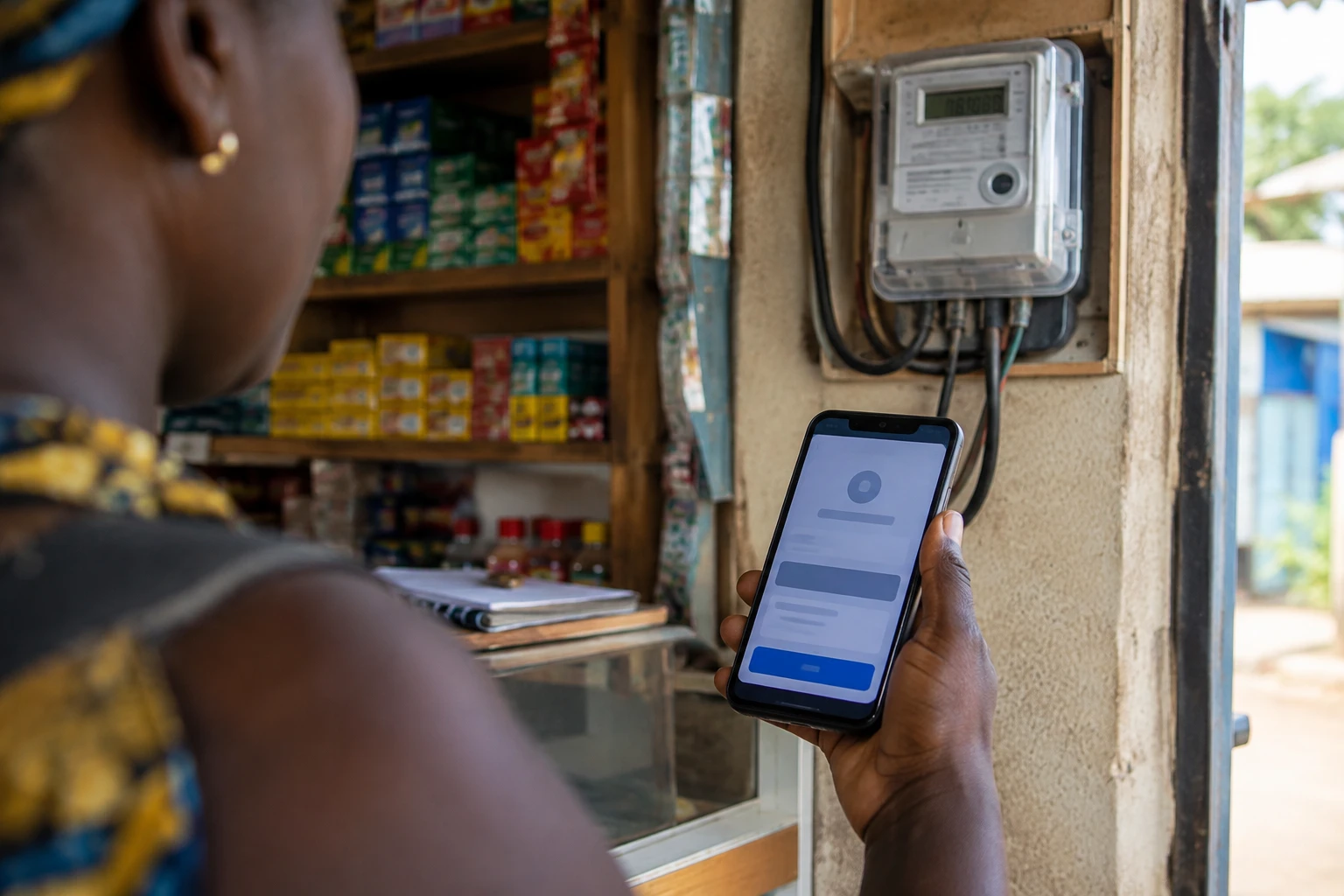
In communities far from major urban centres, the challenge is not simply to lay power lines. The service must also be reliable enough for a workshop to operate, a health centre to function and a household to use electricity in its daily life.
In Benin, new funding is aimed specifically at distribution: the network that delivers electricity to users. But the results will depend as much on the connections made as on the ability to provide a steady and affordable supply.
Strengthening the network in seven departments
On 13 October 2026, Benin and the Arab Bank for Economic Development in Africa (BADEA) signed a $65m loan agreement for the second phase of the Electricity Distribution Project, PADSBEE II. The agreement was signed by BADEA president Abdullah K. Al Musaibeeh and Hugues Oscar Lokossou, minister delegate in charge of mobilising external resources and debt management.
The programme plans to extend and densify the network of the Benin Electricity Company (SBEE), as well as bring certain facilities up to standard. The works are due to cover 127 communities in seven departments: Alibori, Atacora, Borgou, Collines, Atlantique, Ouémé and Plateau.
The stated targets include connecting 61,127 households, public services and 4,300 very small businesses. Benefits are also expected for the cotton sector. These figures describe the project’s targets; they are not yet a record of completed work.
The signing comes as access to electricity remains uneven. The World Bank estimates that 59% of Benin’s population had access to electricity in 2024. However, this national rate alone does not show whether the service is continuous, or how conditions differ between urban and rural areas.
Connections alone do not guarantee reliable service
Strengthening distribution lines can bring the network closer to households and economic activities. For small businesses, a stable connection can make it easier to preserve products, use equipment or extend working hours. For public services, continuity of supply is also important to the day-to-day operation of schools and health facilities.
But the practical impact will depend on the construction of the infrastructure, its maintenance and the supply of electricity. A connection does not automatically guarantee a regular supply, and the cost of service remains decisive for households and very small businesses alike. The available information does not specify a detailed timetable for the works or arrangements for monitoring the announced connections.
The loan is part of an existing investment drive. PADSBEE, launched in 2022, has the broader aim of improving Benin’s access to electricity. Other initiatives, including the Benin Electricity Access Scale-up project backed by the World Bank, are also helping to expand infrastructure. Their complementarity and the coordination of works will be important to prevent gaps between the networks built and the needs of communities.
The country has set energy access targets for 2030. Across Africa, this priority is aligned with Mission 300, an initiative led by the World Bank and the African Development Bank to accelerate connections across the continent. The challenge is shared, but responses must take account of the specific realities of each national grid.
A regional operation with local stakes
For the communities targeted, benefits will not be measured solely by the number of poles or meters installed. The quality of supply, connection times and users’ ability to pay for the service will also need to be assessed. Households, small businesses and public services have different needs and means.
The regional dimension also matters. The announced works cover departments in northern, central and southern Benin. The actual distribution of investment among the 127 communities will determine who benefits first from improvements and whether less-served areas make measurable progress.
BADEA’s financing thus adds to a broader effort to densify the network, while needs extend beyond infrastructure construction alone. For the Beninese authorities, the challenge will be to turn financial commitments into usable services. For regional and continental partners, PADSBEE II illustrates a central question for electrification in West Africa: how to ensure that network expansion is followed by a sufficiently reliable supply to support households and economic activity.
The next steps to watch are the start and timetable of the works, followed by the publication of verifiable results on connections and service quality. These will provide the measure of the agreement’s practical impact, following its signing in Porto-Novo, Benin’s capital.
The Beninese account of financing agreements with BADEA reports the financial details and stated objectives for PADSBEE II. World Bank data on access to electricity in Benin put the national rate at 59% in 2024. The Beninese government also documents the launch of the PADSBEE programme and its infrastructure objectives.