Algeria
 Egypt
 Libya
 Morocco
 Sudan
 Tunisia
 Benin
 Burkina Faso
 Cabo Verde
 Côte d'Ivoire
 Ghana
 Guinea
 Guinea-Bissau
 Liberia
 Mali
 Mauritania
 Niger
 Nigeria
 Senegal
 Sierra Leone
 The Gambia
 Togo
 Cameroon
 Central African Republic
 Chad
 DR Congo
 Equatorial Guinea
 Republic of the Congo
 São Tomé and Príncipe
 Burundi
 Comoros
 Djibouti
 Eritrea
 Ethiopia
 Kenya
 Madagascar
 Malawi
 Mauritius
 Mozambique
 Rwanda
 Seychelles
 Somalia
 South Sudan
 Tanzania
 Uganda
 Angola
 Botswana
 Eswatini
 Lesotho
 Namibia
 South Africa
 Zambia
 Zimbabwe
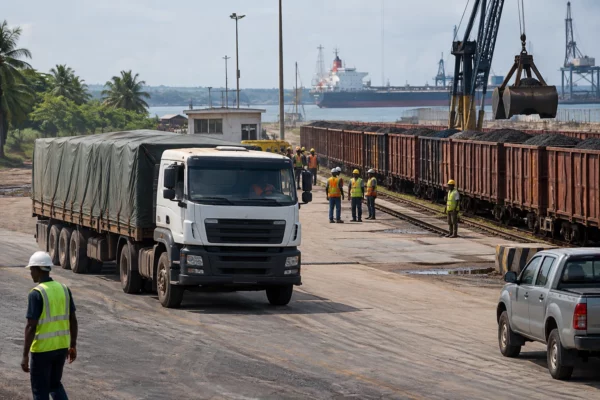
At Bélinga, the challenge is no longer just to confirm the presence of iron ore. The deposit must be connected to transport routes, a port and energy supplies, and it must then be established that the whole operation can function and that its construction can be financed. It is at this lengthy and costly stage that the transformation of a mining promise into sustainable economic activity for Gabon will be decided.
A permit is not enough to launch a mine
Located in Ogooué-Ivindo province in the north-east of the country, Bélinga is a long-standing project. The deposit was discovered in 1955, but its development has been delayed several times. The mining agreement with Ivindo Iron, a company linked to Australian group Fortescue, was signed in February 2023. A large-scale mining permit was subsequently granted by decree. The agreement provided for initial production of two million tonnes a year.
That authorisation does not mean the mine is ready to produce. Studies still need to be completed, costs specified, the necessary approvals obtained and transport for the ore organised. A decision by Gabon’s Constitutional Court, published in June 2023, also established that the agreement was not a treaty requiring parliamentary ratification. It is a reminder that the project’s legal framework is also subject to national decisions and the mining regulations in force.
An initial shipment was sent in 2023 to test the quality of the ore. This pilot operation does not constitute the start of commercial production. In 2025, Fortescue said it was still carrying out exploration work and feasibility studies. The timetable then outlined aimed for the study to be completed in December 2026. In its public information, the company says that more than 230,000 metres of drilling have been completed, without giving a new firm date for the study’s completion.
The project is taking shape, but the timetable remains to be clarified
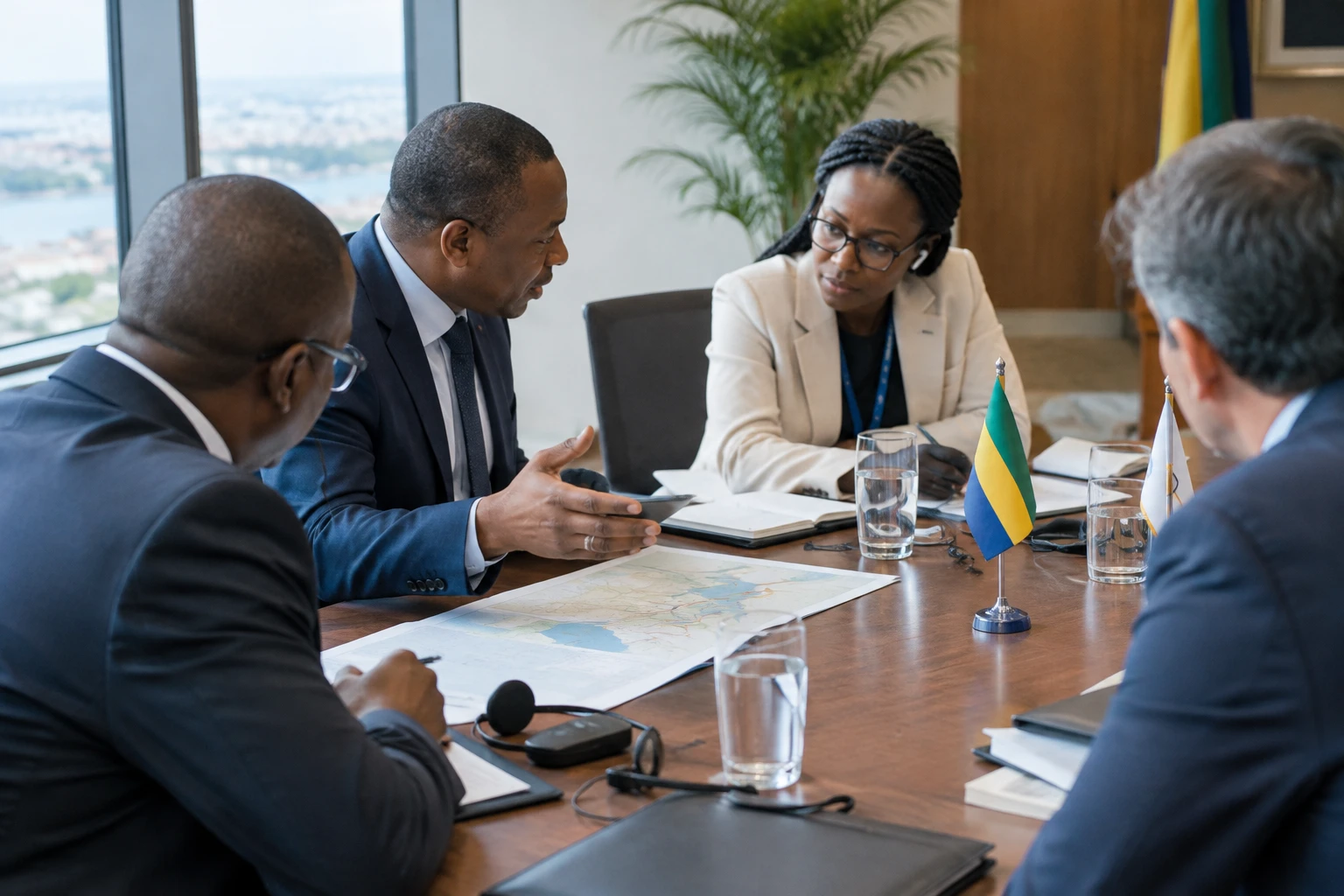
Concrete steps have since been announced. On 29 September 2026, Gabonese authorities launched construction in Makokou of a future Fortescue operations hub. The day before and on the day itself, Gabonese officials met Andrew Forrest, the group’s head, in Libreville. Discussions focused on coordinating infrastructure and partners associated with the project.
These announcements point to a stronger operational presence in Ogooué-Ivindo. They do not, however, replace either the feasibility study or a final investment decision. The Gabonese government says it wants to advance Bélinga as an integrated project: mine, railway, port facilities and energy supply. This is a broader ambition than extraction alone, but each component adds financing needs, delays and approvals.
The government has also said that Fortescue has invested $270 million in the Gabonese economy. This figure was provided by the authorities and should not be confused with the total cost of building the complex, which has not been established in the public information consulted. The distinction matters: exploration and site development spending does not yet guarantee that all the infrastructure will be built.
Benefits will depend on local choices
For the state, Bélinga offers a chance to diversify an economy in which hydrocarbons play a major role. Iron ore could expand export revenues and support services linked to transport, maintenance and energy. But the scale of these benefits will depend on contracts, taxation, jobs created and the share of procurement awarded to Gabonese companies.
In Makokou and nearby communities, activity could bring jobs and new markets for suppliers. It could also put greater pressure on housing, roads and public services. The benefits will therefore not be the same for recruited workers, companies based in Libreville and communities living near work sites. Training and local-content commitments will need to be assessed against verifiable results, not just announcements.
The project must also contend with fluctuations in the iron ore market. A fall in prices could reduce expected revenues or make it harder to finance major infrastructure. Conversely, more favourable prices are not enough to guarantee profitability: ore quality, transport costs and the ability to ship cargoes regularly are decisive.
A test for diversification in Central Africa
Bélinga is part of a broader Gabonese strategy, alongside the Baniaka iron ore project led by Genmin. The two projects are at different stages and do not necessarily share the same logistics solutions. Together, however, they show that mining diversification depends as much on infrastructure and agreements with the state as on the resources beneath the ground.
This issue extends beyond Gabon. As a member of CEMAC, the Economic and Monetary Community of Central Africa, the country is part of a region where diversification and transport infrastructure remain shared concerns. Bélinga could strengthen trade and Gabon’s industrial capacity, but its regional impact will depend on effective connections and a competitive supply chain.
The next step to watch is therefore the publication of a full feasibility study, including costs, energy requirements and an updated timetable. A 2030 target has been raised for an integrated operation and the first commercial shipments, but it is not a guarantee. Until then, construction of the Makokou site, public approvals, funding and the organisation of rail and port links will show whether Bélinga is moving from preparation to execution.
Documentary sources: Gabonese decree granting the Bélinga mining permit, Constitutional Court opinion on the mining agreement, Fortescue’s project overview, government announcement on the Makokou operations hub, Gabonese authorities’ update on the integrated project, Gabonreview’s account of the September 2026 discussions.