Algeria
 Egypt
 Libya
 Morocco
 Sudan
 Tunisia
 Burkina Faso
 Cabo Verde
 Côte d'Ivoire
 Ghana
 Guinea
 Guinea-Bissau
 Liberia
 Mali
 Mauritania
 Niger
 Nigeria
 Senegal
 Sierra Leone
 The Gambia
 Togo
 Cameroon
 Central African Republic
 Chad
 DR Congo
 Equatorial Guinea
 Gabon
 Republic of the Congo
 São Tomé and Príncipe
 Burundi
 Comoros
 Djibouti
 Eritrea
 Ethiopia
 Kenya
 Madagascar
 Malawi
 Mauritius
 Mozambique
 Rwanda
 Seychelles
 Somalia
 South Sudan
 Tanzania
 Uganda
 Angola
 Botswana
 Eswatini
 Lesotho
 Namibia
 South Africa
 Zambia
 Zimbabwe
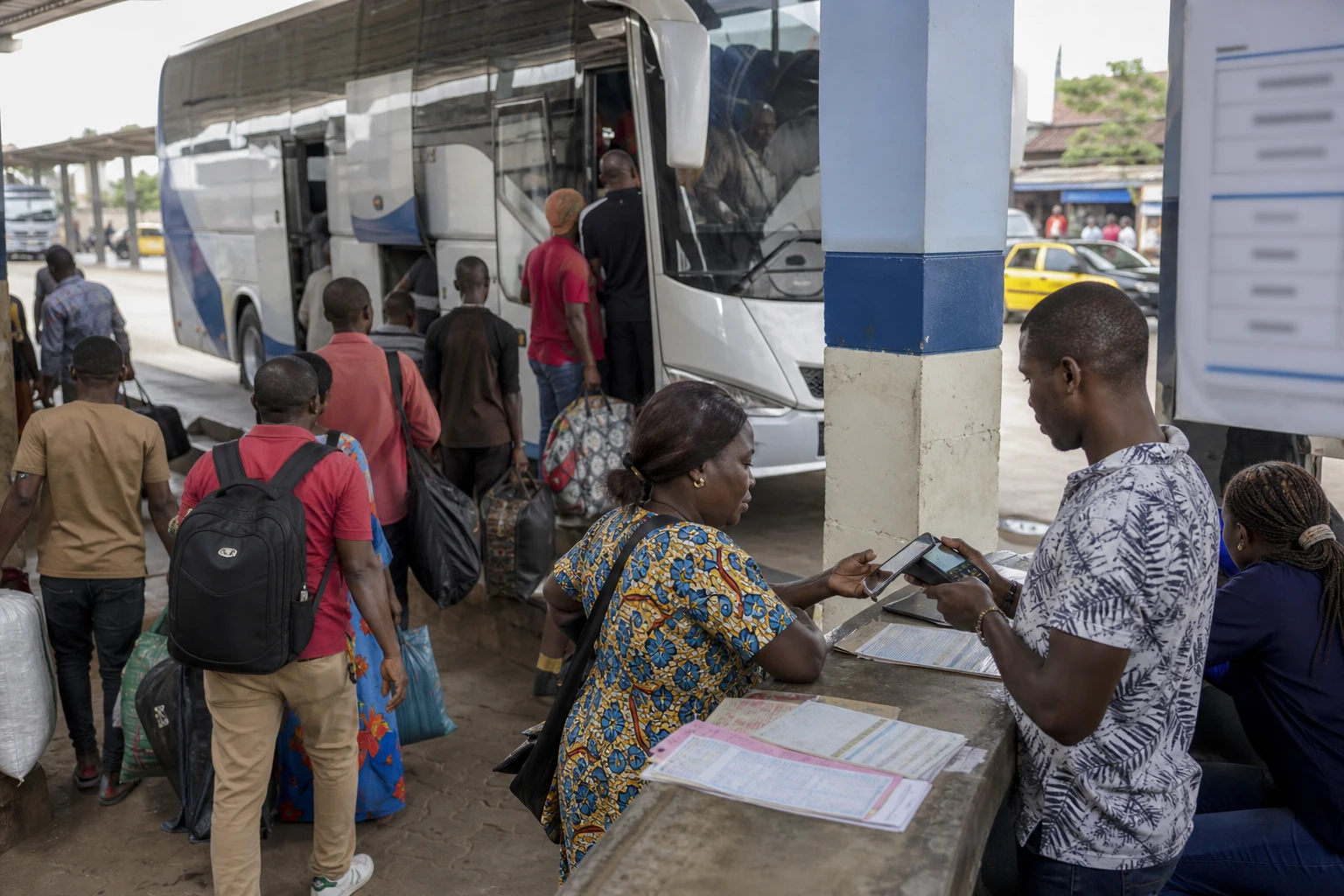
Digital payments are entering a new phase in the West African Economic and Monetary Union (WAEMU). The Central Bank of West African States (BCEAO) wants to preserve free small transfers while giving providers the means to fund a shared infrastructure. The change comes as Wave, one of the region’s most widely used mobile wallets, finally joins the system.
Free transfers refocused on small amounts
From 2 November 2026, domestic electronic-money transfers will remain free up to a cumulative total of 8,000 CFA francs per day. The cap will apply to the same user and the same PI-SPI participant, on the WAEMU’s Interoperable Instant Payment System Platform.
The threshold applies daily. It does not apply to each transaction individually. A customer who sends 5,000 CFA francs in the morning and then 4,000 CFA francs in the afternoon will exceed the free-transfer limit. Splitting a large amount into smaller transfers will not get around the rule.
Above 8,000 CFA francs, banks, electronic-money institutions and payment institutions will be able to charge for the transfer. The rate must remain between 0% and 0.8% of the amount, excluding tax. Providers will retain some discretion, but will not be able to exceed the cap set by the central bank.
Receiving money will remain free, with no limit on the amount or number of transactions. This applies to transfers between a bank account, a microfinance account, an electronic wallet or an account held with a payment institution.
The BCEAO estimates that the 8,000 CFA franc threshold will cover about 75% of electronic-money transactions in the Union. The stated aim is to target free transfers more closely at everyday uses: sending money to a relative, paying a small expense or making a low-value transfer between individuals.
PI-SPI aims to become WAEMU’s shared payment rail
Launched on 30 September 2025, PI-SPI is intended to connect the different payment networks across the regional bloc. WAEMU comprises eight countries: Benin, Burkina Faso, Côte d’Ivoire, Guinea-Bissau, Mali, Niger, Senegal and Togo.
Until now, a transfer between two networks could require several intermediaries, a cash withdrawal or the use of a specific service. Interoperability, by contrast, aims to enable direct transfers between banks, fintechs, mobile-money operators and microfinance institutions connected to the platform.
Since 2 November 2026, interoperable electronic-money transactions within WAEMU have had to pass through PI-SPI. The same pricing schedule will apply to transfers between the eight countries from 1 June 2027. This deadline will give the new model a regional reach, extending it beyond transfers made within a single country.
The BCEAO presents this change as a way to broaden access to instant payments. It also aims to make PI-SPI a central infrastructure, available around the clock and capable of supporting a wider range of uses. As at 30 September 2026, the platform had 175 authorised participants, according to the list published by the central bank.
Wave’s arrival shifts the market balance
Wave Digital Finance is now among the participants authorised to offer PI-SPI services to the public. Its arrival is particularly significant in Senegal and Côte d’Ivoire, two markets where the wallet plays a major role in mobile payments.
The company has grown through an aggressive pricing policy. In several countries, its 1% transfer fee has helped establish a new benchmark for customers. Its entry into an infrastructure that enables free interoperable transfers of small amounts therefore changes the competitive landscape between networks.
For Wave users, the benefits are tangible. Their wallet can now connect more widely with bank accounts and other participating providers. They are no longer limited to transactions within the same ecosystem, provided the service is actually open and available through the relevant providers.
For Wave, the equation is more complex. Free interoperability can help attract customers and increase wallet use. It can also reduce revenue from some transfers previously made on its own network. The company will therefore need to derive more value from merchant payments, collections and services offered to businesses.
The hidden cost of free transfers
A transfer that is free for the customer is not free for the ecosystem. Operators must fund technical connectivity, security, transaction monitoring and service continuity. Agent networks must also be supplied with cash, particularly in areas where withdrawals remain common.
BCEAO data reveal the tension between lower fees and economic viability. In 2024, the number of electronic-money service points in WAEMU fell by 5.23% to 1.59 million. The central bank linked this trend in particular to lower service fees and commissions paid to distribution networks.
At the same time, merchant locations grew sharply. This points to a shift in the model. The challenge is no longer just to deposit or withdraw money. It is also to keep funds within the digital system and then use them directly to pay a merchant, settle a bill or receive a refund.
From transfers to business payments
The BCEAO is preparing for this expansion with “API Business”, standardised technical interfaces that make it easier for businesses to connect to payment services. They can be used to collect payments from customers, pay multiple beneficiaries, settle supplier invoices, issue refunds or send payment requests.
This standardisation addresses a practical problem. Without a shared interface, a business must develop separate connections for each bank, wallet or payment institution. It then faces higher technical costs and has to maintain several systems in parallel.
Early figures give an indication of the market’s size. In 2025, electronic-money institutions supervised in the West African Monetary Union (WAMU) had 172.9 million accounts. Mobile-phone transactions reached 164,169.1 billion CFA francs, up 31.4% year on year. Their provisional net profit rose from 6.1 billion to 16.9 billion CFA francs.
However, not all these accounts are active. The WAMU Banking Commission says 35.1% of them recorded recent activity in 2025. The next battle will therefore be less about the number of wallets opened than about how often payments are actually made and the ability to turn accounts into everyday tools.
A regional test for financial integration
The pricing reform and Wave’s arrival pose a dual challenge for PI-SPI. The platform must remain accessible to households transferring small sums. It must also offer a sufficiently viable model for the providers that keep it running.
The timetable will be crucial. On 1 June 2027, the pricing schedule will be extended to transfers between the eight WAEMU countries. Until then, the BCEAO will need above all to check that services are genuinely available, that fees are clearly stated and that providers still being connected to the platform are integrated.
If users come to trust the system, it could reduce some of the need to handle cash and facilitate exchanges between neighbouring economies. Otherwise, interoperability will remain a technical promise with too little effect on everyday practices. Wave’s participation gives PI-SPI new critical mass. It also makes the project’s central requirement more visible: to make a single payment space work for millions of users without erasing the realities of each market.