
 Egypt
 Libya
 Morocco
 Sudan
 Tunisia
 Benin
 Burkina Faso
 Cabo Verde
 Côte d'Ivoire
 Ghana
 Guinea
 Guinea-Bissau
 Liberia
 Mali
 Mauritania
 Niger
 Nigeria
 Senegal
 Sierra Leone
 The Gambia
 Togo
 Cameroon
 Central African Republic
 Chad
 DR Congo
 Equatorial Guinea
 Gabon
 Republic of the Congo
 São Tomé and Príncipe
 Burundi
 Comoros
 Djibouti
 Eritrea
 Ethiopia
 Kenya
 Madagascar
 Malawi
 Mauritius
 Mozambique
 Rwanda
 Seychelles
 Somalia
 South Sudan
 Tanzania
 Uganda
 Angola
 Botswana
 Eswatini
 Lesotho
 Namibia
 South Africa
 Zambia
 Zimbabwe
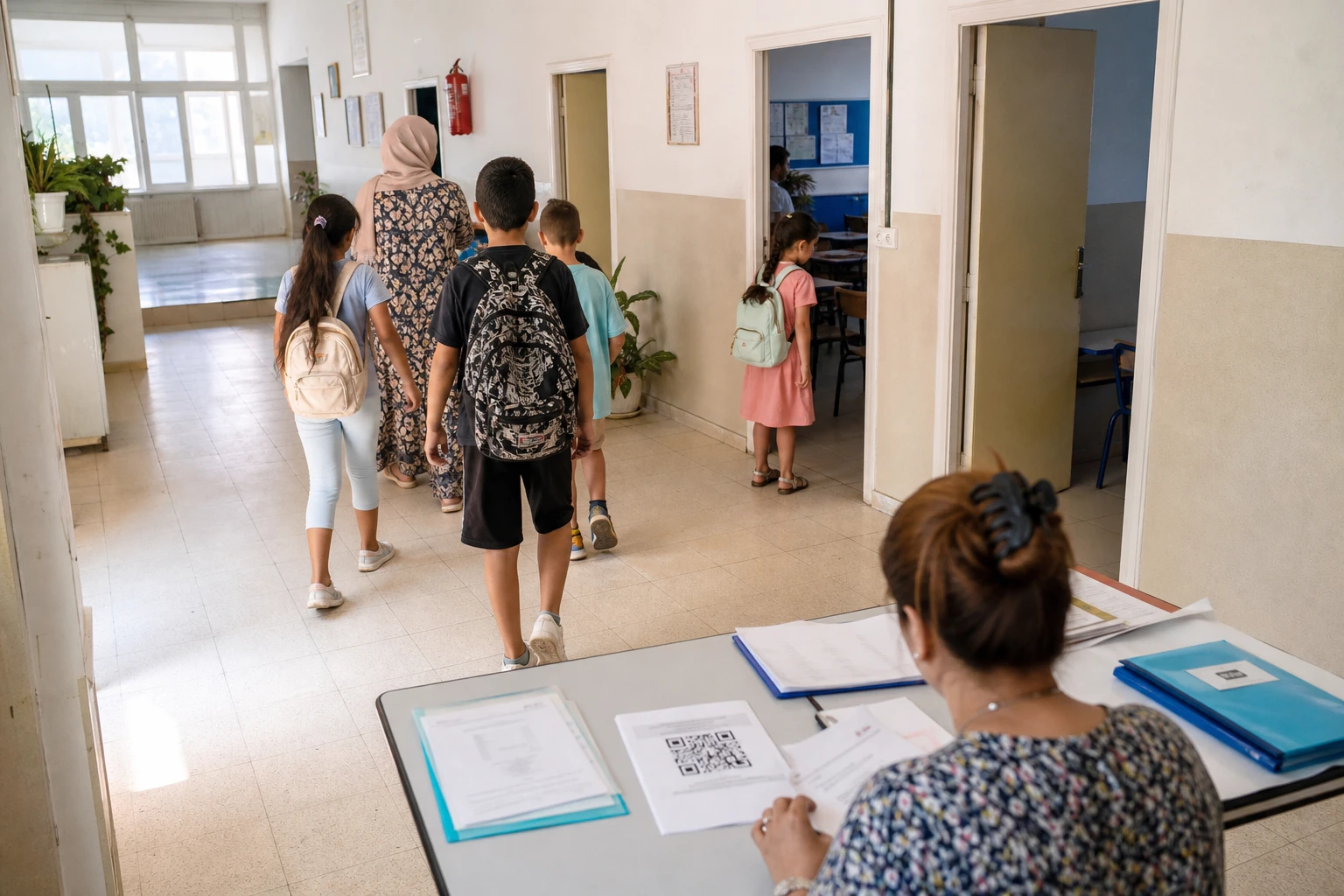
When summer becomes a tool for passing on heritage
Every summer, Algerian families living abroad return with the same question: how can they keep alive the connection between children born far from Algiers and a national history they sometimes know only in fragments? The launch of a summer education camp addresses this need with a simple approach: learn, visit, take part, then leave with firmer points of reference.
In Algeria, the question of the diaspora is not merely an emotional one. It also concerns education, language, memory and, increasingly, development. In recent weeks, the country has embarked on several initiatives to better organise its ties with the national community living abroad. The programme launched in Algiers is part of this effort, as the authorities seek to turn a dispersed attachment into a structured relationship.
A programme designed in Algiers, but looking outwards
On Sunday 19 July 2026, in Algiers, the authorities launched the “Summer Camp 2026” programme for children of the national community living abroad. The initiative is run by several government departments, including Foreign Affairs, National Education and Youth. It is aimed at children aged 8 to 16 and includes lessons alongside cultural and leisure activities.
Registration is online, using a dedicated QR code. The programme is organised in three sessions between July and August, with a first phase running until 30 July, followed by a second from 2 to 13 August. It takes place in 14 wilayas, or administrative provinces, including Algiers, Tlemcen, Sétif, Annaba and Béjaïa. More wilayas are expected to join in future editions, according to the authorities.
The project’s central aim is clear: to teach children about Algeria’s linguistic and historical heritage in a setting led by teachers. The stated goal is to strengthen their connection with their country of origin, at an age when points of reference are formed quickly and lastingly.
Beyond memory, a strategy for mobilisation
This summer camp is not an isolated gesture. In late June 2026, Algiers also established a Higher Council for the National Scientific Community Abroad, attached to the presidency. Here, too, the message is the same: the diaspora should not merely be celebrated; it should be organised, connected and mobilised. One official responsible for the national community abroad has presented these measures as the implementation of guidelines set at the highest level of the state.
This is significant for a country that remains closely linked to its citizens abroad. In France, Algerian nationals were among the main nationalities to receive first residence permits in 2024, with 32,003 permits issued. Official French data also note that a specific residence certificate exists for Algerians under the Franco-Algerian agreement of 27 December 1968, which remains central to the bilateral migration framework.
The human scale of this relationship remains considerable. The Algerian diaspora is commonly estimated at between 3 million and 4 million people, with a strong concentration in Europe, especially France. This reality explains why Algiers is investing so heavily in symbols of connection: education, culture, administration and research. The summer camp is part of this effort to sustain national ties across distance.
A cultural issue, but an economic one too
Alongside the passing on of heritage, there is also the question of resources. Remittances to Algeria reached around $1.8 billion to $1.9 billion in 2024, or about 0.7% of GDP, according to World Bank data. In this respect, the country remains well behind Morocco and Tunisia, which receive more. The gap is not merely a matter of accounting. It also points to a difference in how ties between the state and its diaspora are organised.
For families, these camps mainly offer structured access to the language, history and customs of the country. For the state, they serve another purpose: maintaining a sense of belonging, preparing future links and preventing geographical distance from turning into civic disengagement. For children, the benefits can be tangible. They discover a country often described at home by their families, but rarely explained in a systematic way.
For the formal and informal economies, summer is also a particular season. Diaspora returns support transport, accommodation, restaurants and some local commerce, especially in major coastal cities and popular regions. The education programme therefore takes advantage of an already busy period, when the country renews its ties with citizens abroad around their summer stays.
What the initiative says about Algeria and the region
Across North Africa, Algeria is joining a broader trend: several Maghreb states are now seeking to structure their relationships with communities abroad more effectively. But each does so according to its own priorities. Morocco has long relied on dedicated institutional mechanisms. Tunisia also combines consular diplomacy, financial transfers and cultural programmes. Algiers, for its part, is moving forward in stages, with the state playing a central role.
In this context, the 2026 summer camp is more than a seasonal activity. It is a test of approach. Algeria wants to show that it can turn a summer presence into a lasting tool for national cohesion. The programme’s success will be measured less by its announcement than by its ability to endure, expand and reach, over the years, children whose relationships with their parents’ country are not all the same.
The next steps will come at the start of the school year and in subsequent editions. If the programme takes root, it could become a defining feature of Algerian policy towards its diaspora, at the intersection of education, memory and development. In a country where the state is seeking to harness skills and attachments dispersed abroad more effectively, the stakes extend well beyond the holiday season.



