
 Egypt
 Libya
 Morocco
 Sudan
 Tunisia
 Benin
 Burkina Faso
 Cabo Verde
 Côte d'Ivoire
 Ghana
 Guinea
 Guinea-Bissau
 Liberia
 Mali
 Mauritania
 Niger
 Nigeria
 Senegal
 Sierra Leone
 The Gambia
 Togo
 Cameroon
 Central African Republic
 Chad
 DR Congo
 Equatorial Guinea
 Gabon
 Republic of the Congo
 São Tomé and Príncipe
 Burundi
 Comoros
 Djibouti
 Eritrea
 Ethiopia
 Kenya
 Madagascar
 Malawi
 Mauritius
 Mozambique
 Rwanda
 Seychelles
 Somalia
 South Sudan
 Tanzania
 Uganda
 Angola
 Botswana
 Eswatini
 Lesotho
 Namibia
 South Africa
 Zambia
 Zimbabwe
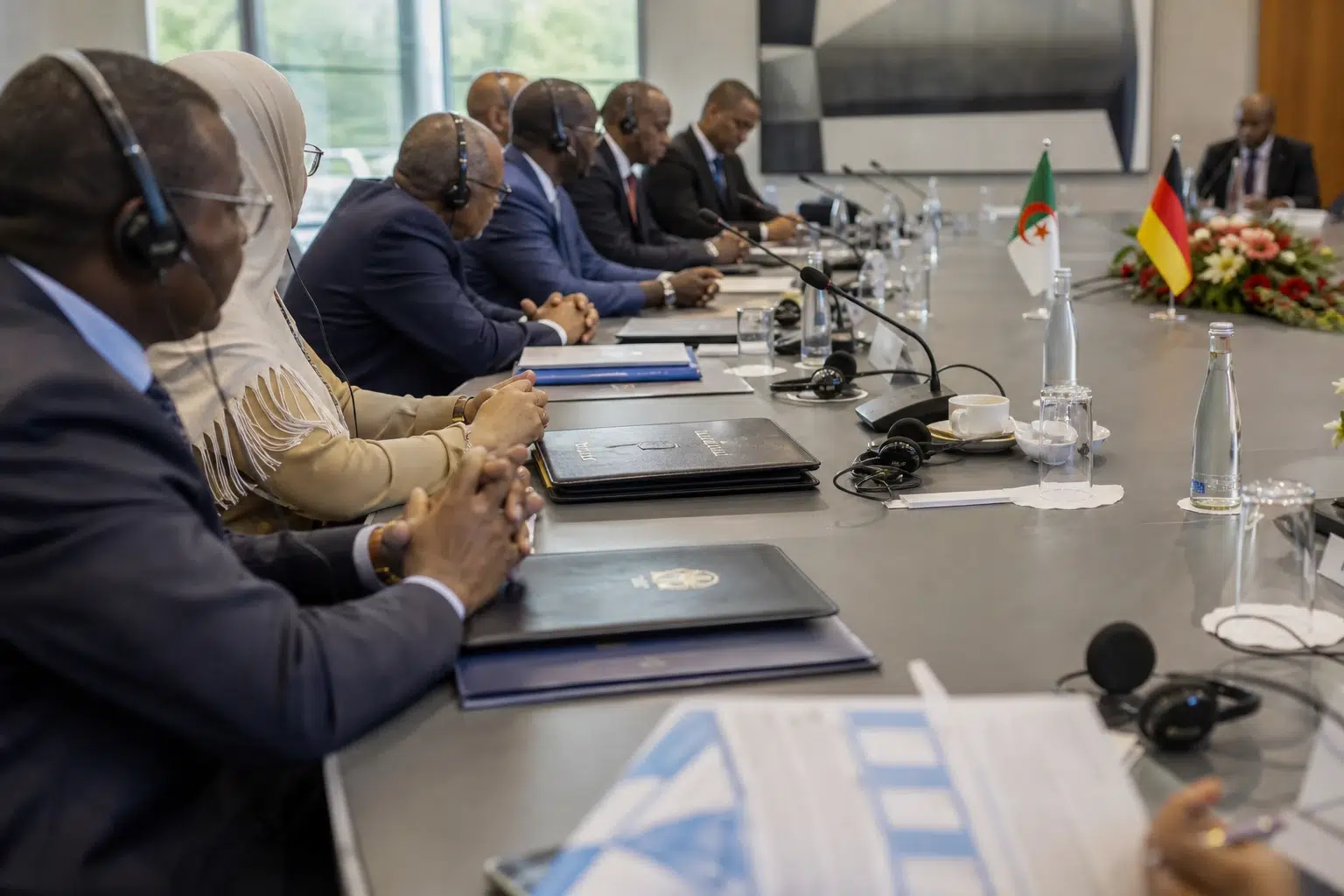
An industrial agreement that also speaks to productive sovereignty
In Algeria, the question is no longer simply how to sell more. It is also how to manufacture more locally, with skills transferred and deeper value chains. It is in this context that a partnership between Condor Electronics and Germany’s Maincor Rohrsysteme was announced in Berlin, covering the production of pipes for construction and industry, with industrial investment and technology transfer.
The stakes extend beyond the technical plastics sector alone. In a country seeking to diversify its exports beyond hydrocarbons, every locally based industrial project matters for jobs, subcontracting and the upgrading of Algerian businesses. The agreement also comes amid a broader diplomatic sequence: Abdelmadjid Tebboune’s official visit to the Federal Republic of Germany and a bilateral economic forum in Berlin.
Berlin showcases renewed economic ties between Algiers and Germany
The Algerian-German forum on 17 July 2026 provided a setting for several signings in sectors considered strategic, from energy and industry to health, transport, digitalisation, the green economy and tourism. The German authorities, for their part, presented the visit as a step towards deepening the bilateral partnership.
The joint statement issued after the meeting between the two sides also refers to activating the Algerian-German Joint Economic Commission and creating a bilateral business council, with the support of the Algerian-German Chamber of Commerce, the Algerian Economic Renewal Council and the Algerian Chamber of Commerce and Industry. This detail is important: it shows that the agreement is not isolated, but embedded in a more structured follow-up mechanism.
In this context, the industrial partnership involving Condor and Maincor stands as an example. Maincor Rohrsysteme specialises in piping systems for heating solutions, plumbing, sanitary installations and certain industrial applications. Its catalogue also features products for underfloor heating, plumbing networks and a broader range of technical uses.
What Condor stands to gain, and what Algeria is seeking to build
Condor Electronics, a subsidiary of the Benhamadi family group, is no newcomer to Algerian industry. The company already manufactures televisions, smartphones, computers, household appliances and solar panels. Its own communications channels also highlight activities in air-conditioning equipment and technical solutions, which helps explain its move into pipes for construction and industry.
The announcement states that the products will be made in Algeria under a German brand, for sale locally and export to other markets. The investment amount has not been made public. This is a point to watch, since the real scope of a partnership depends less on the names of the signatories than on the extent of the industrial footprint, production volumes and the actual local content incorporated.
For Algiers, the benefits are clear. Such an arrangement could strengthen local integration, diversify outlets and consolidate a manufacturing base capable of supplying the construction and renovation markets, as well as certain industrial niches. For the Algerian company, it is also a way to build on commercial expertise already established in several overseas markets. Condor says it exports a large share of its production to 18 markets across Africa, the Middle East and Europe.
For Germany, choosing an Algerian partner reflects a different reading of the market. Algeria remains an important industrial and commercial centre in North Africa, with demand for construction equipment, heating systems and technical components. The partnership could therefore serve geographic proximity, reduce some logistical constraints and provide new growth opportunities beyond the European market. This reading is an inference based on Maincor’s activities and the content of the announced agreement.
A North African dimension, with an eye on what comes next
This story says something broader about Algeria today. The country is seeking to step up a more assertive economic diplomacy while retaining control over local production. At the same time, Berlin wants to consolidate stable industrial relations with a Mediterranean partner able to provide access to regional and African markets.
The continental dimension is also reflected in the markets being targeted. If production from this partnership finds a place beyond the Algerian market, it could become part of North African and African trade dynamics, as the African Union promotes implementation of the African Continental Free Trade Area, or AfCFTA, the framework intended to facilitate trade between countries on the continent. The interest is not theoretical: it concerns manufacturers seeking neighbouring markets and states wanting to capture more added value within their borders.
Three points will now need to be followed. First, the production timetable. Next, the actual scale of technology transfer. Finally, the share of locally produced inputs. These factors will determine whether the Berlin agreement becomes a genuine industrial presence or merely a useful announcement during a busy diplomatic period.



